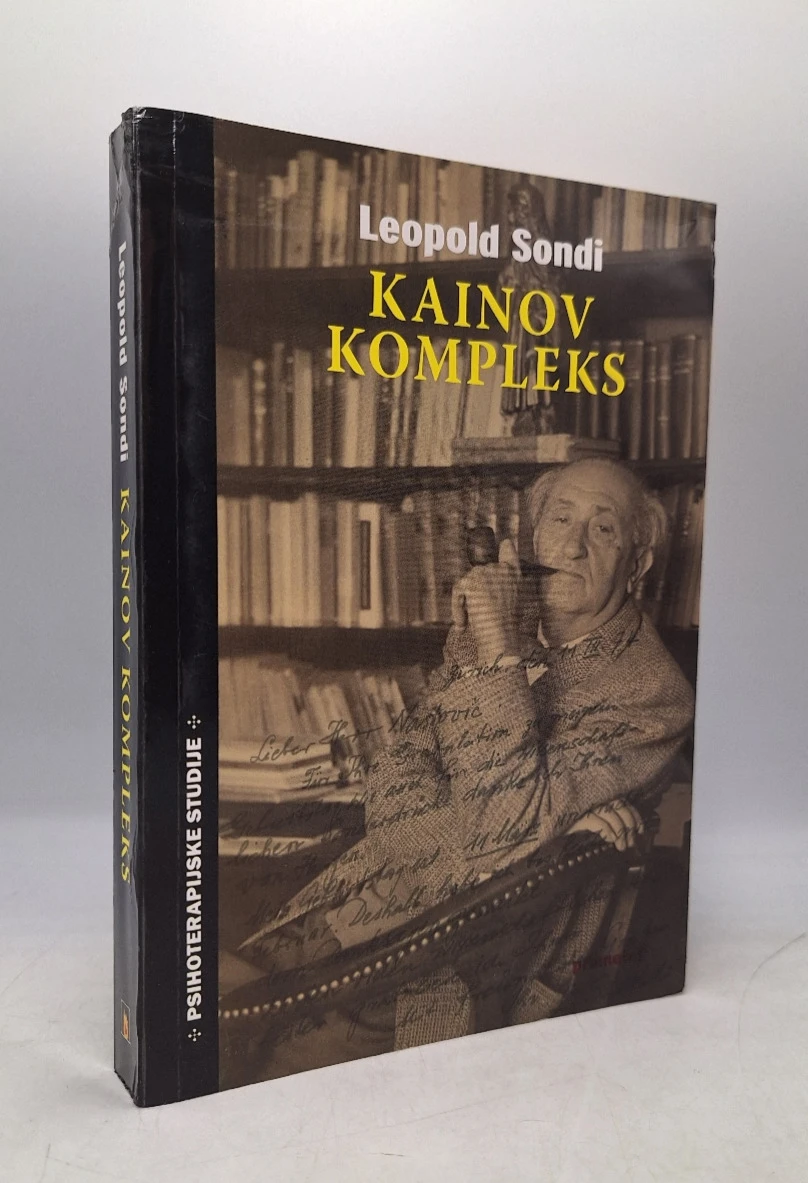

Szondi Leopold: Kainov kompleks
€ 10,00
Free delivery in Croatia for orders over EUR 70
Basic information
- Author: Szondi Leopold
- Publisher: Prometej
- Availability: Available
- Condition: Vrlo dobro
- Code: 83550
Shipping options
GLS Croatia
5€
Delivery
0€
Personal collection at the antique store
0€
GLS parcel machine
3€
Payment methods
Pay on pickup
CorvusPay
By general payment / Virman / Internet banking
Cash on delivery
Kainov kompleks
Szondi Leopold
Summary
Leopold Szondi: Cain's complex
Unlike Sigmund Freud, who used the mythical figure of Oedipus to denote the incestuous attachment of children to their parents, Leopold Sondi used the biblical figure of Cain to primarily denote the rivalry between brothers over paternal love, since the biblical Cain kills his brother Abel, who is a symbol of goodness, out of jealousy. However, just as the Oedipus complex does not only mean incestuous attachment to parents, but Carl Gustav Jung gives it a wider, archetypal meaning - the need for warmth and protection in the form of infantile dependence, so the Cain complex does not only mean the rivalry of brothers over love for the father, but at the same time represents the projection of "evil instincts" that exist in man, and are reflected in crimes, greed, vanity, jealousy, intolerance and unnecessary hurting of others. Therefore, we must understand the Cain complex in a broader sense as a symbol of evil, evil that exists to a greater or lesser extent in every human being and represents the dark, negative part of the human personality. That dark, murderous part of human evolution manifested itself in one of the most important Old Testament leaders and prophets - Moses. The killing of the Egyptian when Moses was eighteen years old, which is almost ignored in the literature, is the focus of Sondi's attention in this book. The mental consequences of such a sin and the burden of guilt that Moses had to carry in himself after the murder, as well as the conscience that tormented him, gradually grew so much in him that they could turn a lawbreaker into a lawgiver. In short, Sondi is primarily interested in the appearance of Cain in Moses' fate and his influence on Moses' further development, that is, he is interested in how murder can lead to guilt, guilt to confession, confession to liberation, and how, then, liberation from guilt can lead the murderer to God. Because, according to the Talmud, man can and should serve God and the evil impulses of Cain.
Additional information
- Author: Szondi Leopold
- Publisher: Prometej
- Year of publication:2013
- Place of publication:Novi Sad
- Pages:253
- Dimensions:14x20 cm
- Script:Latinica
- Condition:Vrlo dobro
- Binding:Meki
You may also like







Recently viewed

Biblos Newsletter
For book lovers who enjoy finding the rare
New titles, special copies and quiet recommendations from the antiquarian bookshop.