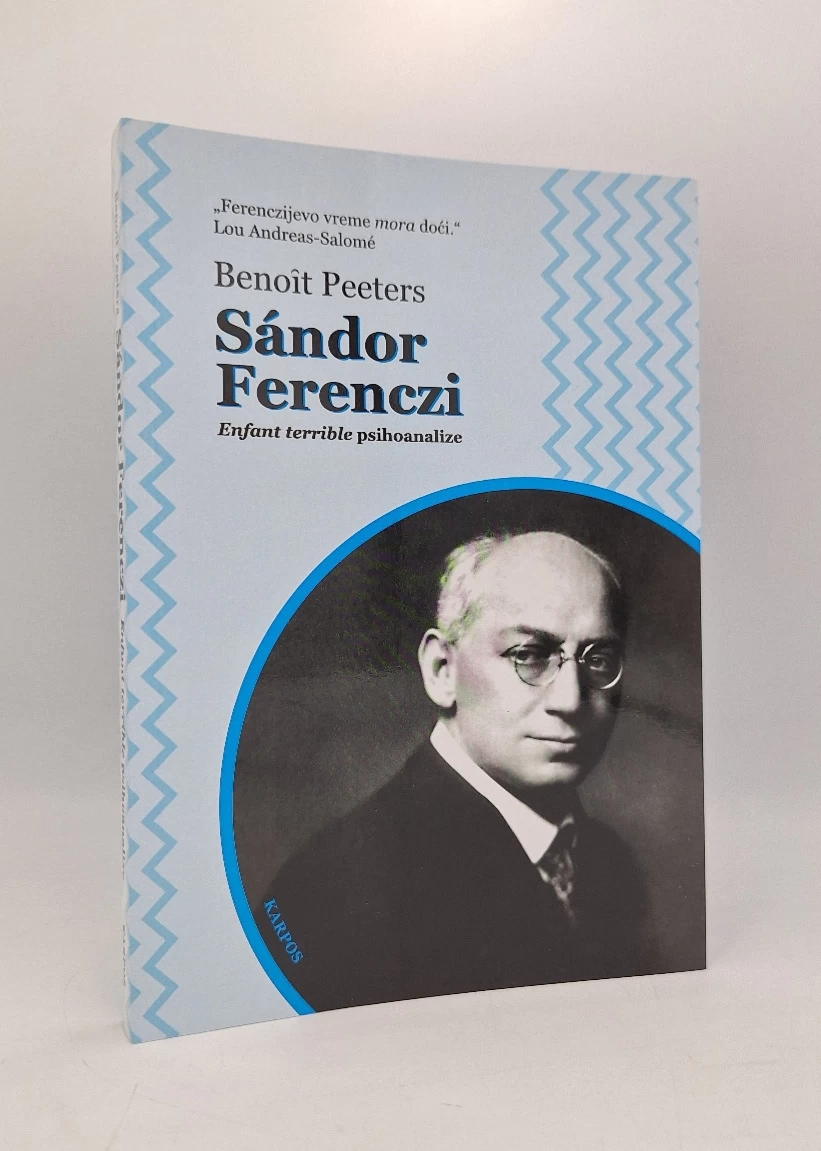

Peeters Benoit: Sandor Ferenczi: Enfant terrible psihoanalize
€ 22,00
Free delivery in Croatia for orders over EUR 70
Basic information
- Author: Peeters Benoit
- Publisher: Karpos
- Availability: Available
- Condition: Nova knjiga
- Code: 78982
Shipping options
GLS Croatia
5€
Delivery
0€
Personal collection at the antique store
0€
GLS parcel machine
3€
Payment methods
Pay on pickup
CorvusPay
By general payment / Virman / Internet banking
Cash on delivery
Sandor Ferenczi: Enfant terrible psihoanalize
Peeters Benoit
Summary
Benoit Peeters: Sandor Ferenczi: Enfant terrible of psychoanalysis
From the cover:
Sándor Ferenczi (Šandor Ferenci, 1873–1933), Freud's dear student and close associate, was one of the most attractive figures of early psychoanalysis and one of its most prolific theorists. His collaboration with Freud was marked by a long "imprisonment" in the stormy relationship of "father and son", which oscillated between fascination and the desire for emancipation.
Sándor Ferenczi. Enfant terrible psychoanalizeis a biography that, in addition to shedding light on Ferenczi's relationship with Freud, talks about the role that Ferenczi played in the spread and development of psychoanalysis in Hungary, but also in the world, about the emergence of the International Psychoanalytic Society and the conflicts within it, about joint trips with Freud (in the USA and elsewhere), the design of Ferenczi's innovative technique of analysis and his deepening understanding of the limits and dangers of orthodox psychoanalysis. But the dramatic plot of this work mostly illuminates the love triangle between Sándor, his lover Gizelle and her daughter Elma: Ferenczi takes them both under analysis, and after he falls in love with Elma, he sends her to Freud for further treatment. Soon, countless letters and confidential thoughts begin to circulate between Vienna and Budapest.
However, this book is neither a scientific treatise nor a classic biography. It is a moving story about a friendship that perhaps could never have existed and a love that was just as unattainable.
"I first heard the name of Sándor Ferenczi in my senior year of high school, in 1974. Our philosophy teacher mentioned his most famous text, Thalassa, in a way that was striking enough to stick in my memory. As a careful reader of Freud and an occasional listener to Lacan's lectures, I continued to take a closer interest in psychoanalysis during the following years. In 1992, the presentation of the correspondence between Freud and Ferenczi immediately fascinated me, and then in Das klinische Tagebuch. I was impatiently waiting for the next two volumes of correspondence, although in a very fragmented form and, at the same time, about the extraordinary elucidation of the beginnings of the psychoanalytic movement."
Benoît Peeters
Additional information
- Author: Peeters Benoit
- Publisher: Karpos
- Year of publication:2024
- Place of publication:Loznica
- Pages:240
- Dimensions:14.5x20.5 cm
- Script:Latinica
- Condition:Nova knjiga
- Binding:Meki
You may also like











Recently viewed





Biblos Newsletter
For book lovers who enjoy finding the rare
New titles, special copies and quiet recommendations from the antiquarian bookshop.