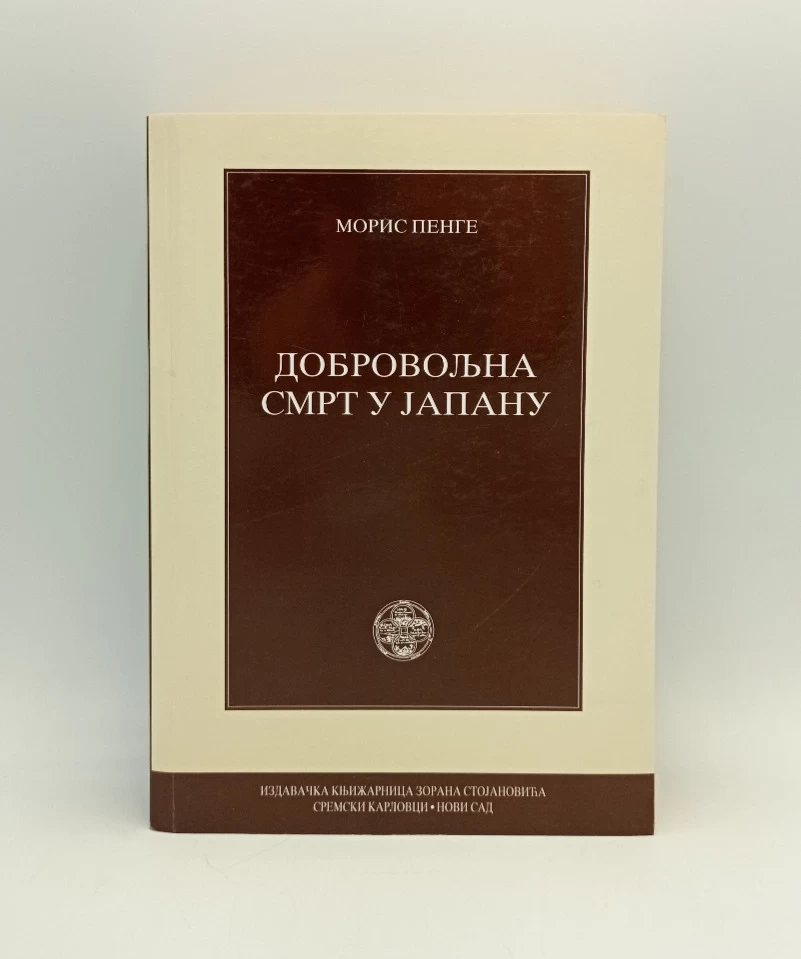
Dobrovoljna smrt u Japanu
Basic information
- Author: Pinguet Maurice
- Publisher: Izdavačka knjižarnica Zorana Stojanovića
- Availability: Available
- Condition: Excellent
- Code: 49514
Shipping options
Payment methods
Explore more
Dobrovoljna smrt u Japanu
Pinguet Maurice
Summary
Maurice Pinguet: Voluntary Death in Japan
"Jupiter could not have seen anything more beautiful on earth than Cato's suicide," declares Seneca. However, how many confusions, how many contradictions, to start from the details in Plutarch, spoil this voluntary death, the most famous in the history of the West? Cato's relatives, friends, sons saw through his intention to kill himself, and during dinner, they stole the sword that was hanging above his headboard. Cato does not know whether to ask him back immediately, at the risk of revealing his intentions, or perhaps it would be wiser for him to pretend to be indifferent and deceive the household that he has not yet decided to die. Although his hidden intention is firm and pure, although there is nothing in him that hesitates before the act he wants to perform and the meaning he wants to attach to it, he must use cunning and violence until the last moment, leading an extremely exhausting fight against those who would save him of his own will. He was just hitting the servants, scolding his sons, quarreling with his friends. At the end, they return the sword to him: "Now I stand, he says, at my disposal."
Additional information
- Author: Pinguet Maurice
- Publisher: Izdavačka knjižarnica Zorana S...
- Year of publication:2009
- Place of publication:Novi Sad
- Pages:544
- Dimensions:14x20 cm
- Script:Cyrillic script
- Condition:Excellent
- Binding:Softcover with dust jacket
Reviews
0 reviewsWrite a review
Share your experience and help other readers choose.
This item has no reviews yet. Be the first to share your experience.
More books from Izdavačka knjižarnica Zorana Stojanovića
You may also like