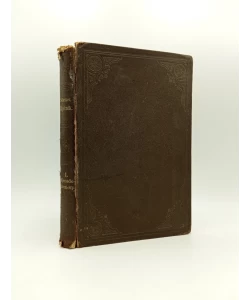


Tehnički rječnik I - II. njemačko - hrvatskosrpski / kroatoserbisch - deutsch
Basic information
- Author: Dabac Vlatko
- Publisher: Tehnička knjiga
- Availability: Available
- Condition: Good
- Code: 16843
Shipping options
Payment methods
Explore more
Tehnički rječnik I - II. njemačko - hrvatskosrpski / kroatoserbisch - deutsch
Dabac Vlatko
Summary
Technical dictionary I - II. German - Croatian Serbian / Croatian Serbian - deutsch
I. part: German-Croatian-Serbian.
II. part: Croatian-Serbian-German.
From the preface:
The development of science and technology brings constant, and ever faster, new knowledge and methods, new technical solutions and devices. There is no adequate nomenclature for these new concepts neither in the vernacular nor in the literary language. Teachers who present students with new scientific and technical achievements, scientific and professional workers who write about them must find and invent names for new terms. The names created in this way remain or are forgotten, they harmonize with each other, and some of them enter the scientific and professional terminology that is accepted by all.
Almost twenty years ago, the electrical engineering institutes of the Faculty of Engineering started the publication of the Electrical Dictionary (author Vlatko Dabac, »School Book«, Zagreb 1952), in which the electrotechnical terminology for the field of high current, and for the state of technology at that time, was recorded and processed. The sudden development of electrical engineering, especially electronics, telecommunications and automation, over time made the mentioned dictionary deficient, among other things, because it covers only a small part of modern electrical engineering. For this reason, at the end of 1963, the Faculty of Electrical Engineering of the University of Zagreb launched an action to update and expand the dictionary based on the terminology used in technical literature and at the faculties of the University of Zagreb. At first, almost all full-time and part-time teachers of the Faculty of Electrical Engineering, as well as part of the teachers of the Faculty of Electrical Engineering in Split, were involved in this work. Numerous teachers from other universities, especially technical faculties in Zagreb, as well as a large number of scientific workers and experts outside the University responded to the call for cooperation. The huge lexical material that was thus collected enabled the publication of the Technical Dictionary instead of the new edition of the Electrotechnical Dictionary. The Faculty of Electrical Engineering was only the initiator and initial organizer, while V. Dabac took over the coordination of the work, the selection and harmonization of terminology, consultations with a number of collaborators, and all other major work related to the preparation of a dictionary of such scope. Without his hard work and sense of organization, without his love for language and persistence, the Technical Dictionary would have remained just an unfulfilled wish.
Additional information
- Author: Dabac Vlatko
- Publisher: Tehnička knjiga
- Year of publication:1969
- Place of publication:Zagreb
- Pages:1104 1576
- Dimensions:19x24 cm
- Script:Latin script
- Condition:Good
- Binding:Hardcover
Reviews
0 reviewsWrite a review
Share your experience and help other readers choose.
This item has no reviews yet. Be the first to share your experience.
More books from Tehnička knjiga



You may also like