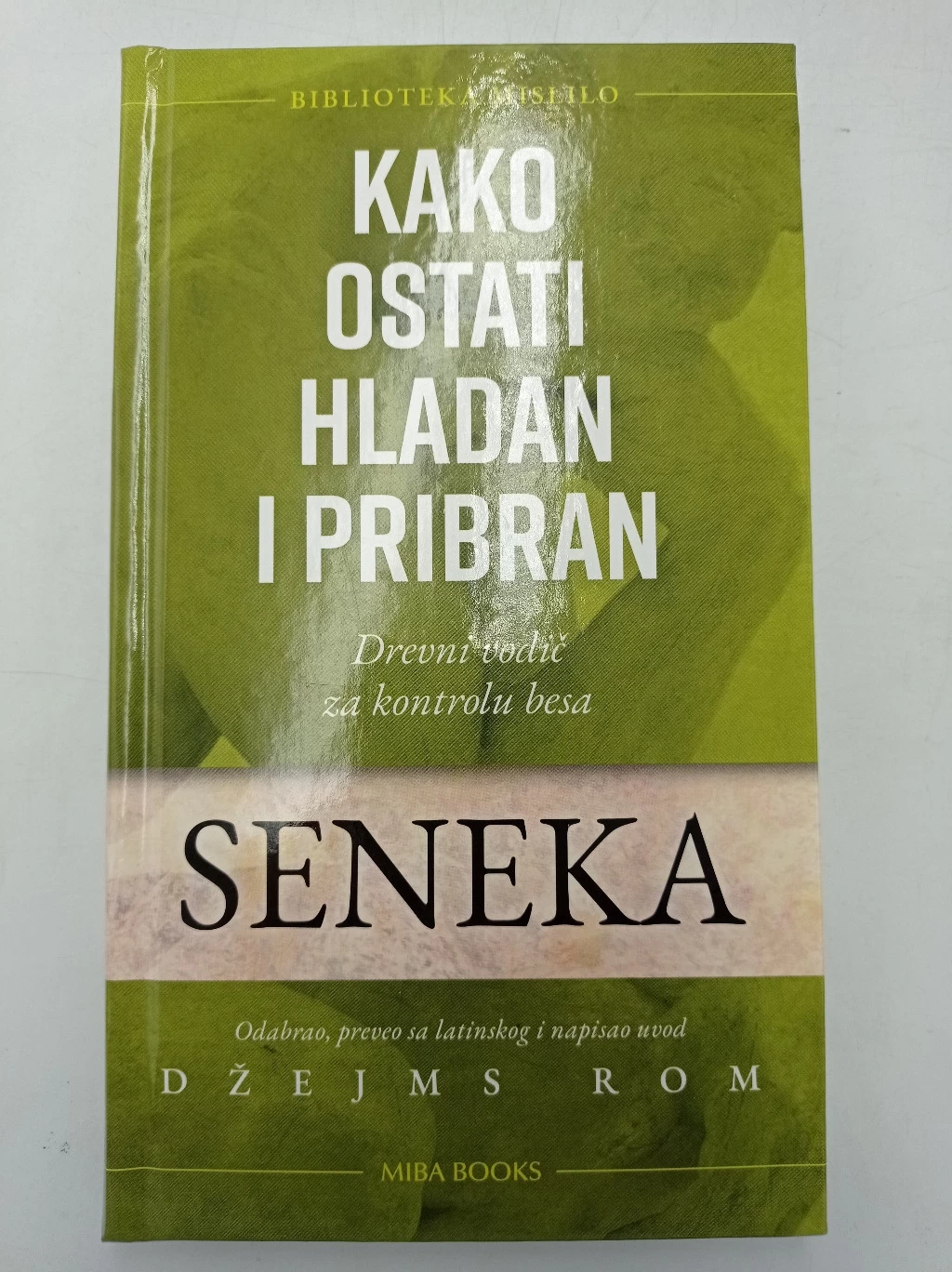

Seneka: Kako ostati hladan i pribran
€ 11,00
Free delivery in Croatia for orders over EUR 70
Basic information
- Author: Seneka
- Publisher: Miba Books
- Availability: Available
- Condition: Nova knjiga
- Code: 65378
Shipping options
GLS Croatia
5€
Delivery
0€
Personal collection at the antique store
0€
GLS parcel machine
3€
Payment methods
Pay on pickup
CorvusPay
By general payment / Virman / Internet banking
Cash on delivery
Kako ostati hladan i pribran
Seneka
Summary
Seneca: How to Stay Cool and Composure
An Ancient Guide to Anger Control
Selected, translated from Latin, and introduction written by James Rom
In his essay On Anger (De ira), the Roman Stoic thinker Seneca (4 BC - AD 65) claims that anger is the most destructive of all passions: "No plague has cost the human race more." This is also proven by his own life, which he barely managed to preserve under one angry emperor, Caligula, and which he lost under another, Nero. This remarkable new translation of selected essay passages, presented with an expert introduction and the original Latin text, offers readers a timeless guide to avoiding and coping with anger. He vividly illustrates why this emotion is so dangerous and why both individuals and society have enormous advantages from controlling it.
With his vast rhetorical arsenal, including examples from history (especially Caligula's terrible reign), anecdotes, digressions, and magnificent flights of eloquence, Seneca makes his case against anger ever stronger. As an impassioned preacher who speaks of the fire and brimstone of hell, he presents us with a grim picture of the moral dangers to which anger exposes us, finding the root of almost every evil in the world in this poisonous source. But then he lifts us up with a beautiful vision of a different path that we must take, a path of forgiveness and compassion that is similar to what we can find in Christianity and Buddhism.
Seneca's thoughts on anger have never been more relevant than today when uncivilized behavior is increasingly scaring public debate. Whether seeking personal growth or political success, readers will find Seneca's wisdom a valuable antidote to the scourges of raging time.
Additional information
- Author: Seneka
- Publisher: Miba Books
- Year of publication:2021
- Place of publication:Beograd
- Pages:205
- Dimensions:12x20 cm
- Script:Latinica
- Condition:Nova knjiga
- Binding:Tvrdi
You may also like



Recently viewed






Biblos Newsletter
For book lovers who enjoy finding the rare
New titles, special copies and quiet recommendations from the antiquarian bookshop.