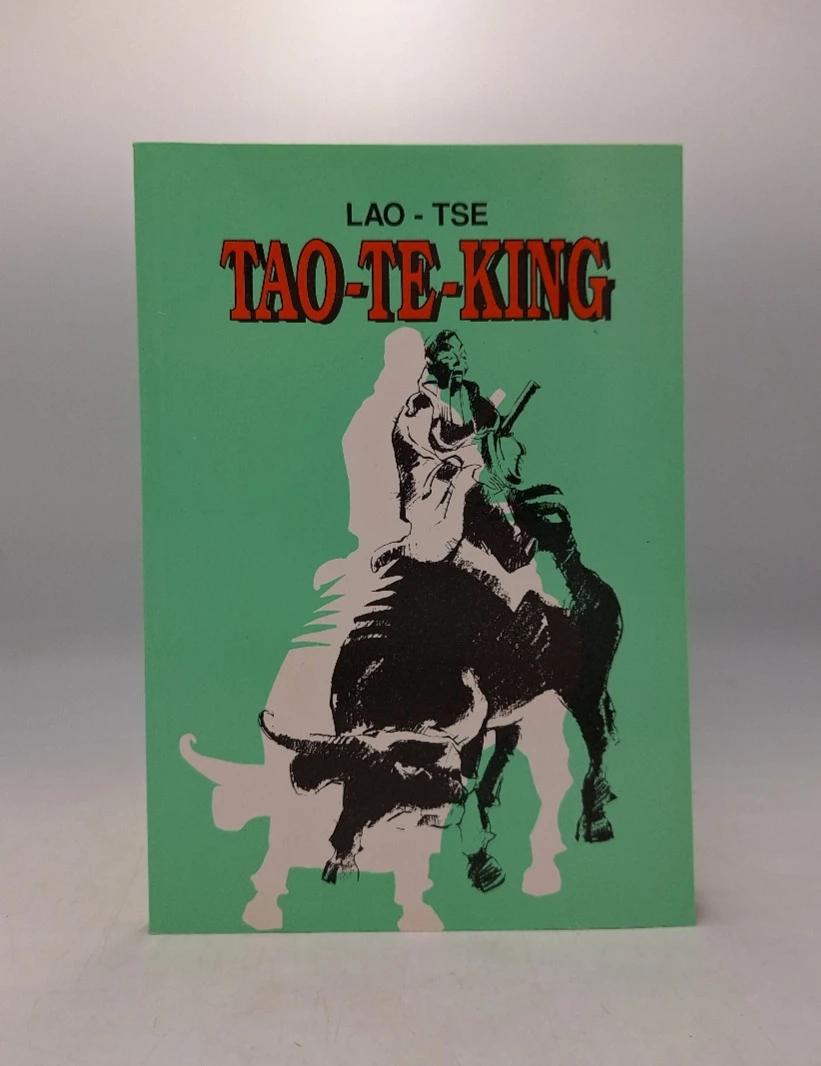

Lao-Tse: Tao-te-king
€ 8,00
Free delivery in Croatia for orders over EUR 70
Basic information
- Author: Lao-Tse
- Publisher: CID Zagreb
- Availability: Available
- Condition: Excellent
- Code: 82486
Shipping options
GLS Croatia
Delivery time: 1-2 working days (RH)
Delivery is made via the GLS delivery service.
5,00 €
Delivery
Delivery time: 3-21 working days
We send the delivery price via email within 24 hours.
Price on request
Personal collection at the antique store
Palmotićeva 28, 10000 Zagreb
Free
GLS parcel machine
Delivery time: 1-2 working days
Delivery is made to the selected GLS package machine.
3,00 €
Payment methods
Pay on pickup
CorvusPay
By general payment / Virman / Internet banking
Cash on delivery
Tao-te-king
Lao-Tse
Summary
Lao-Tse: Tao-te-king
The "Tao Te Ching" was written 2,500 years ago and is a classic of Chinese culture, but it has long since outgrown the boundaries of its origin and today is classified as one of the timeless highlights of the world's literary heritage.
In the original Chinese writing, it consists of 81 poems, which are divided into two parts: poems 1-37 are dedicated to the interpretation of the term "tao" or the "way", the unmanifest source of all creation, while poems 38-81 deal with the teaching of "te", virtue.
The text is considered the foundational work of Taoist philosophy and is a guide book on how to live a good and harmonious life.
It offers a series of insights about life and nature, and these are more suggestions than rules or assertions.
"Tao Te Ching" is written in classical Chinese, a figurative language that knows no punctuation marks, active or passive, has no singular and plural, cases, grammatical gender and verb tense.
Also, in the Taoist manner, some parts of the text are deliberately unclear and ambiguous, leaving freedom of one's own experience and interpretation.
Additional information
- Author: Lao-Tse
- Publisher: CID Zagreb
- Year of publication:1994
- Place of publication:Zagreb
- Pages:137
- Dimensions:14x20 cm
- Script:Latin script
- Condition:Excellent
- Binding:Softcover
Reviews
This item has no reviews yet. Be the first to share your experience.
Write a review
You may also like



Recently viewed


Biblos Newsletter
For book lovers who enjoy finding the rare
New titles, special copies and quiet recommendations from the antiquarian bookshop.