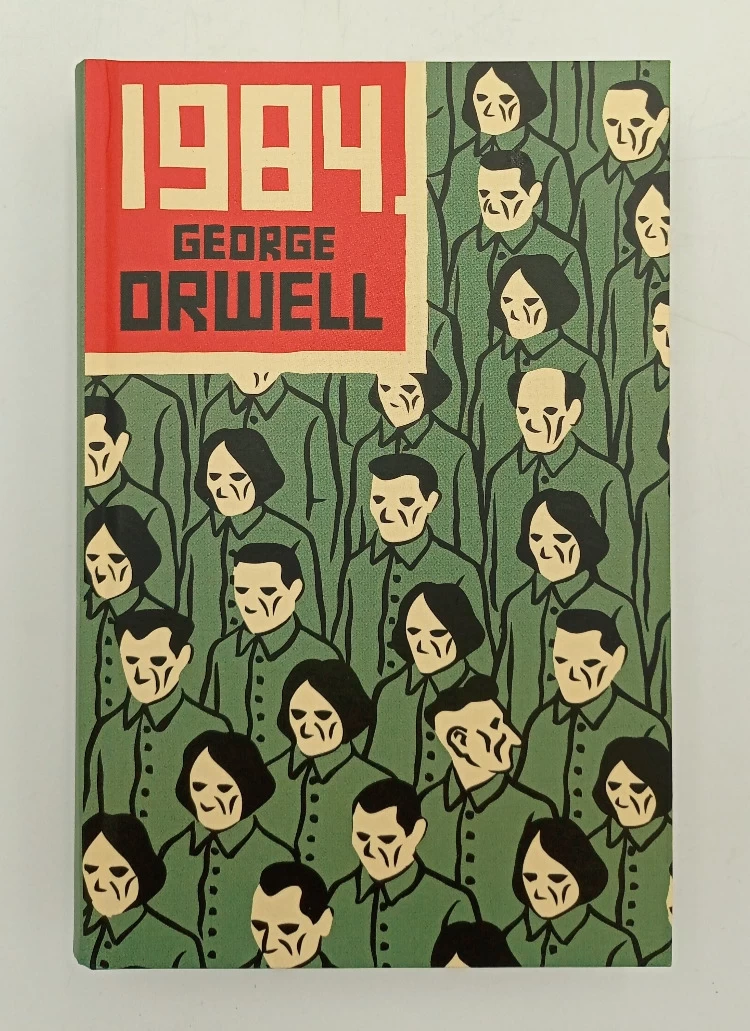

Orwell George: 1984
€ 18,00
Free delivery in Croatia for orders over EUR 70
Basic information
- Author: Orwell George
- Publisher: Šareni dućan
- Availability: Available
- Condition: Nova knjiga
- Code: 62842
Shipping options
GLS Croatia
5€
Delivery
0€
Personal collection at the antique store
0€
GLS parcel machine
3€
Payment methods
Pay on pickup
CorvusPay
By general payment / Virman / Internet banking
Cash on delivery
1984
Orwell George
Summary
George Orwell: 1984
»We know that no one comes to power with the intention of giving it up. Power is not a means, but an end. Dictatorship is not introduced in order to preserve some kind of revolution; the revolution rises in order to establish a dictatorship... The purpose of government is power. Are you starting to understand me now?" - this is how Orwell's hero explains and asks in this exceptional, influential, important, brave, critical, provocative, cult... book, which since its release in 1949 has been on all relevant lists of the greatest works of world literature. One thousand nine hundred and eighty-four is about the life of a regime official in the Ministry of Truth who works on falsifying historical facts, on daily harmonizing official history with official policy. Dissatisfied with his job and life in which the Thought Police monitor his every move, every word he uttered or intended to utter day and night through telescreens, he tries to do something, to resist the totalitarian system, although he is aware of total control and mortal danger. The novel is usually described as dystopian and futuristic, but readers who, unlike the author, survived 1984 are well aware of its 1984. What seemed unfathomable, excessive or impracticable in Orwell's time, for the most part came true before 1984. Because of the strong dark vision of the future, 1984 became not only a chronological term but also a description of the state of mind of the human community marked by alienation, injustice, violence, dictatorship, fear... and terms from the book such as: Big Brother, world of permanent war, news talk, cold war, room 101, Orwellian... have long since crossed the borders of the literary world. Amazing, ingenious, unique and unrepeatable - a must-have book! In Croatian novogovor: must read!
Additional information
- Author: Orwell George
- Publisher: Šareni dućan
- Year of publication:2015
- Place of publication:Koprivnica
- Pages:350
- Dimensions:14x20.5 cm
- Script:Latinica
- Condition:Nova knjiga
- Binding:Tvrdi
You may also like






Recently viewed



Biblos Newsletter
For book lovers who enjoy finding the rare
New titles, special copies and quiet recommendations from the antiquarian bookshop.