
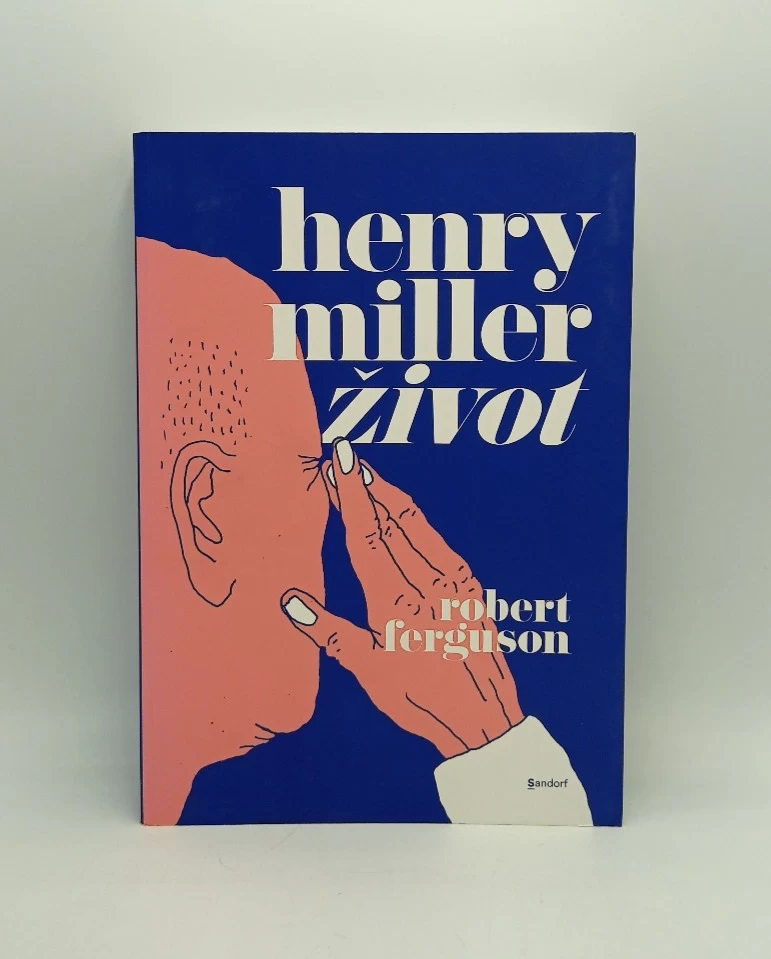
Henry Miller - život
Basic information
- Author: Ferguson Robert
- Publisher: Sandorf
- Availability: Available
- Condition: New book
- Code: 50015
Shipping options
Payment methods
Explore more
Henry Miller - život
Ferguson Robert
Summary
Robert Ferguson: Henry Miller - life
Henry Miller (1891-1980) is an iconic name in American literature of the twentieth century. He belongs to the so-called lost generation of American writers who came of age at the same time as the outbreak of the First World War, such as Ernest Hemingway or E. E. Cummings. Born and raised in Brooklyn, the huge, multi-ethnic dormitory of New York, Miller is the forerunner of all those authors whom contemporary criticism calls urban writers, because he cultivated his direct, jovial literary style in street fights and jumping the boundaries of strictly segregated immigrant neighborhoods, built his language on swear words and the extreme political incorrectness of the feuding classes of the booming megalopolis, and his literary heritage from mystics and proto-new agers like Madame Blavatsky or Krishnamurti, who represented a window to the world for newly minted New York kleinbürgers. Miller, as a child of the first generation of German immigrants, shared a fascination with America that he decided to translate into literature at a young age under the strong influence of great literary individuals from the end of the nineteenth century such as Walt Whitman, Mark Twain or Jack London, authentic critics of American society and way of life, but at the same time initiators of the great American literary imaginary, which exploded in the twentieth century, and with the wholehearted help of Miller and his Beatnik successors, won worldwide popular recognition. culture.
In this biography of Henry Miller - for one a prophet of sensualism, for others an incorrigible bohemian, and for others a shameless egoist - Robert Ferguson managed to separate the intertwined and split personalities of Miller the writer and Miller the literary character from his own novels. From Proust and Joyce, through W.G. Sebald to Knausgaard, autofiction as a form of fictionalized autobiography dominates the most intimate literary form. Miller stubbornly resisted any categorization of his literary work, insisting that for him literature is life, and with this attitude he influenced generations of writers. Ferguson explores Miller's poses and vulnerabilities and gives us a portrait of a complex and impressive personality in an awkward combination of hypersensitivity and extreme nonchalance, which is perhaps best manifested in a ten-year love-literary relationship with Anaïs Nin. The attempt to speak the truth and bravely face life and the world of Miller cost him thirty years of banning the sale of his books, but it earned him the respect of literary greats such as Orwell, T. S. Eliot and Lawrence Durrell, and eventually countless readers around the world.
Additional information
- Author: Ferguson Robert
- Publisher: Sandorf
- Year of publication:2018
- Place of publication:Zagreb
- Pages:410
- Dimensions:17x24 cm
- Script:Latin script
- Condition:New book
- Binding:Softcover with dust jacket
Reviews
0 reviewsWrite a review
Share your experience and help other readers choose.
This item has no reviews yet. Be the first to share your experience.
More books from Sandorf




You may also like