
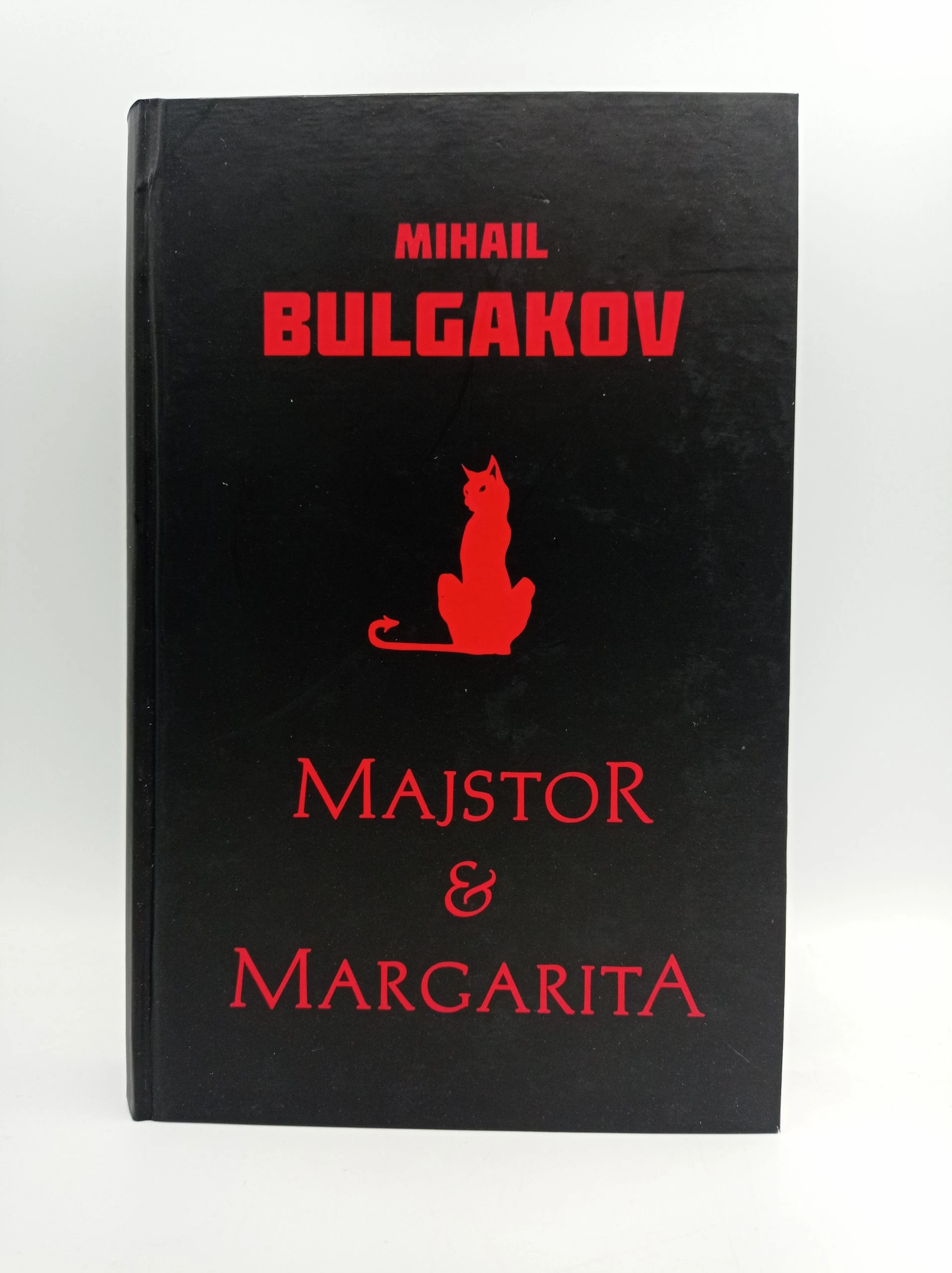
Majstor i Margarita
Basic information
- Author: Bulgakov Mihail
- Publisher: Šareni dućan
- Availability: Available
- Condition: New book
- Code: 39162
Shipping options
Payment methods
Explore more
Majstor i Margarita
Bulgakov Mihail
Summary
Mikhail Bulgakov: The Master and Margarita
Bulgakov made a literary miracle out of a topic that has been treated many times. It is fascinating to what extent Bulgakov managed to convey the appearance of the Soviet reality of his time by dealing with such eternal themes as Pilate, Jesus and the Devil... creating a novel full of light, although his theme is the essential and all-consuming evil of the reality in which he lived. I guess that's called magic.
(from Darij Grgić's foreword)
Today we can consider the novel Majstor i Margarita one of the capital works of world literature.
Not only does that novel follow the tradition of creation in language »which we can easily recognize in a whole series of modern novelists from Kafka, Joyce, and Proust all the way to Grass or Marques« (Solar), but it seems as if the great currents of the European cultural and literary tradition have merged into it.
The effect of this book is really fantastic. She is from another world that has nothing to do with the Soviet environment. Reading that book offers you a view in another direction, just enough to realize that everything you have experienced up to that point was a deception.
(Victor Pelevin)
Bulgakov was definitely included in the ranks of the immortals when the novel The Master and Margarita was first published. One did not need to have a particularly sharp literary taste to immediately understand that this is one of the best novels (at least) of the twentieth century.
(Kruno Lokotar)
I got the idea for the song Sympathy for the Devil after reading Baudelaire and Bulgakov's novel The Master and Margarita.
(Mick Jagger)
Additional information
- Author: Bulgakov Mihail
- Publisher: Šareni dućan
- Year of publication:2012
- Place of publication:Koprivnica
- Pages:398
- Dimensions:16x24 cm
- Script:Latin script
- Condition:New book
- Binding:Hardcover
Reviews
0 reviewsWrite a review
Share your experience and help other readers choose.
This item has no reviews yet. Be the first to share your experience.
More books by Bulgakov Mihail
More books from Šareni dućan





You may also like






Recently viewed