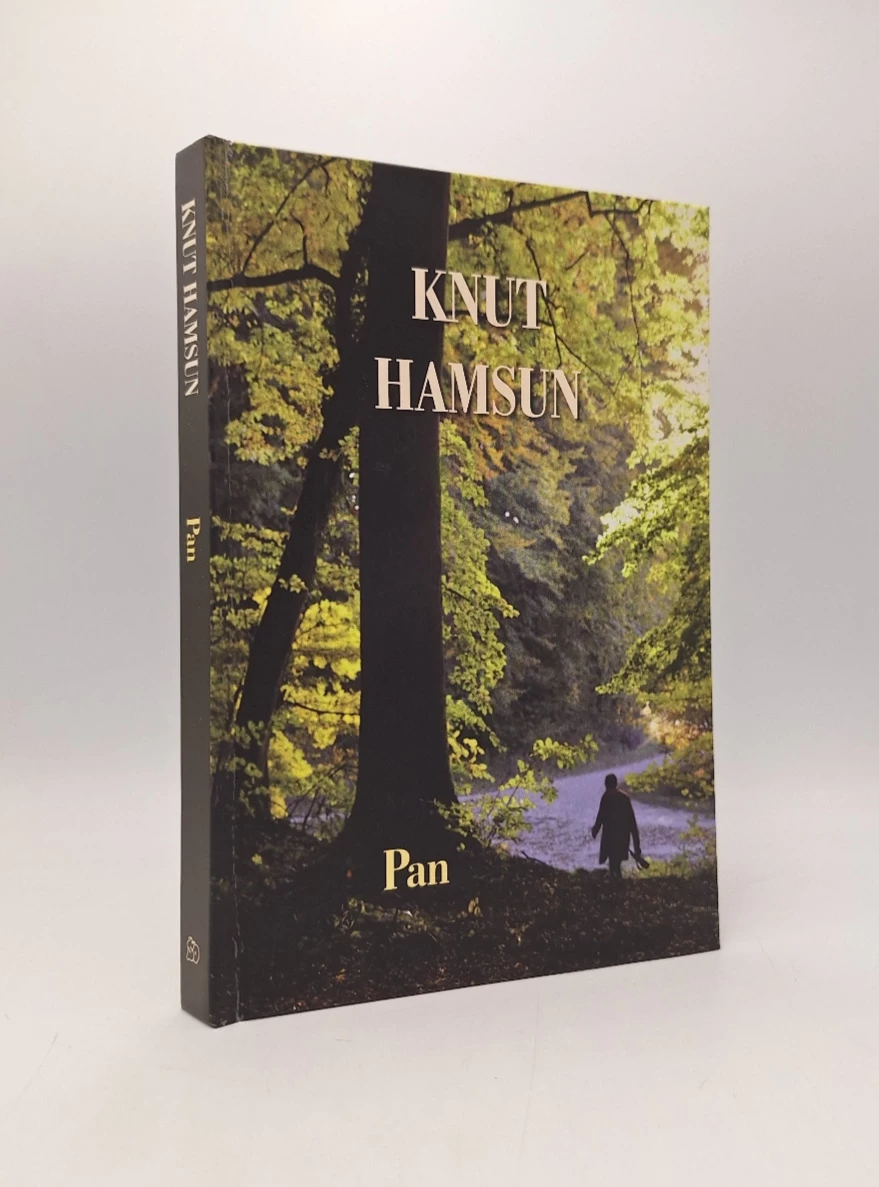
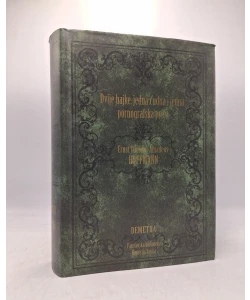
Knut Hamsun: Pan
Almost all critics agree that Pan is Hamsun's most beautiful and artistically perfect work. Later, he also wrote many deeper things... but he could not have written something as wonderful and distinctive as Pan, because it was a work from that era, when his elation reached its peak and when everything was permeated by the intoxication of life, youth and love. The difficult days of hardship and hunger had just passed, and he, overjoyed to have finally gotten rid of the painful life among people, rushed to the forests and mountains to enjoy the freedom he had longed for, and a completely untethered life. In ardent ecstasy, he roams the mountains, like a lone hunter, slung his rifle over his shoulder, ready to rejoice in everything, everything... He is a son of the forest and only in the forest does his soul calm down and achieve complete tranquility. He doesn't need any of the people, because life is so full and rich in him and around him. He enjoys not the forest, but the forest itself, he experiences all its life and enjoys it... It is all one life, one breath, one same nature, one same god, Pan. Hamsun called this work Pan, and indeed, when you read that book, it seems to you, as if that Ugursu rutted god was sprawled out somewhere on a thick branch... He laughs at the hunter, who is sitting down under the tree, the hunter in love in the forest. A hunter came to enjoy his freedom, but his heart was captured long ago. He was poisoned by a girl... It would be a sin to talk as much as possible about the love of that hunter in the forest and about his unsuspecting lover, and it would not even be possible, because every line of that work is closely related to the whole, and every page of incomparable beauty and uniqueness. (from the foreword by Nina Vavra, 1917)