
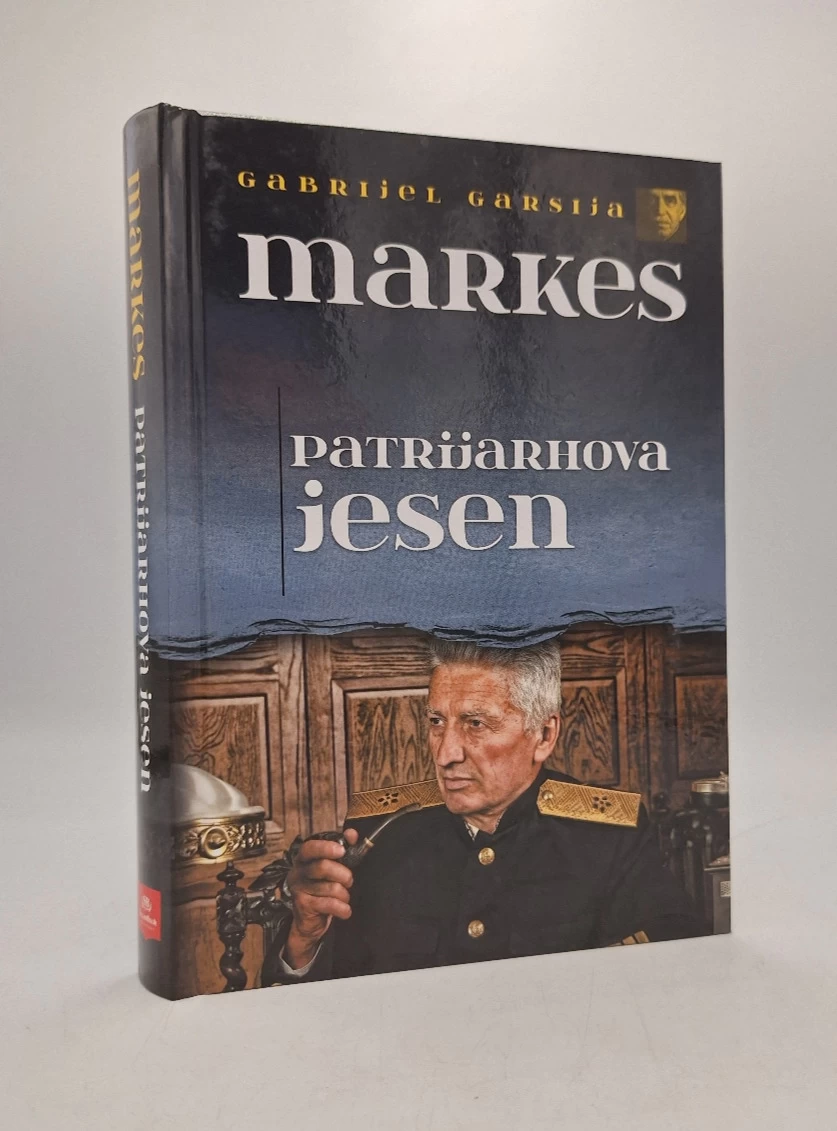
Patrijarhova jesen
Basic information
- Author: Marquez Garcia Gabriel
- Publisher: Sezam book
- Availability: Available
- Condition: New book
- Code: 77759
Shipping options
Payment methods
Explore more
Patrijarhova jesen
Marquez Garcia Gabriel
Summary
Gabriel García Márquez: Autumn of the Patriarchs
Forever obsessed with the search for the ghosts of solitude, Gabriel García Márquez called his Nobel Prize speech "The Solitude of Latin America." With it, among other things, he will encourage his readers to ask themselves where, in fact, is the border between fiction and reality. Mentioning General Antonio López de Santana, who was the three-time dictator of Mexico and who held a magnificent funeral for the right leg lost in the War of the Cakes, which was actually fought, then General García Moreno, who ruled Ecuador as an absolutist monarch for 16 years, and whose corpse was prepared for the vigil, dressed in a ceremonial uniform decorated with decorations and placed on the throne, and General Maximilian Hernández Martínez, the Salvadoran despot and the theosophist, who killed 30,000 peasants in just one massacre and invented a plumb bob to determine if his was poisoned and who covered the street lamps with red paper to eradicate the scarlet fever epidemic, and the discovery that the monument to General Francisco Morazán erected in the main square of Tegucigalpa is actually a second-hand statue of Marshal Ney, bought in a Parisian warehouse of second-hand sculptures, will offer the reader fictional images of Latin American reality with which he conquered the world in the novel "Fall of the Patriarchs". With it, he crowned his literary search for an answer to the question of where are the limits of hunger for power and the limits of loneliness of those who believe that unlimited power and authority will enable them to cheat death.
Additional information
- Author: Marquez Garcia Gabriel
- Publisher: Sezam book
- Year of publication:2023
- Place of publication:Zrenjanin
- Pages:238
- Dimensions:14.5x20.5 cm
- Script:Latin script
- Condition:New book
- Binding:Hardcover
Reviews
0 reviewsWrite a review
Share your experience and help other readers choose.
This item has no reviews yet. Be the first to share your experience.
More books by Marquez Garcia Gabriel









More books from Sezam book





You may also like




Recently viewed