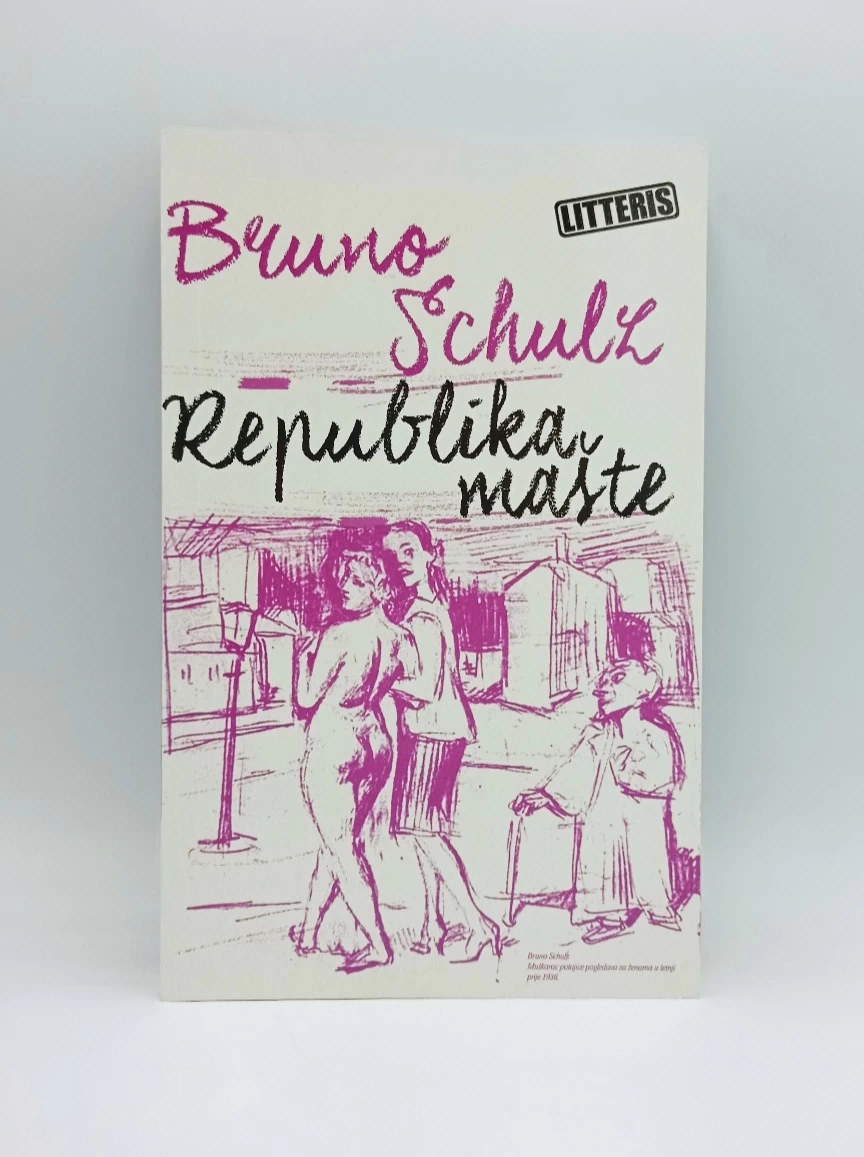

Schulz Bruno: Republika mašte
€ 12,00
Free delivery in Croatia for orders over EUR 70
Basic information
- Author: Schulz Bruno
- Publisher: Litteris
- Availability: Available
- Condition: Nova knjiga
- Code: 36047
Shipping options
GLS Croatia
5€
Delivery
0€
Personal collection at the antique store
0€
GLS parcel machine
3€
Payment methods
Pay on pickup
CorvusPay
By general payment / Virman / Internet banking
Cash on delivery
Republika mašte
Schulz Bruno
Summary
Bruno Schulz: Republika mašte
After "Dućana cimetne boje" (2005) and "Sanatorija pod klepsidrom" (2007), "Republika mašte" is the third and last book in which the publisher Litteris presents Croatian translations of the literary work of the famous Polish-Jewish storyteller Bruno Schulz (1892 - 1942), one of the greatest European writers of the 20th century. However, unlike the previous, more or less complete collections of short stories, published for the first time in book editions during the author's lifetime, this book is made up of individual texts published only in magazines and of texts from the margins of Schulz's private legacy - his letters. The guiding motif of this book remains Literature in its various dimensions - whether it is about Schulz's own work (these are translations of four of Schulz's short stories published in 1936 and 1938: Jesen, Republika mašte, Kometa and Domovina - although they are not an integral part of his two collections - both thematically and stylistically belong to the discourse conceived in The Cinnamon Shops), about the work of others in which he himself is reflected, or about literature which is integrated into the medium of the closest encounter with the other - in letters. Dalibor Blažina, from the foreword Bruno Schulz (1892-1942) Polish writer of Jewish origin and professor of drawing, the son of humble merchants, ended his days by being shot by a Nazi in the street. The success of "Dućana cimetne boje" was confirmed by Schulz's second collection of short stories, "Sanatorij pod klepsidrom" (Sanatorium pod klepsydr, 1937), with which he significantly influenced numerous world writers (let's mention only Danilo Kiš), as well as the generation of Croatian "Borgesians".
Additional information
- Author: Schulz Bruno
- Publisher: Litteris
- Year of publication:2015
- Place of publication:Zagreb
- Pages:227
- Dimensions:13x20.5 cm
- Script:Latinica
- Condition:Nova knjiga
- Binding:Meki
You may also like






Recently viewed
Biblos Newsletter
For book lovers who enjoy finding the rare
New titles, special copies and quiet recommendations from the antiquarian bookshop.