

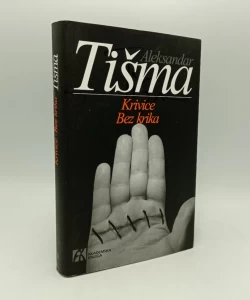
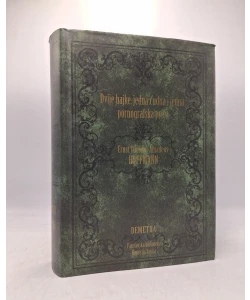
Upotreba čoveka
Basic information
- Author: Tišma Aleksandar
- Publisher: Akademska knjiga
- Availability: Available
- Condition: New book
- Code: 55652
Shipping options
Payment methods
Explore more
Upotreba čoveka
Tišma Aleksandar
Summary
Aleksandar Tišma: The Use of a Man
Although the form of The Use of a Man is at first glance dispersive, bursting (with a large number of narrative branches, digressions that in one moment become the main flow, and in the end are lost, pour into another story, so that their ordinary mysteries are solved all at once, as if by the way, almost in half a sentence), nevertheless, in the end, the reader has the impression that he has finished a regular, geometrically precise, full circle, that he has just reversed a prison or camp walk, rode the wall of death, got off the dizzying merry-go-round, after which only a feeling of nausea and suffocating levitation remains. Tišma first supports such a structure in The Use of Man by occasionally introducing bitterly lyrical passages, with the first sentence being identified with the title and theme of the entire chapter and with all the characters united in a taxative, seemingly heartless, insensitive list of illnesses, passions, falls, incomprehensible signs. Many have already pointed out that these pictures are the anthological highlights of Tišma's storytelling skills.
Additional information
- Author: Tišma Aleksandar
- Publisher: Akademska knjiga
- Year of publication:2010
- Place of publication:Novi Sad
- Pages:331
- Dimensions:14x20 cm
- Script:Latin script
- Condition:New book
- Binding:Hardcover with dust jacket
Reviews
0 reviewsWrite a review
Share your experience and help other readers choose.
This item has no reviews yet. Be the first to share your experience.
More books by Tišma Aleksandar








More books from Akademska knjiga




You may also like







Recently viewed