
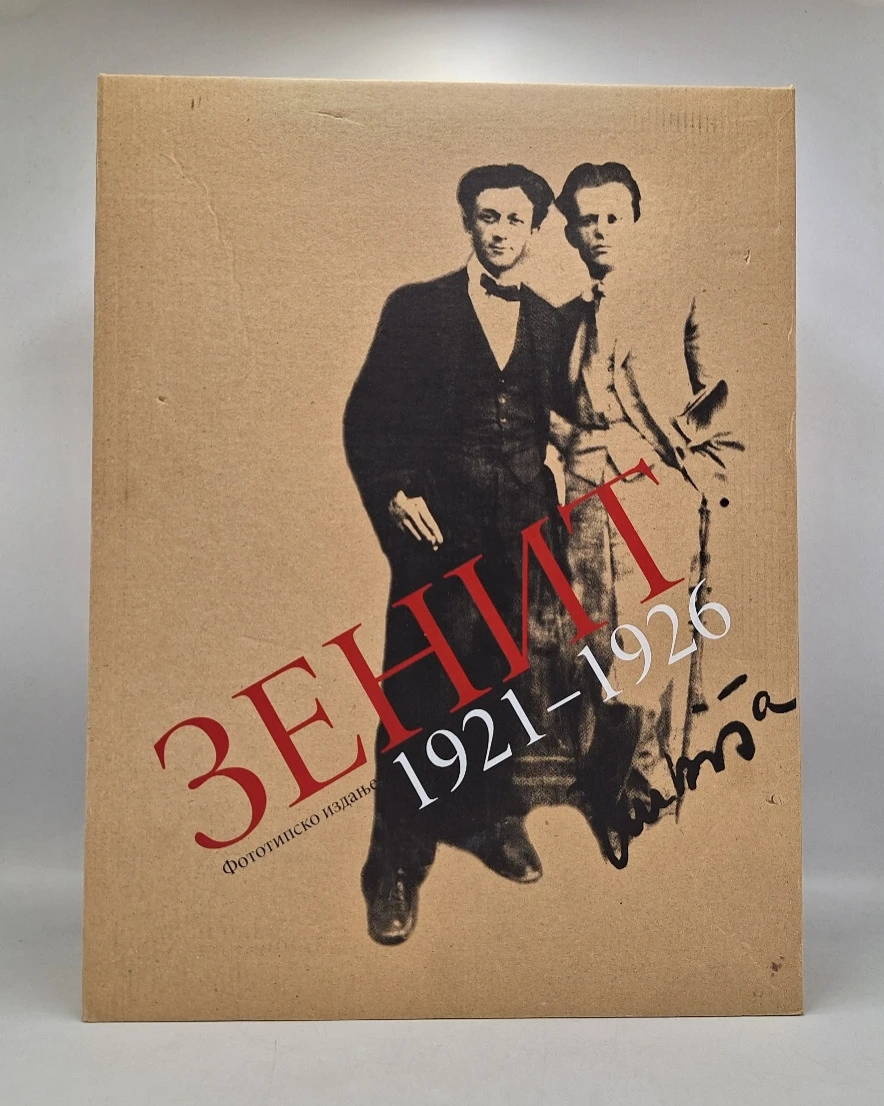
Zenit 1921-1926: fototipsko izdanje
Basic information
- Author: Micić Ljubomir
- Publisher: Narodna biblioteka Srbije | Institut za književnost i umetnost | SKD Prosvjeta
- Availability: Available
- Condition: Excellent
- Code: 84065
Shipping options
Payment methods
Explore more
Zenit 1921-1926: fototipsko izdanje
Micić Ljubomir
Summary
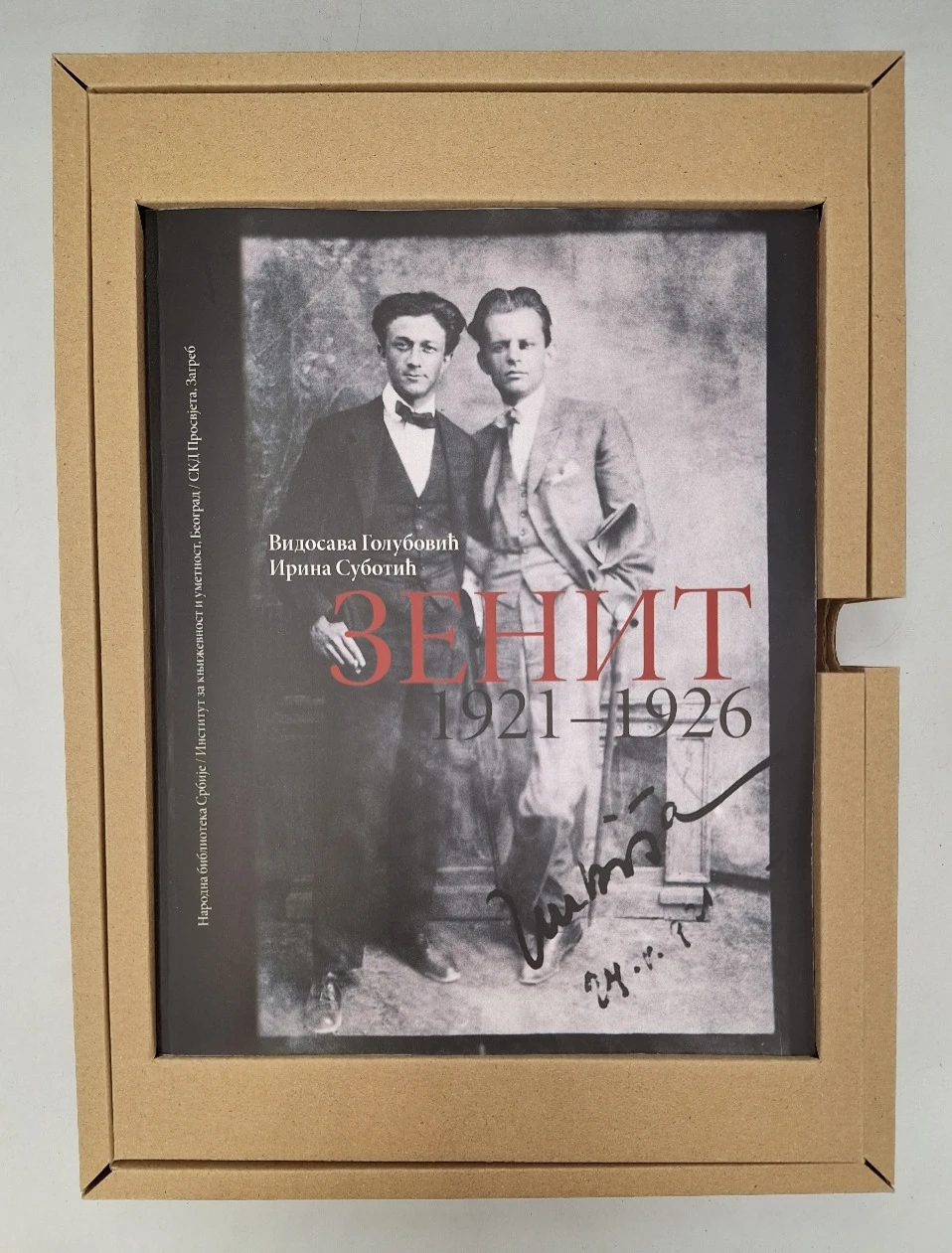
Zenit 1921-1926: phototype edition
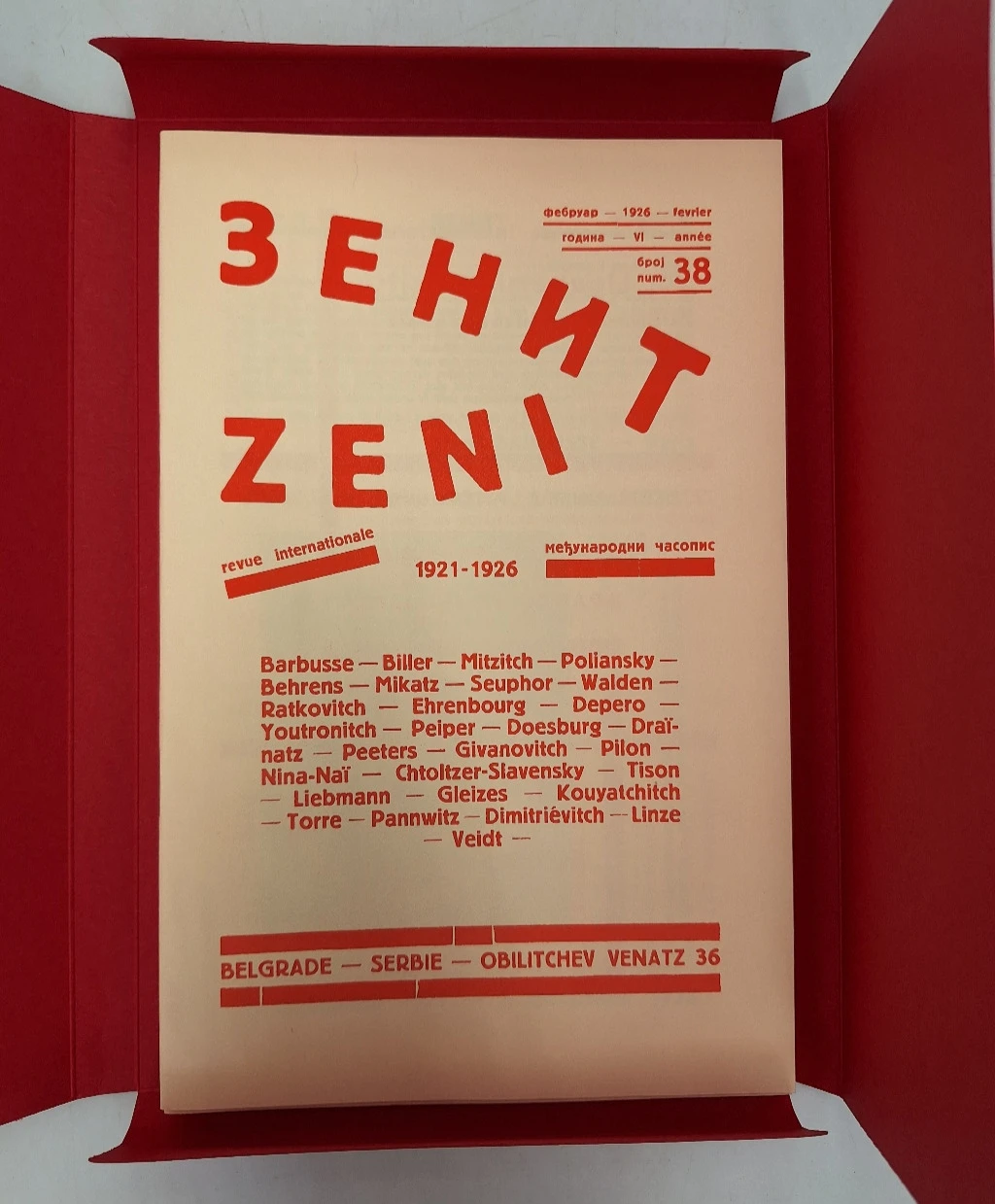
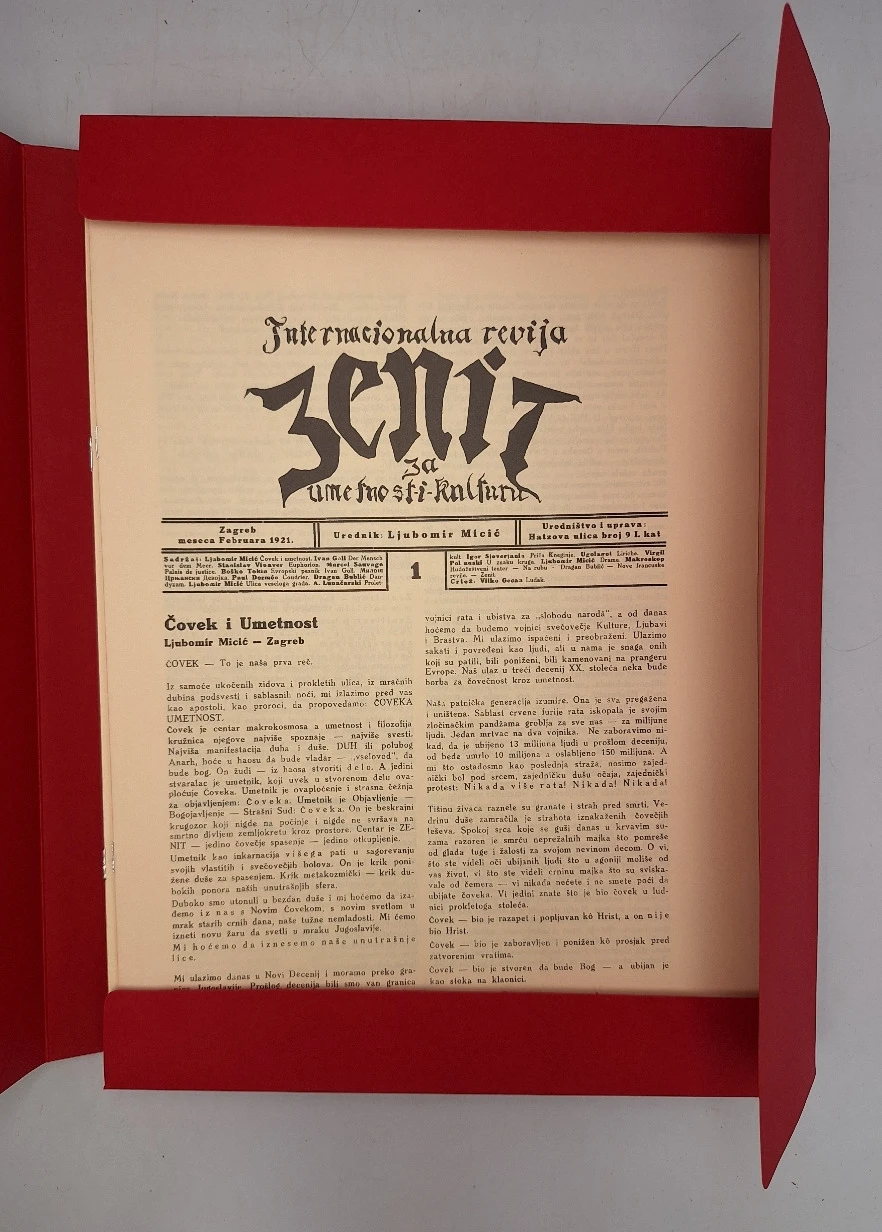
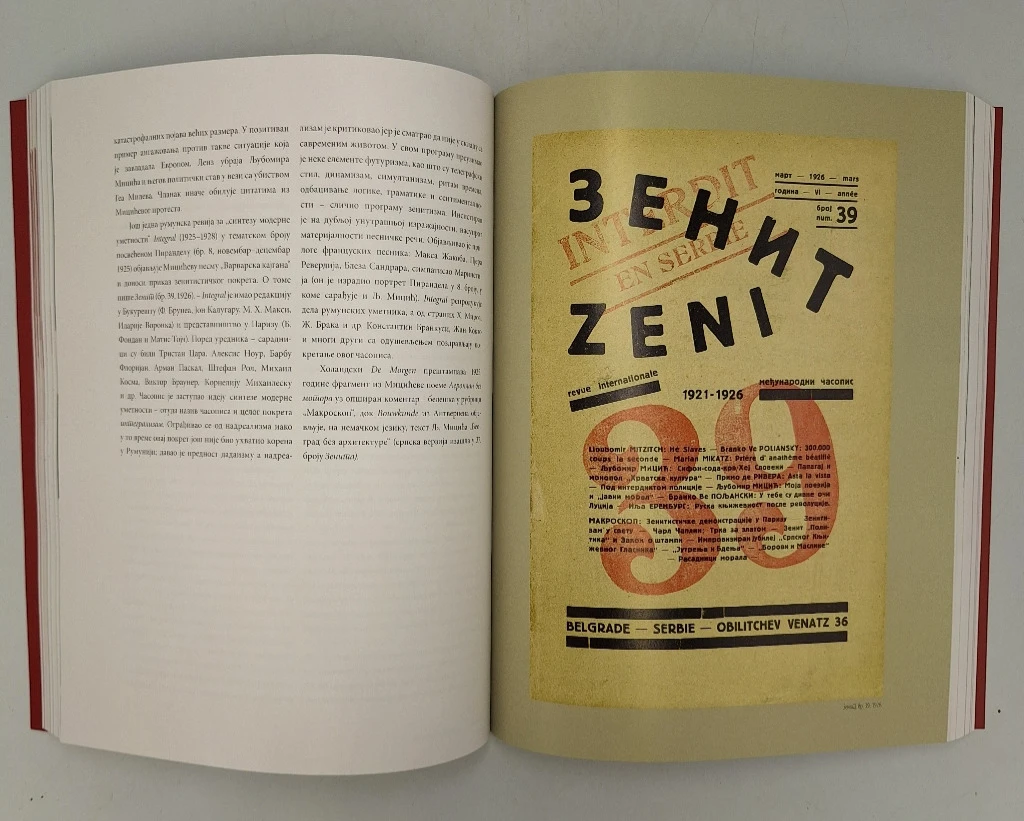
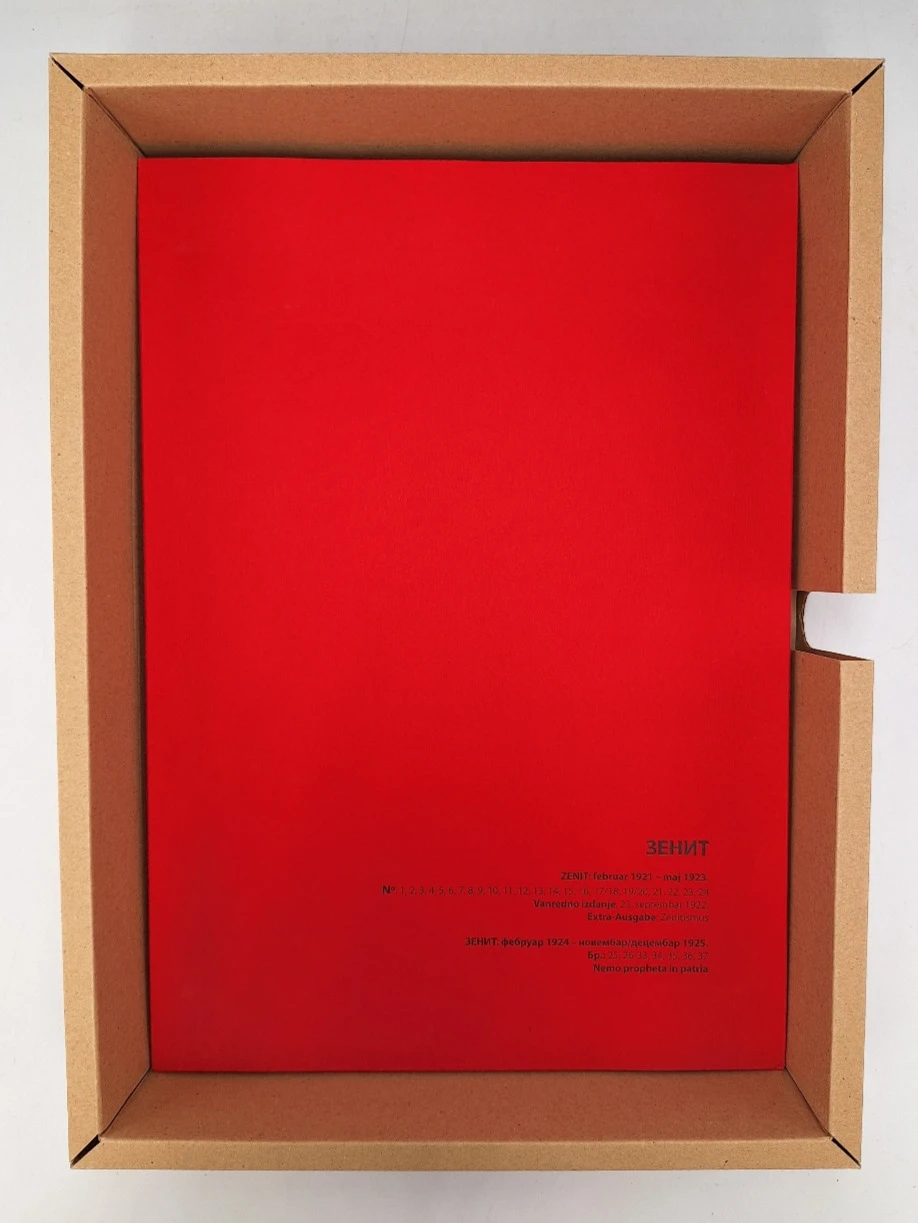
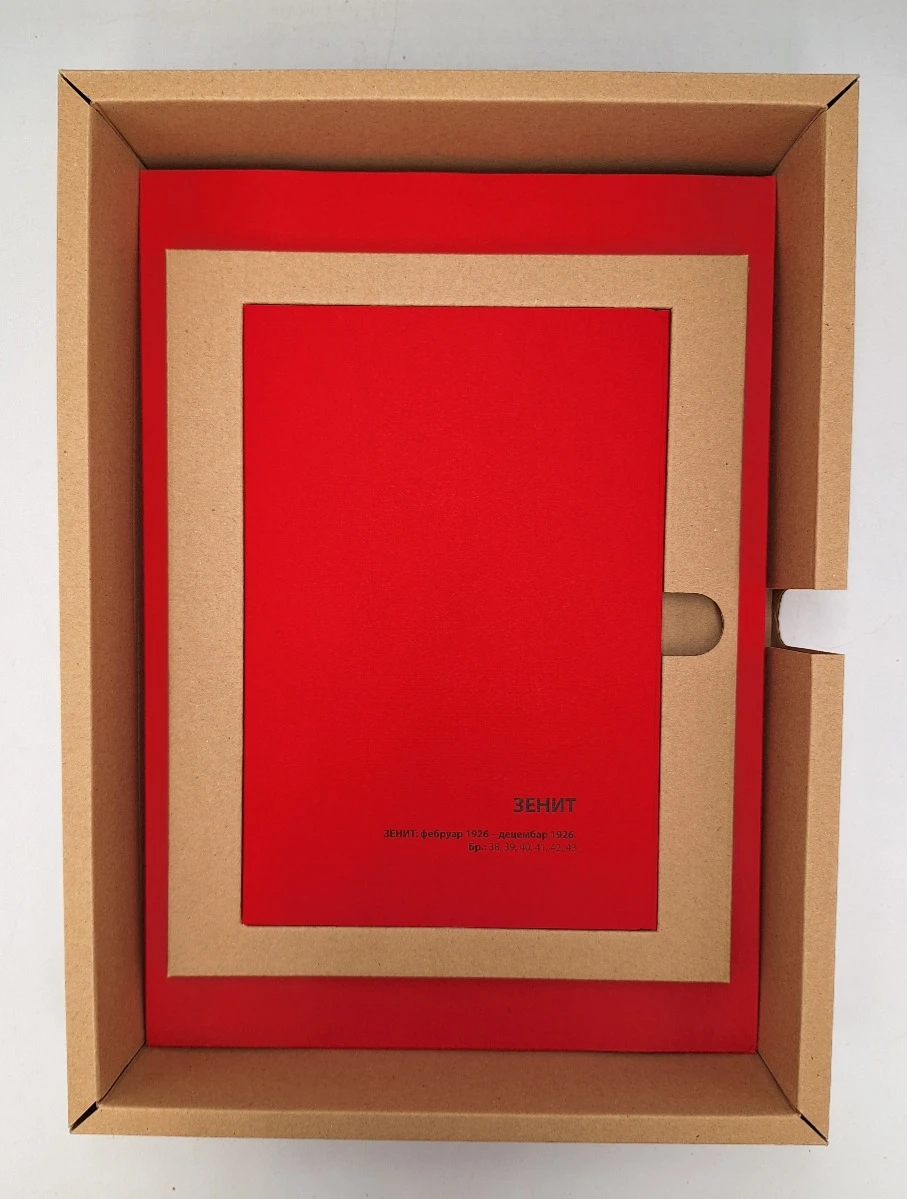
Zenit, 1921-1926, phototype edition of all issues. The set comes in two magazine folders. The first contains 6 magazine issues from January to December 1926 (38, 39, 40, 41, 42, 43). format 23 cm. In the second, larger folder, there are issues of magazines from February 1921-May 1923 from 1-24 + an extraordinary issue from September 23, 1922 and magazines from February 1924-September/October 1925 from issues 25-37, format 28,50.
Zenit is one of the most important avant-garde (and indeed in general) magazines in the territory of the former Yugoslavia. Until 1923, it was published in Zagreb, then in Belgrade. In the period from 1921 to 1926, a total of 43 issues were published.
The avant-garde artist Ljubomir Micić started Zenit in February 1921 in Zagreb, and after a polemic in May 1923, due to a provocative text about Stjepan Radić and Croatian culture, the editorial office was moved to Belgrade, where it was published with an uneven rhythm and often changed the format. It was banned in December 1926, ending with issue 43. Zenit began as a magazine-almanac of an informal group of collaborators, and after the publication of the international Manifesto of Zenitism in June 1921, it became a program newsletter. Besides Micić, Boško Tokin, Rastko Petrović, Ivan Goll, Branko Ve Poljanski and others wrote and worked for Zenit. Micić also started the Zenit library, founded a gallery with works by local and foreign modern and avant-garde artists, organized the International Exhibition of New Art (1924), participated in the Yugoslav Zenitism section at the Revolutionary Art of the West exhibition in Moscow. Zenit is one of the many avant-garde movements that emerged in the twenties in post-war Europe with a similar ideological program and attitude.
Additional information
- Author: Micić Ljubomir
- Publisher: Narodna biblioteka Srbije | In...
- Year of publication:2003
- Place of publication:Beograd | Zagreb
- Pages:532
- Dimensions:30.5x40.5 cm
- Script:Cyrillic script
- Condition:Excellent
- Binding:Softcover
Reviews
0 reviewsWrite a review
Share your experience and help other readers choose.
This item has no reviews yet. Be the first to share your experience.
You may also like