




Summary
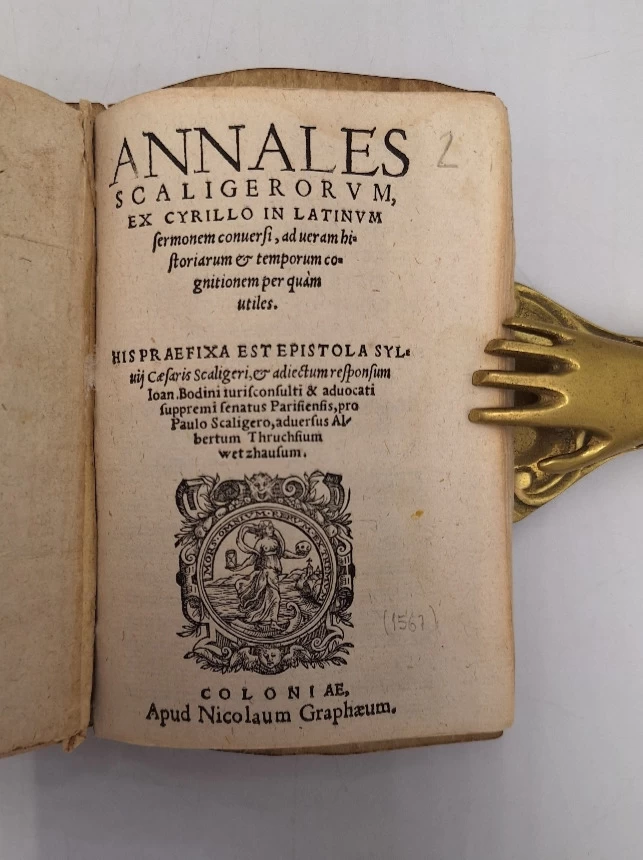
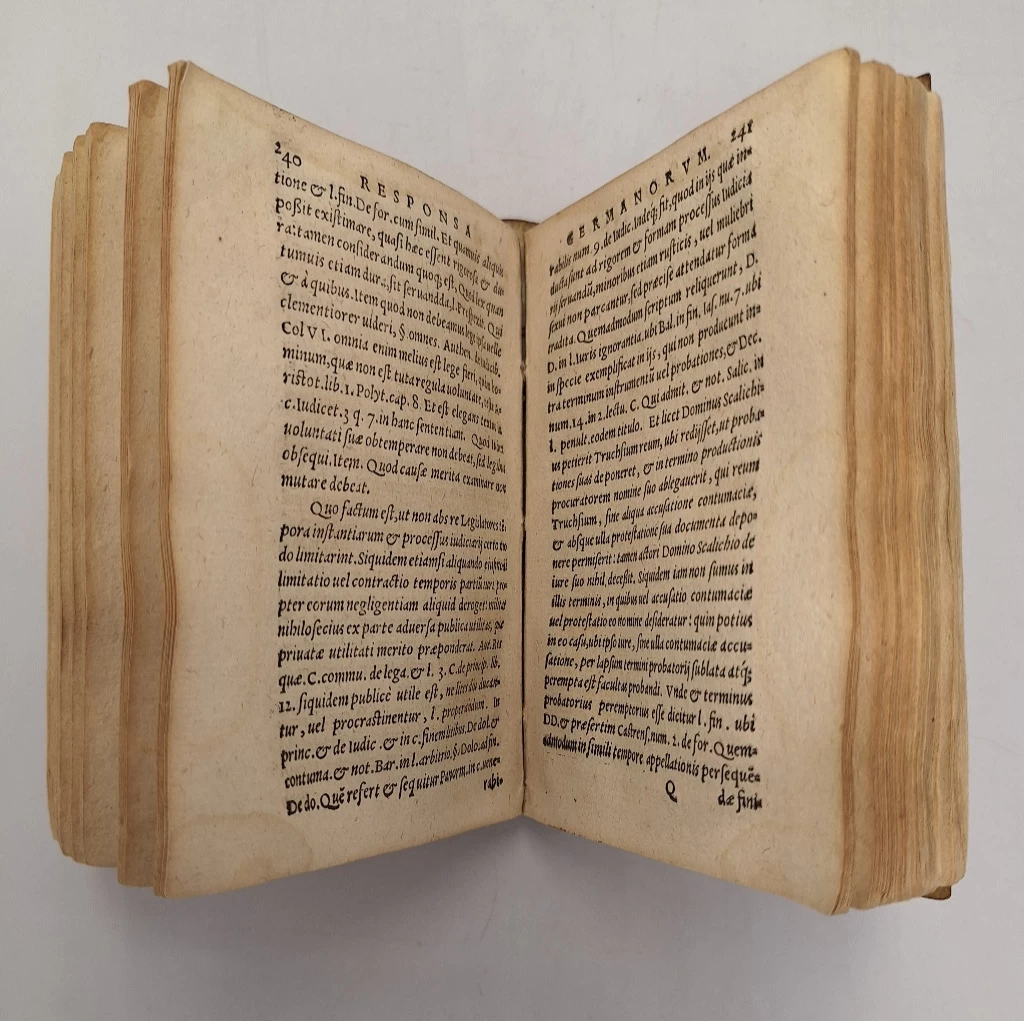
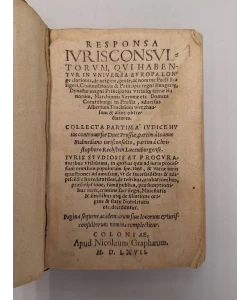
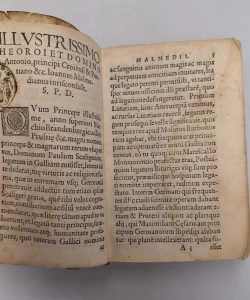
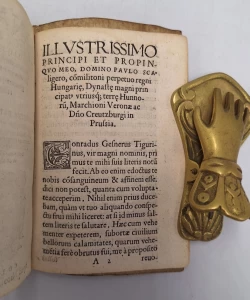
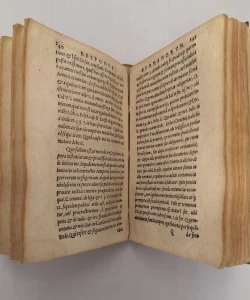
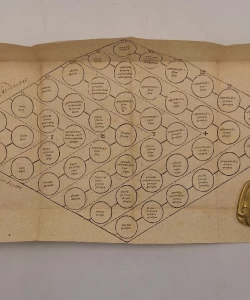
Pavao Skalić: Responsa iurisconsultorum qui habentur in universa Europa clariores de origine, gente ac nomine Pauli Scaligeri ... adversus Albertum Truchsium Wetzhausum et alios obtrectatores. / Annales Scaligerorum, ex Cyril in Latinum sermonem conversi ad veram historiarum et temporum cognitionem perquam utiles. His praefissa est Epistola Sylvii Caesaris Scaligeri, et adiectum Responsum Joan. Bodini ... pro Paulo Scaligero : adversus Albertinum Druchsium Wetzhausum.
Skalić, Pavao (Latinized Paulus Scalichius), Croatian humanist and polyhistor, reformist writer and theologian (Zagreb, 1534 – Gdańsk, 1575). The adventurous son of a poor Zagreb schoolmaster; after studying philosophy in Vienna and a doctorate in theology in Bologna (1552) he made his way (on the basis of forged documents and under false titles of marquis, count and baron, e.g. Count Scaliger) to various European courts. As the court chaplain of Emperor Ferdinand I was unmasked, he went to Tübingen, where he converted to Protestantism, and taught at the university there as a protégé of Christoph Wittenberg and I Ungnad. From 1561 he lived in Königsberg, where he also taught theology at the university and became an adviser to the Prussian Duke Albrecht Hohenzollern. Forced to flee from there in 1566 due to fictitious titles and genealogies, he took refuge in Paris. Later he moved to Münster, returned to Catholicism and wrote counter-reformation writings. He died on the way to Prussia, where he was allowed to return. Starting with the first printed work Conclusions in all kinds of science (Conclusiones in omni genere scientiarum..., 1553), which announced his polyhistorical ambitions, he wrote a series of works in Latin with a varied content (theological, philosophical, occult, historiographical, polemical, etc.). In the title of his work Connoisseur of the encyclopedia or circle of sacred and secular disciplines (Encyclopaediae seu orbis disciplinarum tam sacrarum quam profanarum epistemon, 1559) he was the first to use the word encyclopedia in a meaning similar to today's. In philosophy, he advocated the opinion that God gave people wisdom. Therefore, man's mind resembles God's, but in such a way that it rises through the sensible to the supersensible. Ascending through this sensibility, man at the same time perceives the last plan of God, i.e. the ultimate purpose of all creation. Therefore, philosophy is also a "mystery" in which this purpose should come to light. The soul is a pure act (actus purus), immaterial and imperishable, since in its foundation lies the divine spirit that enables it to rise above the material and to realize the ultimate message of earthly revelation.

Biblos Newsletter
New titles, special copies and quiet recommendations from the antiquarian bookshop.