




Summary
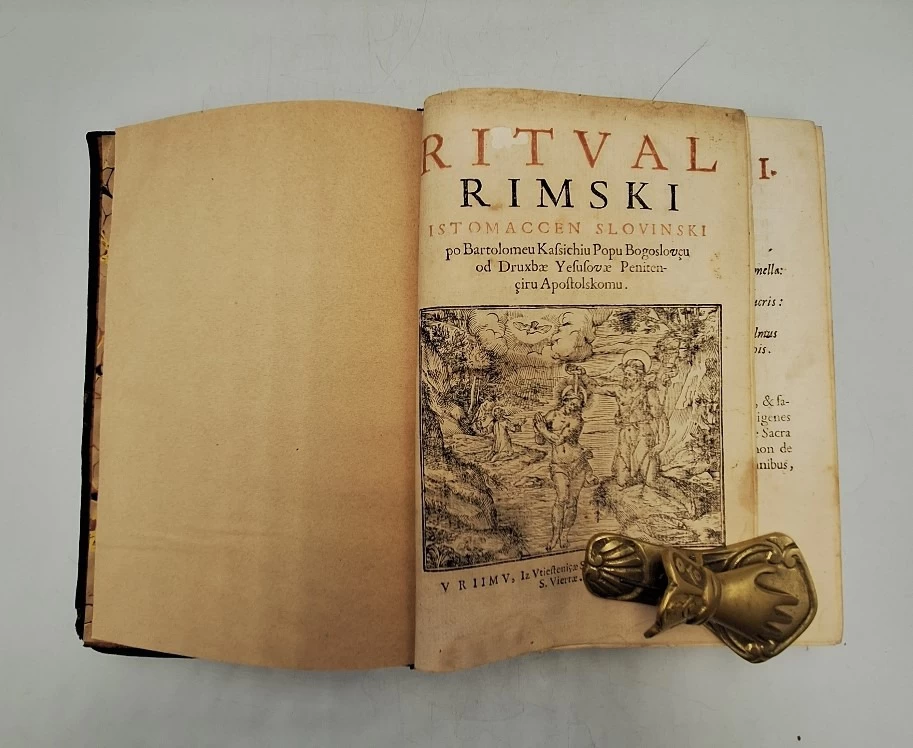
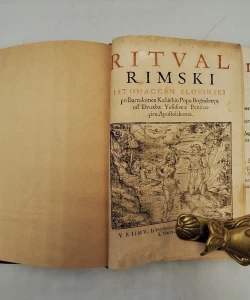
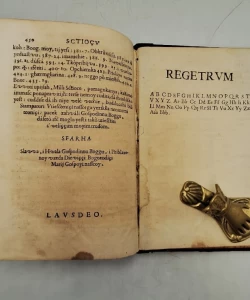
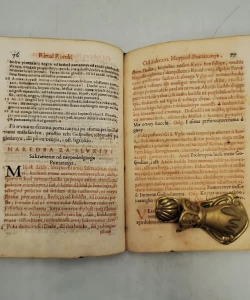
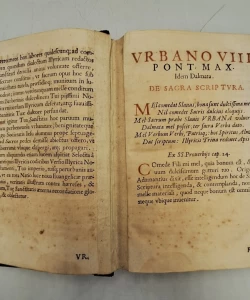
Istomaccen Slovene according to Bartolome Kassichiu Pope Theologian of Druxbae Yesusovae ...
The rite is a liturgical book used by the priest for the celebration of the sacraments and some other non-sacramental celebrations, such as blessings, processions, funerals or some other rites. In the early days of the Church, there was no such book, but the bishops and priests actually improvised the ceremony, but over time the need to create concrete forms became apparent so that elements that should not be present would not be introduced through improvisation. Slowly, therefore, some brochures were formed, which the priests made for themselves, and then, by mutual sharing and editing, more unique booklets were created, that is, those that were used by several priests. With the subsequent unification, such pre-rituals were created at the level of cities and dioceses, and since there were still too many of them and how they differed quite a bit from each other, both in content and quality, the need to create a single ritual for the entire Church was shown. obrednik), but it was not binding, but recommended, i.e. dioceses and ecclesiastical provinces could continue to use their regional obrednik. In practice, it was most often the case that additions were added at the end of that Roman rite, i.e. those rites that became established in certain regions, and since there was no place for them in the Roman rite, they were added in such a way. In addition to such rites, some dioceses still decided to keep their own rites, but they also disappeared over time, that is, they increasingly took over rites from the Roman rite, so that in the 20th century only some specifics remained. As a nation, we can boast of retaining our specificities for a long time, and some have even remained to this day, but this is more about "oral tradition" and "good tradition", and not about official liturgical regulations.
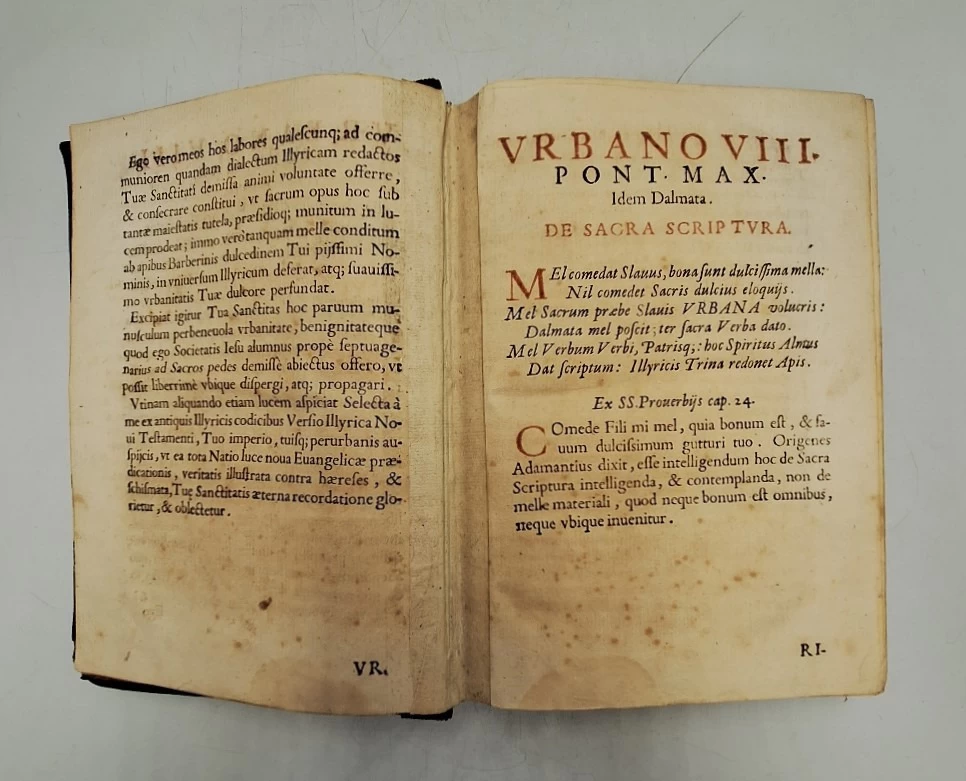
We can thank Bartol Kašić for such preservation of our peculiarities, not only as the first translator of the Roman Rite into the Croatian language, but also as the one whose addition had a special impact on all of this, as will be evident from the following text.
Already seven years after the publication of the Roman Rite of Pope Paul V in 1614, its first translation was published. It is a partial translation into the Albanian language, prepared by Bishop Petar Budi, and printed in Rome in 1621. The first complete translation, as we have already mentioned, was the translation of Bartolo Kašić, and this is a fact that we as a nation and as believers should be extremely proud of. Especially since it all went very painfully, and Kašić's extensive and exceptionally high-quality work is not sufficiently known or appreciated.
Kašić, namely, first in 1622. began to translate the New Testament into Croatian, but three years later he received an order from the Roman Propaganda to translate the entire Holy Scriptures. When he completed it in 1633 and received approval for printing, some "neighbors", who were against the new Croatian literary and liturgical language, written in Latin, began to create considerable difficulties for him, which resulted in a ban on its printing. This translation of the Holy Scriptures, we repeat, will only be made public in 1999, and in this sense it means only a certain acknowledgment of this author who was not recognized during his lifetime.
The translation of the Roman Rite narrowly escaped such a fate. Namely, although at the request of the then Secretary of Propaganda, Francesco Ingolia, Kašić translated the Rituale Romanum as early as 1636, due to extremely difficult circumstances, mostly caused by the aforementioned polemics about the Croatian literary language, as well as the fact that the breviary, as a more important liturgical book, had not yet been printed in the Croatian language, he managed to publish it only in 1640, with great difficulty. It seems that he had the most disagreements about this with Fr. Rafael Levako vič, the then editor of Croatian liturgical books in Propaganda's printing house, who advocated for a Russified version of the Glagolitic, and in addition he himself offered to translate the Ritual, of course in Glagolitic.
Today it still remains unclear to us how Propaganda decided to publish the Ritual in the living Croatian language, especially when it is known that the cardinals of that Congregation, in the presence of Pope Urban VIII, at their session on December 17. In 1627, they decided that liturgical books for Croats should be printed in Cyrillic and Glagolitic. Flipping through Kašić's autobiography, we get the impression that one of the reasons could be Kašić's submission to the Holy See about the apostolic visitation in the area under the Turks, which impressed Pope Urban VIII. Namely, it was clear to Kašić that the people there are almost without spiritual leadership and in great religious ignorance, so they could fall under the influence of schismatics and heretics, and in order to prevent this, it is important that the mysteries be understandable to them, i.e. in a living language.
besides our copy, this one is also for sale. copy
www.abebooks.com/first-edition/Ritual-Rimski-Istomaccen-Slovinski-Rituale-Romanum/31501221866/bd
Istomaccen in Slavonic according to Bartolome Kassichiu, Pope Theologian of Druxbae Yesusovae...
"Obrednik" is a liturgical book used by the priest for the celebration of the sacraments and some other non-sacramental celebrations, such as blessings, processions, funerals or some other ceremonies. In the early days of the Church, there was no such book, so the bishops and priests actually improvised the ceremony, but over time the need to create concrete forms became apparent so that elements that should not be present would not be introduced through improvisation. Slowly, some brochures were formed, which the priests made for themselves, and then, by mutual sharing and editing, more unique booklets were created, that is, those that were used by several priests. With the subsequent unification, such pre-rituals were created at the level of cities and dioceses, and since there were still too many of them and how they differed quite a bit from each other, both in content and quality, the need to create a single ritual for the entire Church was shown.
The first such ritual in the full sense of the word was issued by Pope Paul V on June 17, 1614., under the name Rituale Romanum (Roman Ritual), but it was not binding, but recommended, that is, dioceses and ecclesiastical provinces could still use their local ritualists. In practice, it was most often the case that additions were added at the end of that Roman rite, i.e. those rites that became established in certain regions, and since there was no place for them in the Roman rite, they were added in such a way. In addition to such rites, some dioceses still decided to keep their own rites, but they also disappeared over time, that is, they increasingly took over rites from the Roman rite, so in the 20th century only some specifics remained. As a nation, Croatians can boast of keeping their specificities for a long time, and some have even remained until today, but this is more about "oral tradition" and "good tradition", and not about official liturgical regulations.
We can thank Bartolo Kašić for such retention of our peculiarities, not only as the first translator of the Roman Ritual into the Croatian language, but also as the one whose addition had a special impact on all of this, as will be evident from the following text.
Already seven years after the publication of the Roman Ritual of Pope Paul V in 1614, its first translation was published. It is a partial translation into the Albanian language, prepared by Bishop Petar Budi, and printed in Rome in 1621. The first complete translation, as we have already mentioned, was the translation of Bartolo Kašić, and this is a fact that Croatians as a nation and as believers should be extremely proud of. Especially since it all went very painfully, and Kašić's extensive and exceptionally high-quality work is neither well-known nor appreciated enough.
Kašić, namely, first in 1622. began to translate the New Testament into Croatian, but three years later he received an order from the Roman Propaganda to translate the entire Holy Scriptures. When he completed it in 1633 and received approval for printing, some "internal factors", who were against the new Croatian literary and liturgical language, written in Latin, began to create considerable difficulties for him, which resulted in a ban on its printing. This translation of the Holy Scriptures, we repeat, will only be made public in 1999, and in this sense it means only a certain recognition of this author who was not recognized during his lifetime.
The translation of the Roman Ritual narrowly escaped such a fate. Namely, although at the request of the Secretary of Propaganda, Francesco Ingolia, Kašić translated the Rituale Romanum as early as 1636, due to extremely difficult circumstances, mostly caused by the aforementioned polemics about the Croatian literary language, as well as the fact that the breviary, as a more important liturgical book, had not yet been printed in the Croatian language, he managed to publish it only in 1640, with great difficulty. It seems that he had the most disagreements about this with Fr. Rafael Levakovic, then the editor of Croatian liturgical books at the Propaganda printing house, who advocated for a Russified version of the Glagolitic script, and in addition, he himself offered to translate the Ritual, of course in Glagolitic script.
Today, it still remains unclear to us how Propaganda decided to publish the Ritual in the living Croatian language, especially when it is known that the cardinals of that Congregation, in the presence of Pope Urban VIII, at their session on December 17, 1627, decided that liturgical books for Croats should be printed in Cyrillic and Glagolitic scripts. Flipping through Kašić's autobiography, we get the impression that one of the reasons could be Kašić's submission to the Holy See about the apostolic visitation in the area under the Turks, which impressed Pope Urban VIII. Namely, it was clear to Kašić that the people there are almost without spiritual leadership and in great religious ignorance, so they could fall under the influence of schismatics and heretics, and in order to prevent this, it is important that the mysteries be understandable to them, i.e. in a living language.
Publisher: from Vtiestenicae Sfet. skkupa od razplodyenya s. vierrae
Place of publication: Rome
Year of publication: 1640.
Number of pages: 450
Dimensions: 16x21.5cm
Binding: Hard
Condition: Very good

Biblos Newsletter
New titles, special copies and quiet recommendations from the antiquarian bookshop.