
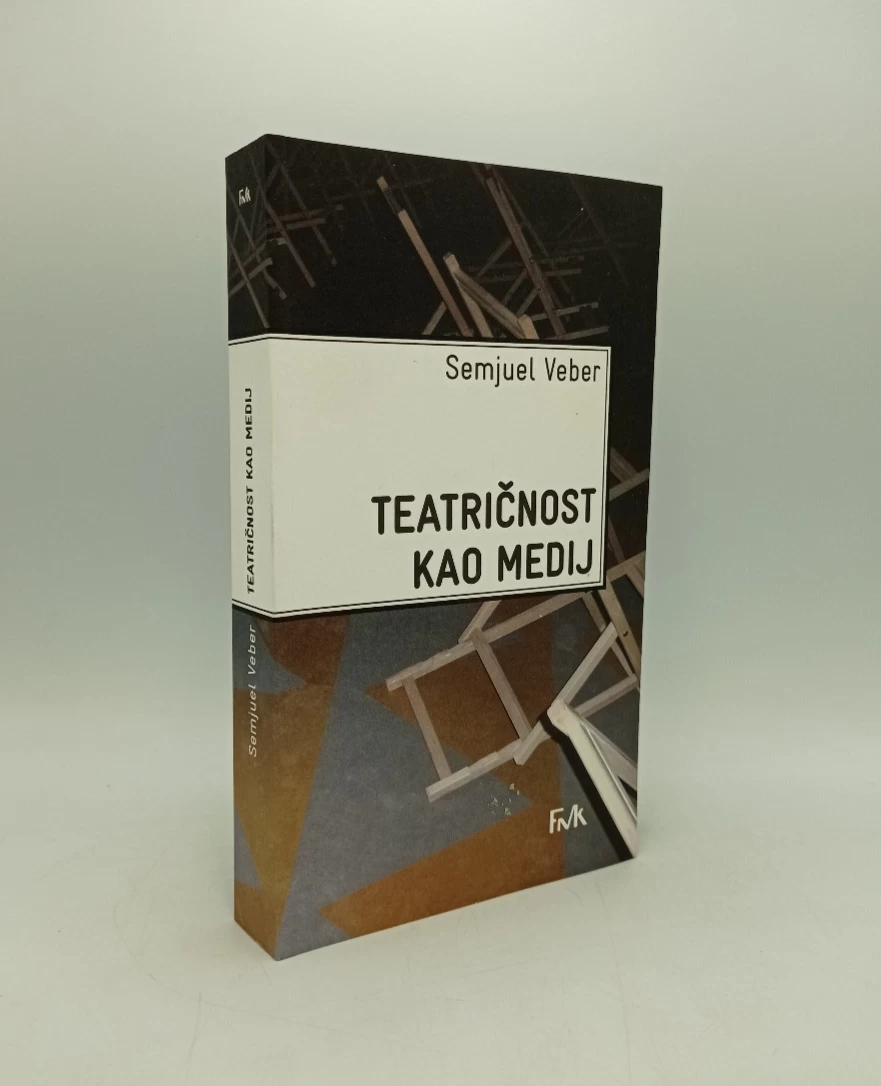
Teatričnost kao medij
Basic information
- Author: Weber Samuel
- Publisher: Fakultet za medije i komunikacije
- Availability: Available
- Condition: New book
- Code: 58769
Shipping options
Payment methods
Explore more
Teatričnost kao medij
Weber Samuel
Summary
Samuel Weber: Theatricality as a Medium
A multidisciplinary study that investigates textual practices about theater that question the aesthetic-generic conception of theater, known since Aristotle. Rejecting the assumption that theater is a form of representation based solely on muthos, Samuel Weber insists on the importance of the material environment of the theater, its specific stage medium, or more precisely, everything related to the spectacle. By reading Plato, the Greek tragedians, Shakespeare, Kierkegaard, Kafka, Freud, Benjamin and other thinkers who develop alternatives to dominant narrative aesthetic assumptions about theater as a medium, Weber also examines the relationship between theatricality and new media. In the constant semantic and syntactic interweaving and confrontation of modern philosophy and media culture, Weber's study of new media does not look at breaking with the characteristics of live performance, but through the intensification of the ambivalence of the terms "place" and "identity", which was present even in the ancient theater.
Additional information
- Author: Weber Samuel
- Publisher: Fakultet za medije i komunikac...
- Year of publication:2018
- Place of publication:Beograd
- Pages:481
- Dimensions:13x22 cm
- Script:Latin script
- Condition:New book
- Binding:Softcover
Reviews
0 reviewsWrite a review
Share your experience and help other readers choose.
This item has no reviews yet. Be the first to share your experience.
More books from Fakultet za medije i komunikacije








You may also like