
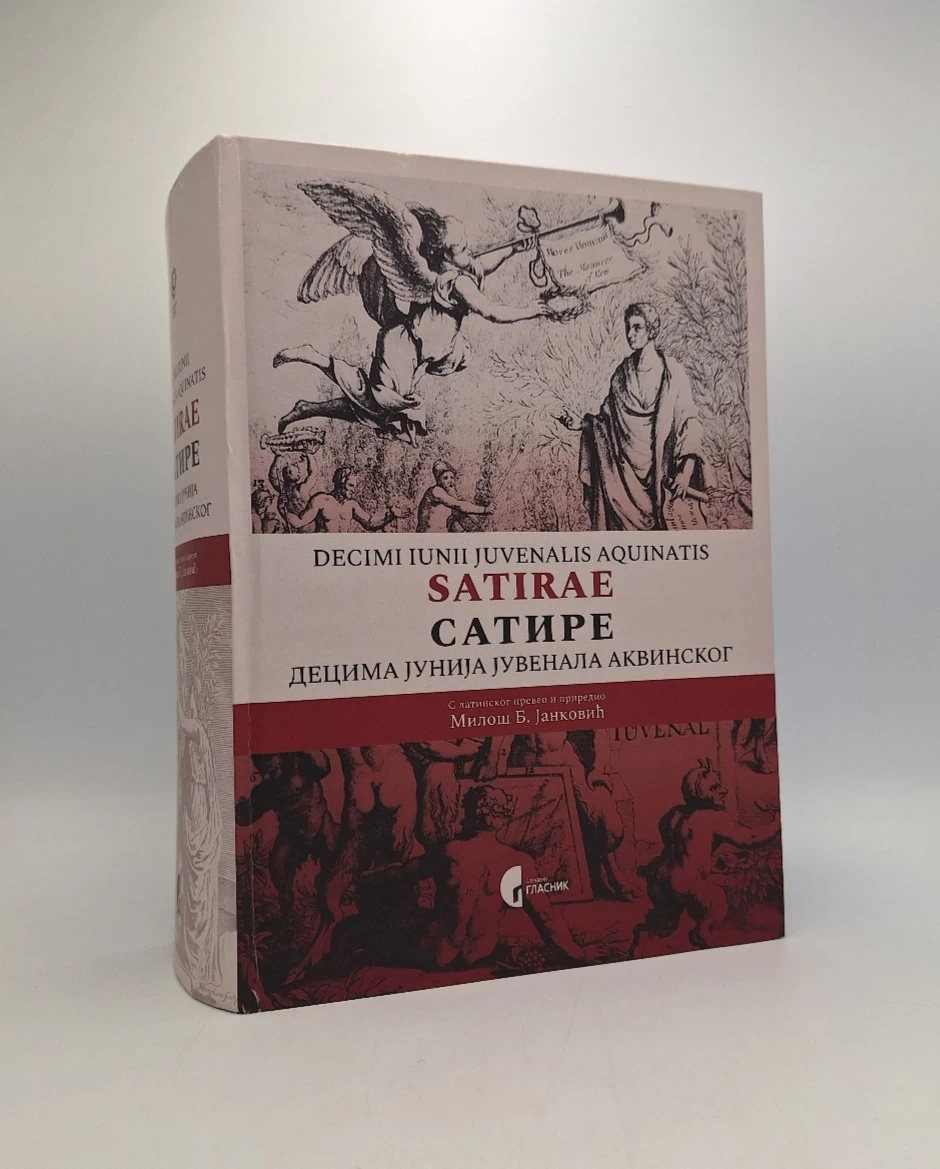
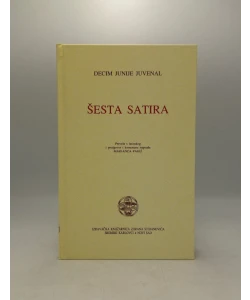
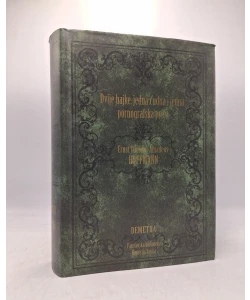
Decimi Iunii Juvenalis Aquinatis satirae / Satire Decima Junija Juvenala Akvinskog
Basic information
- Author: Juvenal Decim Junije
- Publisher: Službeni glasnik
- Availability: Available
- Condition: New book
- Code: 66801
Shipping options
Payment methods
Explore more
Decimi Iunii Juvenalis Aquinatis satirae / Satire Decima Junija Juvenala Akvinskog
Juvenal Decim Junije
Summary
Decimi Iunii Juvenalis Aquinatis satirae / Satire Decima Junius Juvenal Aquinas
In a literal translation with numerous explanations and notes
What Horace did for decorum and taste, Juvenal later did for morality and freedom. This is understandable when you consider that they are separated by a whole century and that Juvenal had to meet and fight with vices, human stupidity and tyranny that were unknown to Horace. While in Horace we notice his occasional sympathy for vice, Juvenal always shows only contempt for it. He does not play with human emotions like Horatio, does not agree to compromises and does not want to adapt to his corrupt environment. He does not like Horace's golden mean (aurea mediocritas), and therefore his ideal is often impractical, but it is an ideal that every honest man must admit is noble. However, throughout his work we feel that Juvenal does not deal with persons, but with vices. He is like an honest and diligent teacher who tries to eradicate bad traits in his students with words and a rod before they go into evil for which they will be punished by cruel whipping.
Juvenal like a sword rushes from palace to inn, from the Roman gates to the borders of the empire, always in search of the moral and political meaning of social events, and cuts without distinction anyone who deviates from the paths determined by nature and honor. This shows the realism of the censor stripping a person's clothes to reveal their secret markings and prepare them for whipping. His satires, stylistically unsurpassed (many agree that he surpassed the famous stylists Lucilius and Varro, and even Horace) are full of sharp humor that does not serve to make people laugh for the sake of laughing, but to point out the vice more strongly (which is best seen in the fourth satire, where some essentially comic scenes of Juvenal are processed in such a way as to leave a very bitter taste in the mouth of the reader). So if we assume that the poet really exaggerated in some places, it only serves him to better present to the reader one thing that is both true and very important. Exaggeration in such cases is not deception, but an attempt to make it almost impossible for the reader not to understand the essence of what the writer wants to say with hyperbole. Juvenal's constant desire is for the reader to unerringly distinguish good from evil, and leave no room for the scholastic philosophy of idlers and its sleights of hand and relativizations. After all, he is not a lyrical poet, but a serious satirist whose task is to point out the ugliness of vice by all means.
Additional information
- Author: Juvenal Decim Junije
- Publisher: Službeni glasnik
- Year of publication:2022
- Place of publication:Beograd
- Pages:1389
- Dimensions:18x24.5 cm
- Script:Cyrillic script
- Condition:New book
- Binding:Hardcover
Reviews
0 reviewsWrite a review
Share your experience and help other readers choose.
This item has no reviews yet. Be the first to share your experience.
More books by Juvenal Decim Junije
More books from Službeni glasnik









You may also like






Recently viewed