
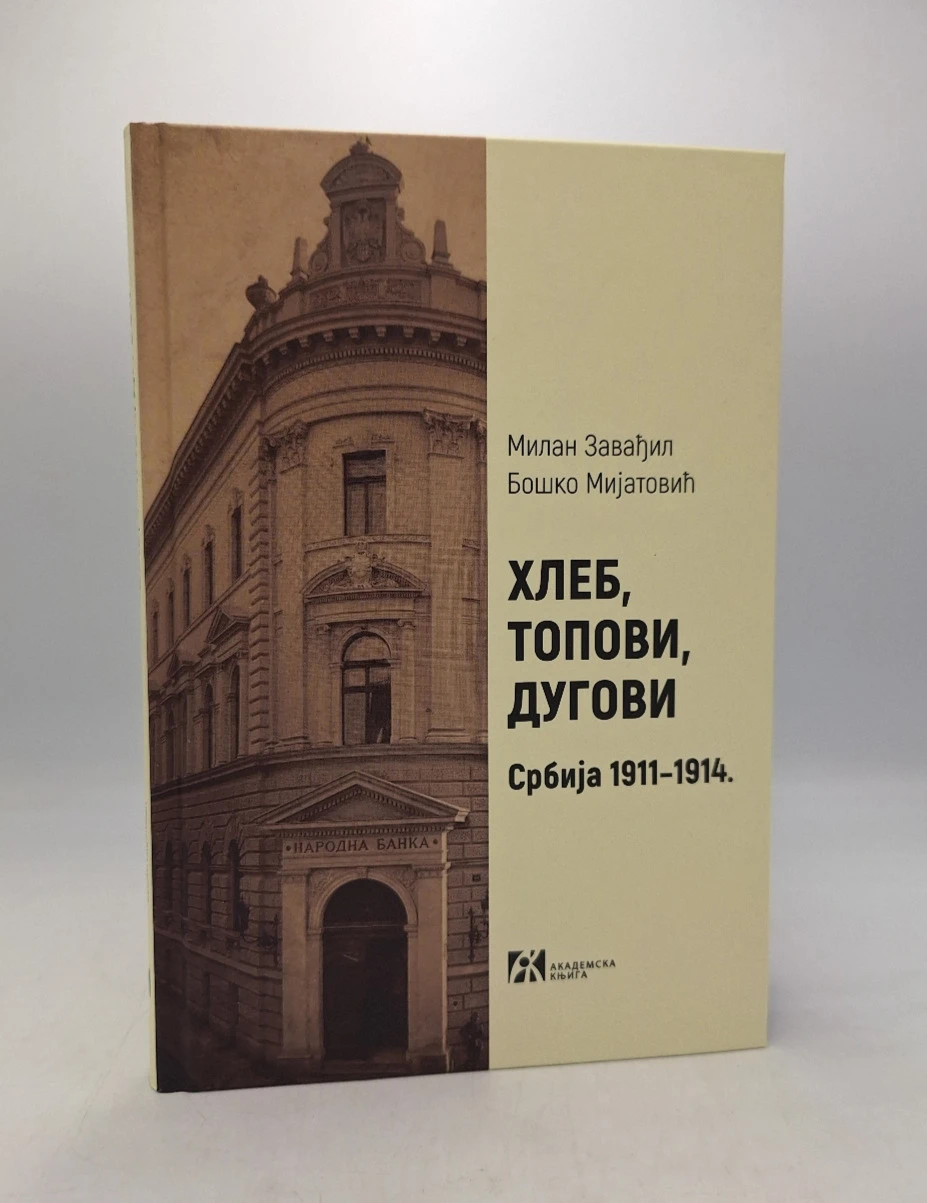
Hleb, topovi, dugovi: Srbija 1911-1914
Basic information
- Author: Mijatović Boško | Zavađil Milan
- Publisher: Akademska knjiga
- Availability: Available
- Condition: New book
- Code: 82123
Shipping options
Payment methods
Explore more
Hleb, topovi, dugovi: Srbija 1911-1914
Mijatović Boško | Zavađil Milan
Summary
Boško Mijatović, Milan Zavađil: Bread, guns, debts: Serbia 1911-1914
The book Bread, guns, debts tries to familiarize us more closely with the events before the First World War, primarily from the field of economic history, but also from neighboring social sciences. In that period, probably the most important event was the Balkan wars, which ended the dynamic growth of the Serbian economy from 1906 to the first half of 1912. Serbia came out of them heavily indebted, since, due to minimal domestic savings, it financed infrastructure, arms procurement and war expenses with external loans. The prospects for servicing those debts were questionable. Probably the most important economic event in the period 1911–1914. was the conclusion of a trade agreement between Serbia and Austria-Hungary in 1910, which entered into force in 1911. It ended the Customs War and normalized economic relations between the two countries, which led to a large increase in foreign trade and agricultural production. However, during the following years, foreign trade suffocated under the burden of war events, but also bad weather and inflation.
Additional information
- Author: Mijatović Boško | Zavađil Mila...
- Publisher: Akademska knjiga
- Year of publication:2025
- Place of publication:Novi Sad
- Pages:194
- Dimensions:15x21.5 cm
- Script:Cyrillic script
- Condition:New book
- Binding:Hardcover
Reviews
0 reviewsWrite a review
Share your experience and help other readers choose.
This item has no reviews yet. Be the first to share your experience.
More books from Akademska knjiga













You may also like