
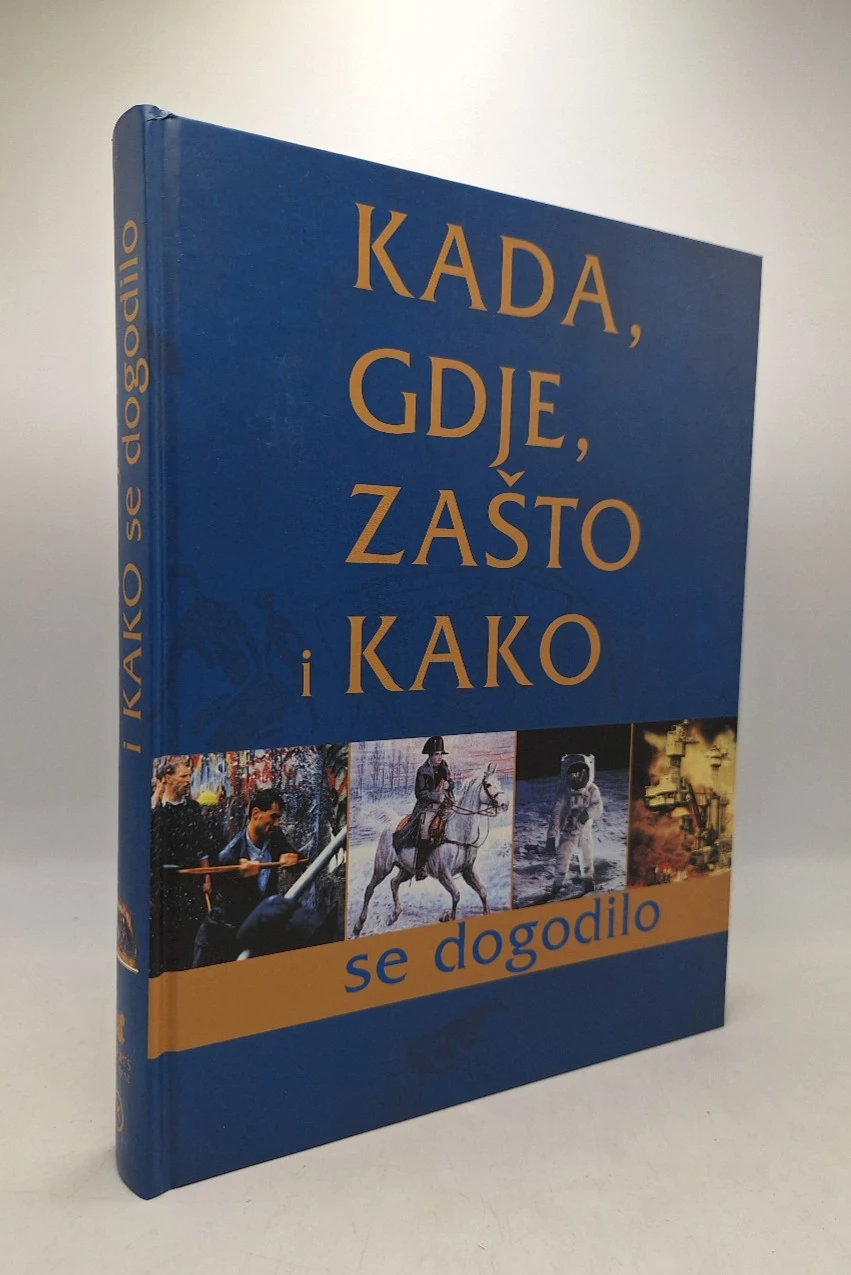
Kada, gdje, zašto i kako se dogodilo. Najdramatičniji povijesni događaji koji su promijenili svijet
€ 12,00
Free delivery in Croatia for orders over EUR 70
Basic information
- Author: Worth Davison Michael
- Publisher: Mozaik knjiga d.o.o.
- Availability: Available
- Condition: Excellent
- Code: 27444
Shipping options
BOXNOW shipping
Delivery time: 2-3 days
Dostava se vrši u odabrani BoxNow paketomat.
Free
GLS Croatia
Delivery time: 1-2 working days (RH)
Delivery is made via the GLS delivery service.
5,00 €
Delivery
Delivery time: 3-21 working days
We send the delivery price via email within 24 hours.
Price on request
Personal collection at the antique store
Palmotićeva 28, 10000 Zagreb
Free
GLS parcel machine
Delivery time: 1-2 working days
Delivery is made to the selected GLS package machine.
3,00 €
Payment methods
Pay on pickup
CorvusPay
By general payment / Virman / Internet banking
Apple Pay / Google Pay
Pay with Apple Pay or Google Pay on the secure CorvusPay page.
Cash on delivery
Explore more
Kada, gdje, zašto i kako se dogodilo. Najdramatičniji povijesni događaji koji su promijenili svijet
Worth Davison Michael
Summary
Michael Worth Davison: When, Where, Why and How It Happened. The most dramatic historical events that changed the world
The phrase "When, where, why and how it happened" is the title of a popular historical encyclopedia that dissects the key moments of civilization. These groundbreaking events permanently reshaped the geopolitical map, technology and society.
These are some of the most dramatic historical events that changed the world:
1. Invention of Gutenberg's Printing Press
- When: Around 1440
- Where: Mainz, Germany
- Why: Duplicating books by hand copying was too slow and expensive, keeping knowledge confined within church and noble circles.
- How: Johannes Gutenberg developed the method of movable metal letters and the press. This enabled the mass production of books, encouraged literacy and enabled the faster spread of ideas (such as the Reformation and the Renaissance).
2. Discovery of America
- When: October 12, 1492
- Where: Caribbean Islands (Bahamas)
- Why: European powers were looking for new, faster trade routes to Asia to avoid Ottoman taxes.
- How: An expedition led by Christopher Columbus, financed by the Spanish crown, mistakenly stumbled upon a new continent. This started globalization, colonization and permanent exchange of goods, people and diseases between the two hemispheres.
3. French Revolution
- When: 1789 - 1799
- Where: Paris, France
- Why: State bankruptcy, huge taxes, hunger and social inequality caused the anger of the third estate (citizens and peasants) towards the absolutist monarchy.
- How: With the demolition of the symbol of tyranny (Bastille) and the adoption of the Declaration of the Rights of Man and Citizen, the feudal system was abolished, and the ideals of freedom, equality and fraternity ("Liberté, égalité, fraternité") became the foundations of modern democracies.
4. The beginning of the First World War
- When: July 28, 1914
- Where: Sarajevo, Bosnia and Herzegovina
- Why: Growing nationalism, imperialism and intertwined secret alliances of the European powers led to an extremely tense situation.
- How: The assassination of Archduke Franz Ferdinand by Gavrilo Princip activated the system of alliances. The conflict escalated into a global war that brought down four great empires (Russia, Germany, Austria-Hungary and Ottoman) and prepared the ground for modern conflicts.
5. Dropping the atomic bomb on Hiroshima
- When: August 6, 1945
- Where: Hiroshima, Japan
- Why: To force Japan into unconditional capitulation and avoid a land invasion that would have claimed millions of lives at the end of World War II.
- How: The American bomber "Enola Gay" dropped the first nuclear bomb used in the war ("Little Boy"). The event instantly claimed tens of thousands of lives, ended the war in the Pacific, and ushered humanity into the nuclear age and the Cold War.
Additional information
- Author: Worth Davison Michael
- Publisher: Mozaik knjiga d.o.o.
- Year of publication:2005
- Place of publication:Zagreb
- Pages:448
- Dimensions:22x28 cm
- Script:Latin script
- Condition:Excellent
- Binding:Hardcover
Reviews
0 reviewsWrite a review
Share your experience and help other readers choose.
This item has no reviews yet. Be the first to share your experience.
More books by Worth Davison Michael

More books from Mozaik knjiga d.o.o.












You may also like