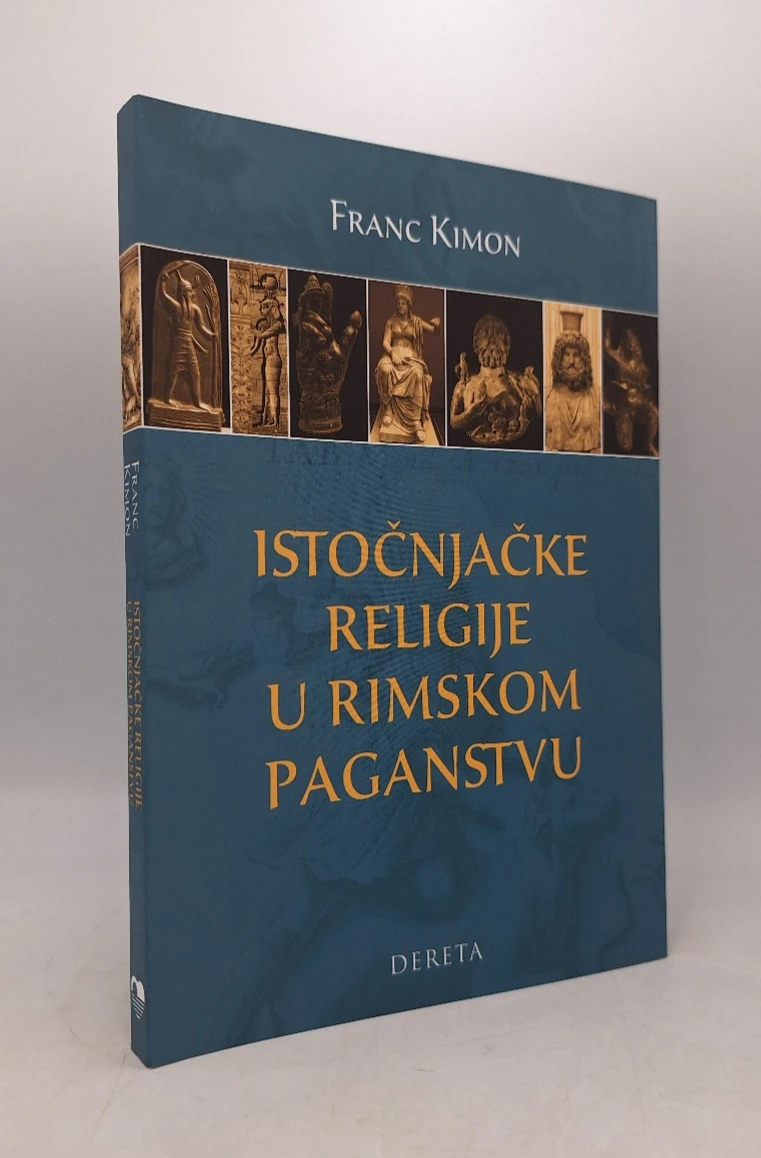


Istočnjačke religije u rimskom paganstvu
€ 13,00
Free delivery in Croatia for orders over EUR 70
Basic information
- Author: Cumont Franz
- Publisher: Dereta
- ISBN: 9788664576079
- Availability: Available
- Condition: New book
- Code: 84611
Shipping options
GLS Croatia
Delivery time: 1-2 working days (RH)
Delivery is made via the GLS delivery service.
5,00 €
Delivery
Delivery time: 3-21 working days
We send the delivery price via email within 24 hours.
Price on request
Personal collection at the antique store
Palmotićeva 28, 10000 Zagreb
Free
GLS parcel machine
Delivery time: 1-2 working days
Delivery is made to the selected GLS package machine.
3,00 €
Payment methods
Pay on pickup
CorvusPay
By general payment / Virman / Internet banking
Cash on delivery
Explore more
Istočnjačke religije u rimskom paganstvu
Cumont Franz
Summary
Franz Cumont: Eastern religions in Roman paganism
In the second century after Christ, the influence of Eastern cults - Egyptian, Semitic and Iranian - grew in the Latin provinces of the Roman Empire. The mysteries of Isis, Serapis, Cybele and Attis, the Syrian Baals, Sabazis and Mithras supplanted the gods of the Greco-Roman pantheon, submerging the rites and concepts of the strict Roman "civil" religious system in an emotional and lavish flood of ceremonial and initiation rites imbued with fantastic mythological content. What reasons led to this spiritual upheaval and what circumstances enabled such a change, the outcome of which was the triumph of Christianity? This question, of crucial importance for the history of religions and for the precise determination of the origins of Western civilization, is at the center of this now classic work by Franz Cumont.
Cumont shows the considerable influence of the East on Rome in various areas, especially in the sphere of religion, through the spread of cults originating from Asia Minor, Syria, Egypt and Persia. According to his opinion, they brought a new spirituality that transformed the old Roman public religion into a kind of henotheism, paving the way for Christianity along paths intertwined with magic: the mystical currents of Platonism, riddles about destiny and the solitary figure of the "unknown" God of the Jews and Christians.
Additional information
- Author: Cumont Franz
- Publisher: Dereta
- Year of publication:2026
- Place of publication:Beograd
- Pages:219
- Dimensions:14x25 cm
- Script:Latin script
- Condition:New book
- Binding:Softcover
Reviews
0 reviewsWrite a review
Share your experience and help other readers choose.
This item has no reviews yet. Be the first to share your experience.
More books by Cumont Franz
More books from Dereta















You may also like










Recently viewed

Biblos Newsletter
For book lovers who enjoy finding the rare
New titles, special copies and quiet recommendations from the antiquarian bookshop.