
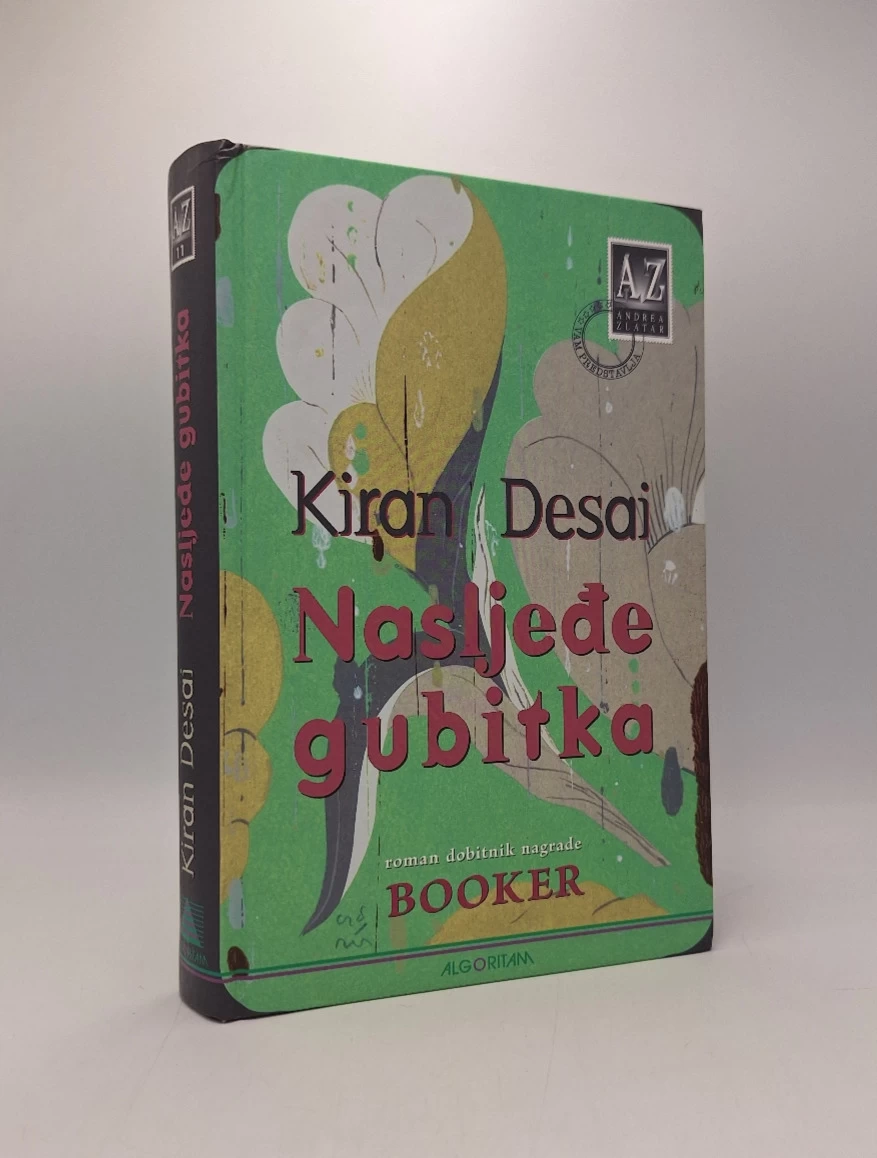
Nasljeđe gubitka
Basic information
- Author: Desai Kiran
- Publisher: Algoritam
- Availability: Available
- Condition: Excellent
- Code: 54446
Shipping options
Payment methods
Explore more
Nasljeđe gubitka
Desai Kiran
Summary
Kiran Desai: Legacy of Loss
From the first sentence of the novel «Legacy of Loss», Kiran Desai introduces us to the world of remote space shrouded in fog, to the neglected and damp house of the old judge Jemubhai, located at the northeastern foot of Mount Kanchenjunga. Although at the beginning it seems like a place of refuge and safety that could be anywhere in the world so isolated, over the course of the novel it becomes a place of insecurity, fear and random violence. The judge's house and those who live in it (the judge, his granddaughter Sai, the cook and the dog Mutt) will lose the privilege of living outside of time and history: and into that space that is still "behind God's feet", forgotten by everyone, modernity enters with its events.
And modernity in this case means uprising, war, robberies and murders, interrupted communications and supplies, destroyed roads and bridges. Although the novel is set in the middle of the eighties of the last century and that historical part is based on the Nepalese struggle for independence, in "Legacy of Loss" one can recognize the indelible sequence of history that constantly repeats the same matrix of conflict and hatred: not as a logical sequence of cause and effect, with clear motives and purpose, but as a random series of catastrophic events that emerge against the background of old conflicts and hatred.
For the novel "Legacy of Loss" Kiran Desai received In 2006, the prestigious 'Booker' prize. The president of the jury, Hermione Lee, a distinguished literary historian and theorist, author of an exceptional biography of Virginia Woolf, did not hide her enthusiasm for Kiran Desai's writing talent.
Additional information
- Author: Desai Kiran
- Publisher: Algoritam
- Year of publication:2008
- Place of publication:Zagreb
- Pages:367
- Dimensions:16x24 cm
- Script:Latin script
- Condition:Excellent
- Binding:Hardcover
Reviews
0 reviewsWrite a review
Share your experience and help other readers choose.
This item has no reviews yet. Be the first to share your experience.
More books by Desai Kiran

More books from Algoritam














You may also like