
Summary
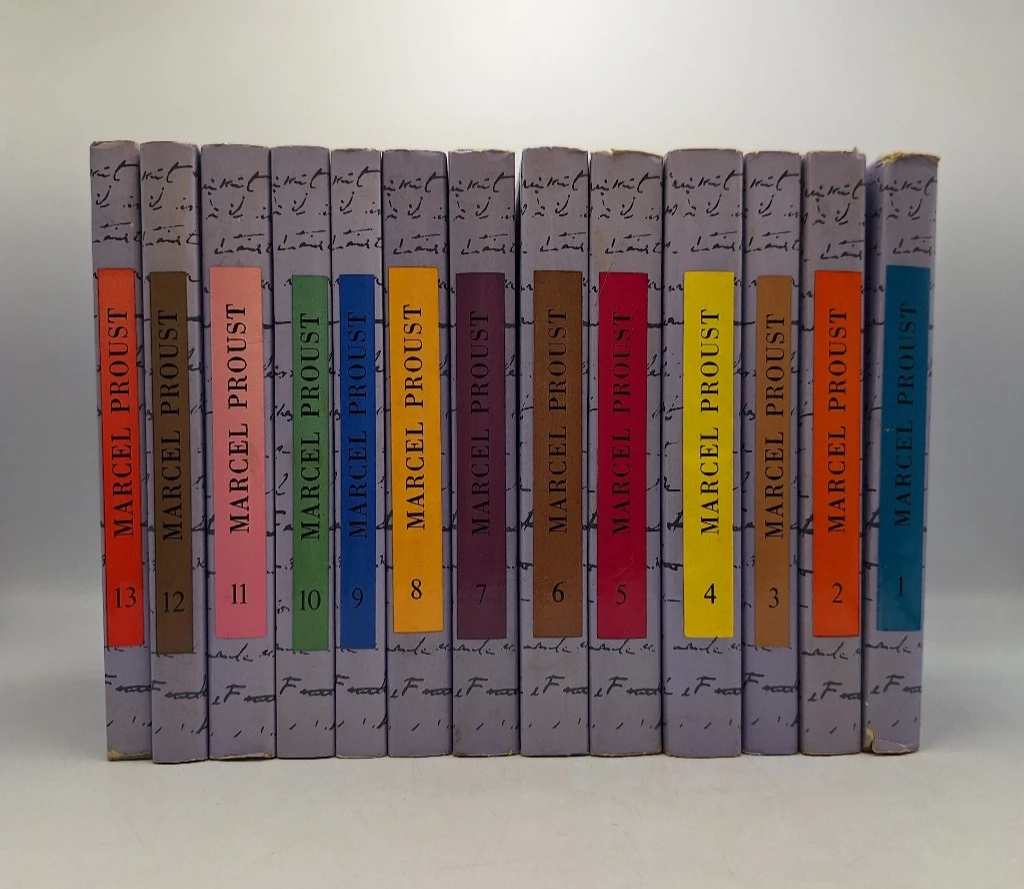
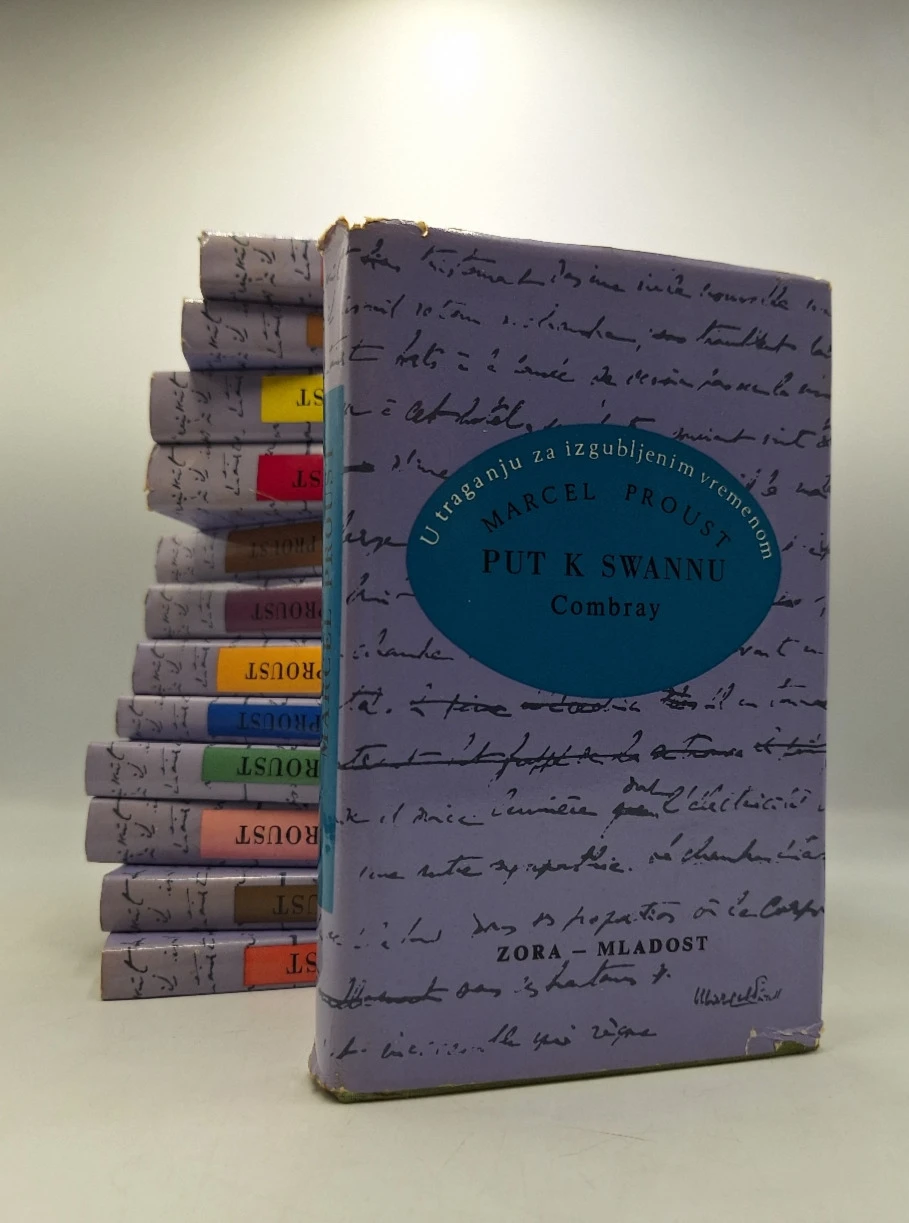
Marcel Proust: In Search of Lost Time I-XIII
Illustrated by Edo Murtić
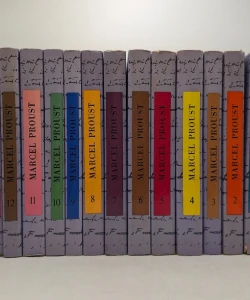
Complete set in 13 volumes of Marcel Proust, In Search of Lost Time, contains:
Valentin Louis Georges Eugene Marcel Proust, (Paris, July 10, 1871 - Paris, November 18, 1922), French novelist. Proust's major themes are the corrosion of being over time, jealousy and love, corporeality and the determination of the psyche by the body, the impermanence of interpersonal relationships and the unknowability of reality, the problematic nature of identity and selfhood, snobbery and political culture and diplomacy on the eve of the First World War. It is considered that time is the main hero of that novel, but it is not interesting to Proust as a philosophical abstraction (eg in St. Augustine) but as a medium and the cause of all metamorphoses; it leads to a change in identity, human communication, and to the loss of the very meaning of life. Under the influence of the French philosopher Henri Bergson, the writer finds a way out of the apparent barrenness and transience of life in the discovery of the fact that the subconscious stores all impressions, so apparently lost time is stored and available in the unconscious segment of being. It is not dead forever, but can be called to the level of consciousness and expression by involuntary, sensory memory of the body, which remembers not only events but also past urges and emotions. The dual point of view of the narration consists of the inexperienced emotions of the main character and the intelligence of the mature narrator seamlessly alternating behind the first person wistful and often crudely humorous soliloquies and sarcastic comments. But the difference between them is not only in experience, but also in the fact that the narrator is aware of his mission and the meaning of life, which he reveals in writing: his failure in life never calls into question the value of life. The message of the poet and modern existential metaphysician Proust affirms life - although not by saying: life does not exist to one day be a picture or a book; it is in itself the greatest art, a kind of masterpiece. As in most of the novel, ambiguity is present: the narrator's consciousness, never fixed, evolves in time as an entity; at the same time, the author often explicitly denies any continuity of self-awareness and identity apart from being rooted in the body (which has led many to proclaim the writer's spiritual kinship with oriental, Hindu-Buddhist metaphysics that denies the Western tradition of the unity of personality); the message of the work is clear, that the purpose of the Search is actually the narrator's spiritual salvation and, in a way, the realization of Walter Pater's aestheticism and the symbolism of the end of the 19th century; but, on the other hand, Proust's work establishes the magic of life independent of the writer's apology of artistic vocation to his private obsession, which for the modern reader seems anachronistic and marginal, while his focus on analysis has caused a lot of critical comments that can be reduced to two points: Proust kills life by hyperanalyzing, and the spiritual dimension of existence remains largely hidden for him due to his comprehensive immersion in time-limited experiences.
Biblos Newsletter
New titles, special copies and quiet recommendations from the antiquarian bookshop.