
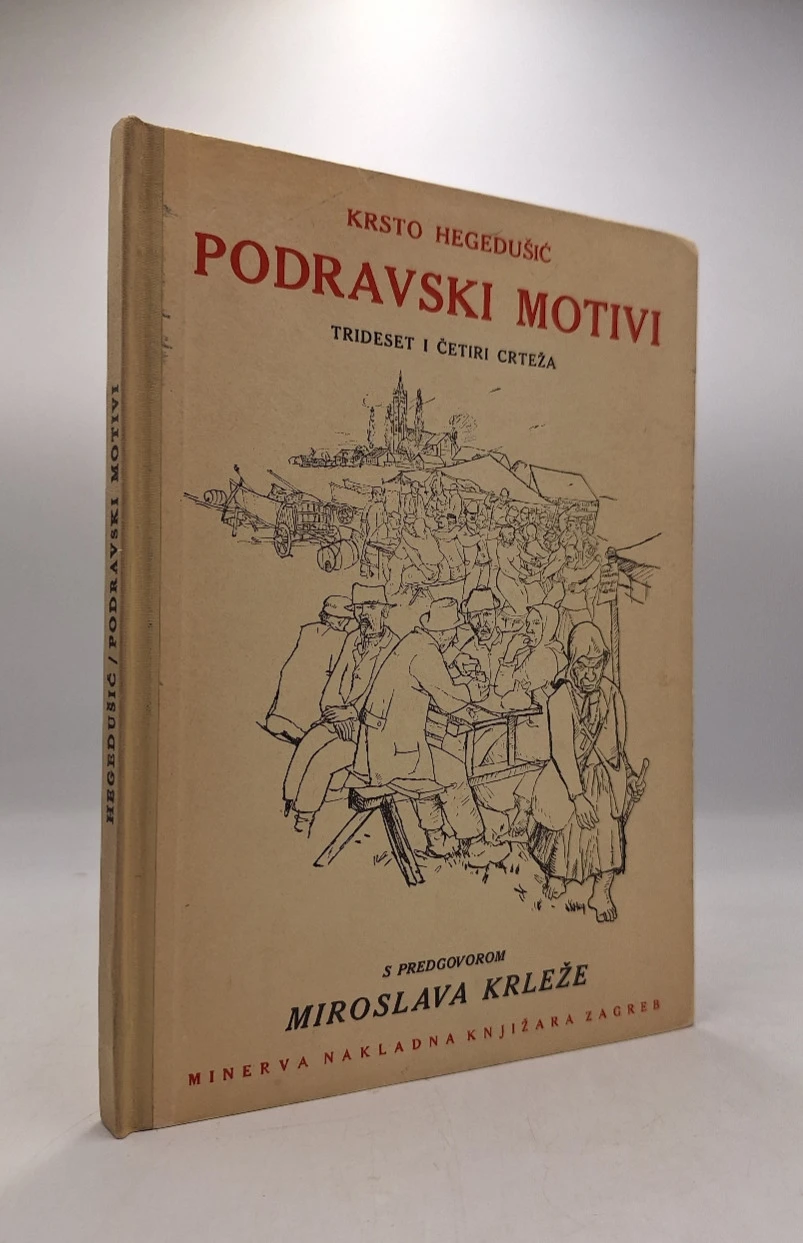
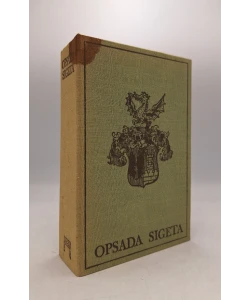
Podravski motivi
Basic information
- Author: Hegedušić Krsto
- Publisher: Liber
- Availability: Available
- Condition: Very good
- Code: 18764
Shipping options
Payment methods
Explore more
Podravski motivi
Hegedušić Krsto
Summary
Krsto Hegedušić: Podravski motives
Reprint of the first edition from 1933
34 drawings
with a foreword by Miroslav Krleža - an essay on art that begins the so-called Conflict on the literary left
In 1933, Miroslav Krleža publishes the Preface to Podravine motifs by Krsto Hegedušić - an essay on art that begins the so-called Conflict on the literary left - Krleža opposes the opinion that artistic creation must be a reflection of social moments
Podravine motifs by Krsto Hegedušić - a collection of drawings published in 1933 in Zagreb - proved to be one of the turning points in Croatian art of the interwar period. Their importance is recognized on two fundamental levels. First, about thirty of Hegedušić's drawings can be interpreted in the context of the basic characteristics of the Association of Artists Zemlja, as an explicit statement of the author's design efforts, but also content inclinations. On the other hand, the Podravska motifs have special importance due to the complex ideological battle that accompanied them. Namely, Miroslav Krleža's Preface to Podravski motivim - in the words of Stanko Lasić, his most important interpreter - "is the basic text of the entire conflict on the literary left". In this sense, the drawings themselves gained additional weight not long after publication, so they were viewed in terms of meaning first of all in the fundamental context of the introductory text: in the light of advocacy for socially engaged but independent art, for a work of art as a product of individual creative impulses, and against its comprehensive ideologisation. Nevertheless, the critical observation of the drawings themselves, as well as their prefaces, cannot be limited exclusively to the spectrum of meanings associated with the famous conflict on the left. Namely, in the Preface, Krlež also discusses many problems that he recognizes as crucial for determining the characteristics of Croatian cultural identity at the beginning of the fourth decade. Thus, certain parts of the text can be interpreted through the prism of the relationship between national identity and artistic creativity, as one of the fundamental problems that the leading members of the Association of Artists Zemlja, as well as other protagonists of Croatian art, tried to articulate. In this sense, special attention is paid to Hegedušić's role in the process of articulating the idea of an independent, national artistic expression, and the significance of Podravine motifs in connecting ideological positions with left-wing political signs and national categories is highlighted, which gives this idea a specific feature among related phenomena in the Central European cultural space.
Additional information
- Author: Hegedušić Krsto
- Publisher: Liber
- Year of publication:1971
- Place of publication:Zagreb
- Pages:72
- Dimensions:18x24.5 cm
- Script:Latin script
- Condition:Very good
- Binding:Hardcover
Reviews
0 reviewsWrite a review
Share your experience and help other readers choose.
This item has no reviews yet. Be the first to share your experience.
More books from Liber




You may also like