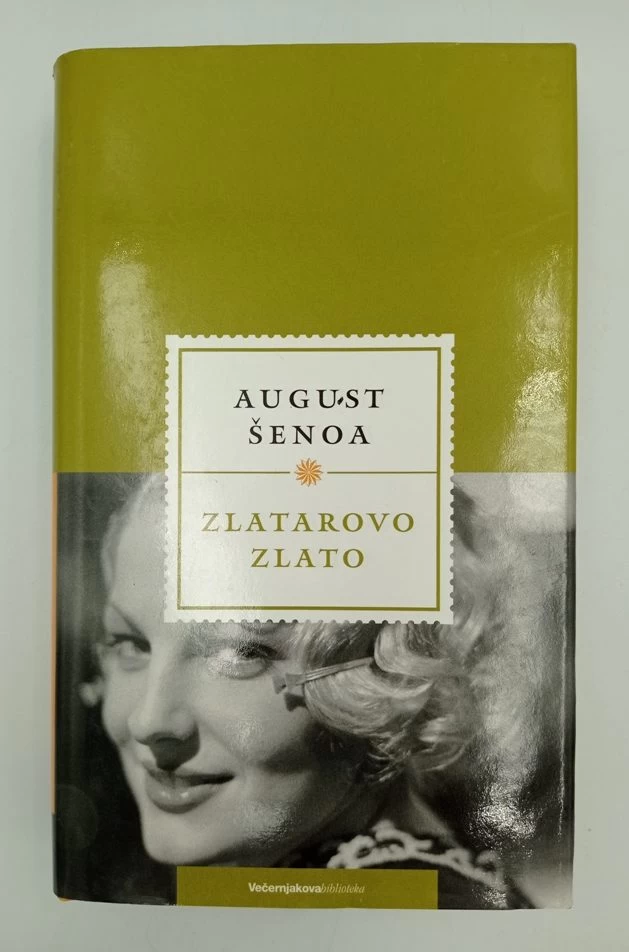

Šenoa August: Zlatarovo zlato
€ 4,00
Free delivery in Croatia for orders over EUR 70
Basic information
- Author: Šenoa August
- Publisher: Večernji list
- Availability: Available
- Condition: Odlično
- Code: 26925
Shipping options
GLS Croatia
5€
Delivery
0€
Personal collection at the antique store
0€
GLS parcel machine
3€
Payment methods
Pay on pickup
CorvusPay
By general payment / Virman / Internet banking
Cash on delivery
Zlatarovo zlato
Šenoa August
Summary
August Šenoa: Goldsmith's Gold
Goldsmith's Gold was written by August Šenoa, probably the most influential figure in Croatian literature of the nineteenth century. The novel was written in 1871 and was published in sequels in the magazine Vienac that same year. It is often said that this novel is actually the first Croatian historical novel, and according to Šeno, an entire period in Croatian literature was named after it. It is about Šeno's age or proto-realism, which begins approximately with the abolition of Bach's absolutism in 1860 and lasts until Šeno's death in 1881. The novel is made up of two plots, a love story and a historical one, which is why it is often called a historical novel. The love fable is based on the relationship between Pavle and Dora, a young couple who, among other things, encounter many obstacles in realizing their relationship due to their class difference. Namely, Pavao is of noble origin, while Dora Krupić is of bourgeois origin. The historical plot is inspired by historical sources concerning Zagreb in the 16th century and the struggle of the citizens of Zagreb with the nobles, i.e. their conflict with Stjep Gregorijanec, the lord of Medvedgrad. The story is set in the 16th century, during the reign of Max II. , and the banning of Bishop Đura Drašković and after him Krsto Ungnad. In the preface entitled "Štiocu", Šenoa informs his readers that he found the main theme for his novel in the archives of the city of Zagreb, and it is about the conflict between the Gregorian subban and the citizens of Zagreb. After that, he collected various historical documents and sought information from various sources about old Zagreb and the Croats of that time, which greatly helped him to write this novel. We can see that the theme of class stratification is present in both fables of this novel. Šenoa describes the decaying nobility and the bourgeoisie whose power is slowly growing, but in the love relationship between Dora and Pavle this difference is the biggest problem. It is also interesting how, by combining these two actions, Šenoa combines the public and private spheres. He portrays many characters as historical and public figures, but on the other hand, he also portrays their intimate sphere, family relationships, love needs, problems, etc. The novel mixes romantic, naturalistic and realistic elements, and the characters are shaped flatly with black and white characterization, which means that they do not change throughout the novel, but remain the same throughout the entire plot as bearers of exclusively good or exclusively bad traits. The stylistic characteristics of romanticism can best be recognized in the love layer of the novel, and realistic actions are also numerous, for example, the omniscient narrator who tries to objectively narrate events. The novel contains many features of a trivial adventure novel (plots, kidnappings, disguises, poisoning, the character of a femme fatale, etc.). Although it is so, many characters and events are based on real historical persons and historical events that Šenoa came to by studying the archives of the city of Zagreb. Šenoa tries to portray the speech of the citizens of that time as authentically as possible, he uses the Štokavian standard in which he introduces numerous Latinisms to describe the speech of the clergy and educated people of that time. The national and patriotic note is expressed in almost all of Šenoa's texts, so this novel is no exception, which is not surprising considering the pressing issue of national survival at the time when Šenoa was writing. Šenoa introduces the topic by describing the events of the 16th century, the political struggle against foreign influences and the real, physical struggle against the Turks that was still ongoing at the end of the 16th century.
Additional information
- Author: Šenoa August
- Publisher: Večernji list
- Year of publication:2004
- Place of publication:Zagreb
- Pages:335
- Dimensions:13x21 cm
- Script:Latinica
- Condition:Odlično
- Binding:Tvrdi s ovitkom
You may also like






Recently viewed





Biblos Newsletter
For book lovers who enjoy finding the rare
New titles, special copies and quiet recommendations from the antiquarian bookshop.