
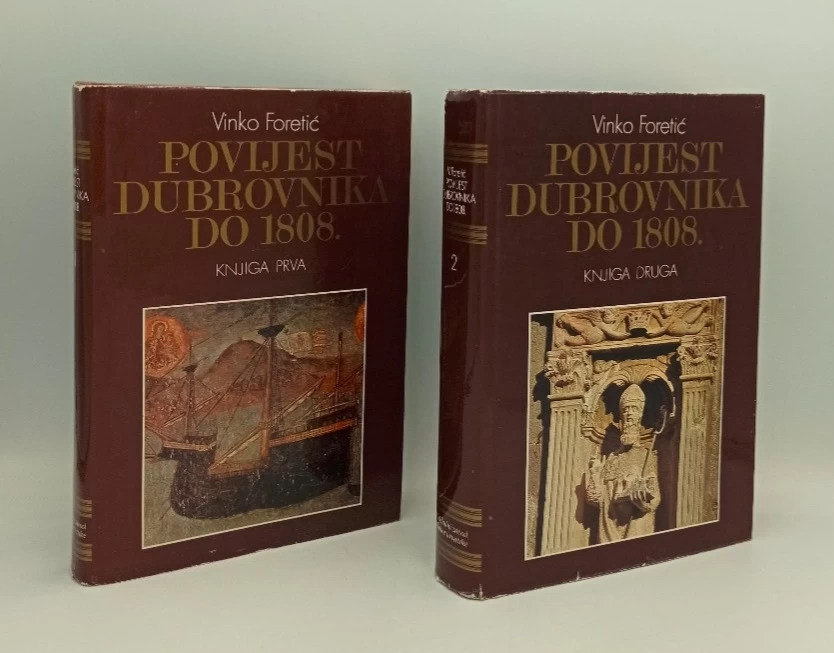

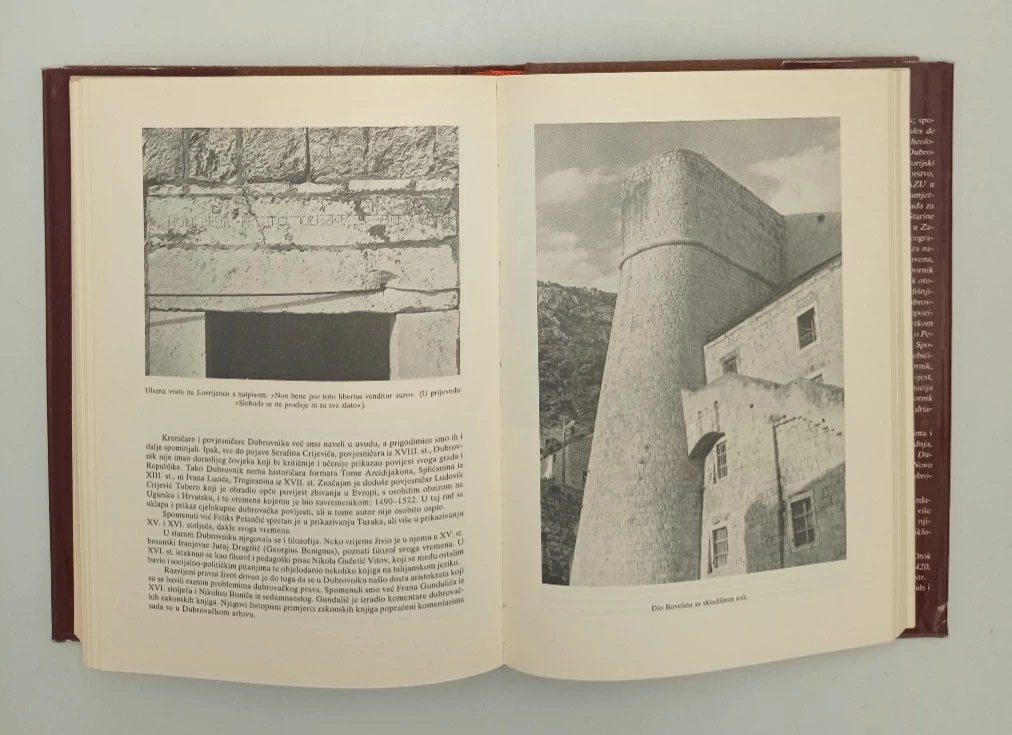
Povijest Dubrovnika do 1808. I-II
Basic information
- Author: Foretić Vinko
- Publisher: Nakladni zavod Matice hrvatske
- Availability: Available
- Condition: Very good
- Code: 47474
Shipping options
Payment methods
Explore more
Povijest Dubrovnika do 1808. I-II
Foretić Vinko
Summary
Vinko Foretić: History of Dubrovnik until 1808 I-II
At the end of his life, Foretić published his capital work, a two-volume synthesis of Dubrovnik history, History of Dubrovnik until 1808 (1980). In these books, Foretic's life's work on Dubrovnik history is summarized and synthesized. Knowledge of vast literature, scientific experience and decades of work on original material enabled the author to systematically present the history of Dubrovnik from the early Middle Ages to the fall of the Republic in 1808 for a wider circle of readers as well as for a scientific audience. All the aforementioned scientific qualities adorn Foretić's work as well. The first book covers the period up to 1526 and chronologically follows the process of the origin and development of the Dubrovnik commune, first under Byzantine and short-lived Norman sovereignty, and then under the supreme Venetian rule. The gradual process of Dubrovnik's independence and the growth of the commune into a Republic, which was marked by diplomatic successes, and sometimes by conflicts and real wars that the people of Dubrovnik waged with neighboring rulers in the hinterland, is detailed. In doing so, Foretić examines the internal and external aspects of Dubrovnik's political relations, arguing his judgments and confronting different points of view on controversial issues. Although the period of the initial Ottoman conquests is covered in the first book, a significant part of the second book is devoted to a detailed analysis of Dubrovnik-Ottoman relations, which begins with the events after the defeat of Mohacs in 1526. In that volume, the changing relations of the Republic with the European powers, primarily the Spanish and Austrian Habsburgs, and with the English, French and Russian courts are discussed. Foretić's analysis of the thorny path of Dubrovnik's politics, especially during the struggle for the Republic's survival after the great cherry tree in 1667, sheds the right light on the too often idealized and schematized representations of Dubrovnik's historical reality.
Although the backbone of Foretić's presentation is the political development of Dubrovnik and the process of the international rise of the Republic, which, thanks to its geopolitical position, became an important economic point of civilizational contact between East and West, the History of Dubrovnik covers all important aspects of Dubrovnik history, from social movements to economy and cultural heritage. The most comprehensive chapter in the second book is entitled General View of Culture and belongs to the most instructive accounts of its kind.
Foretić's History of Dubrovnik until 1808 remains a basic book and primer for anyone who wants to get to know Dubrovnik's past.
Additional information
- Author: Foretić Vinko
- Publisher: Nakladni zavod Matice hrvatske...
- Year of publication:1980
- Place of publication:Zagreb
- Pages:364 512
- Dimensions:17x24 cm
- Script:Latin script
- Condition:Very good
- Binding:Hardcover with dust jacket
Reviews
0 reviewsWrite a review
Share your experience and help other readers choose.
This item has no reviews yet. Be the first to share your experience.
More books by Foretić Vinko

More books from Nakladni zavod Matice hrvatske















You may also like