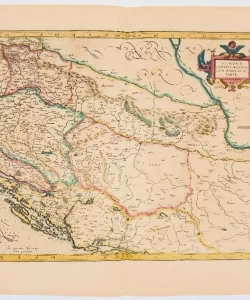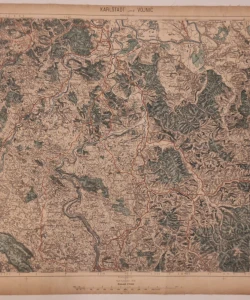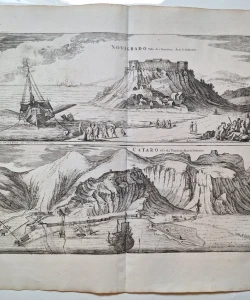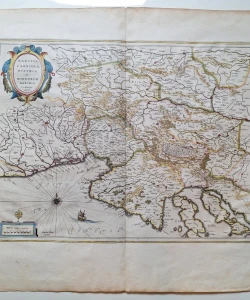

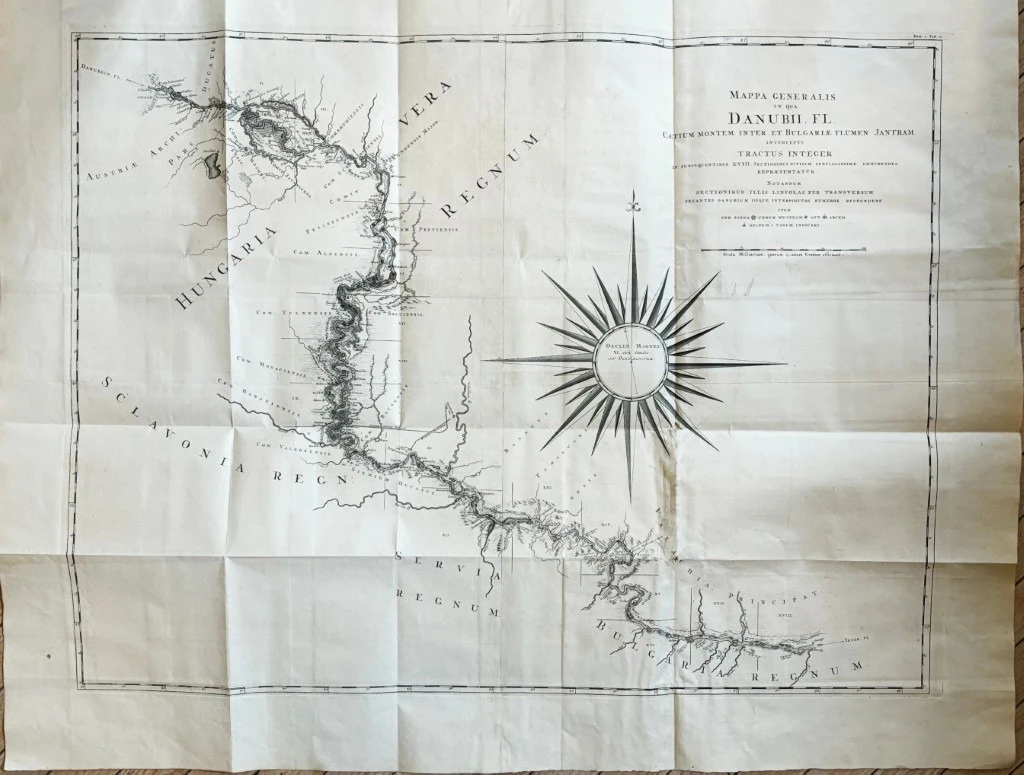
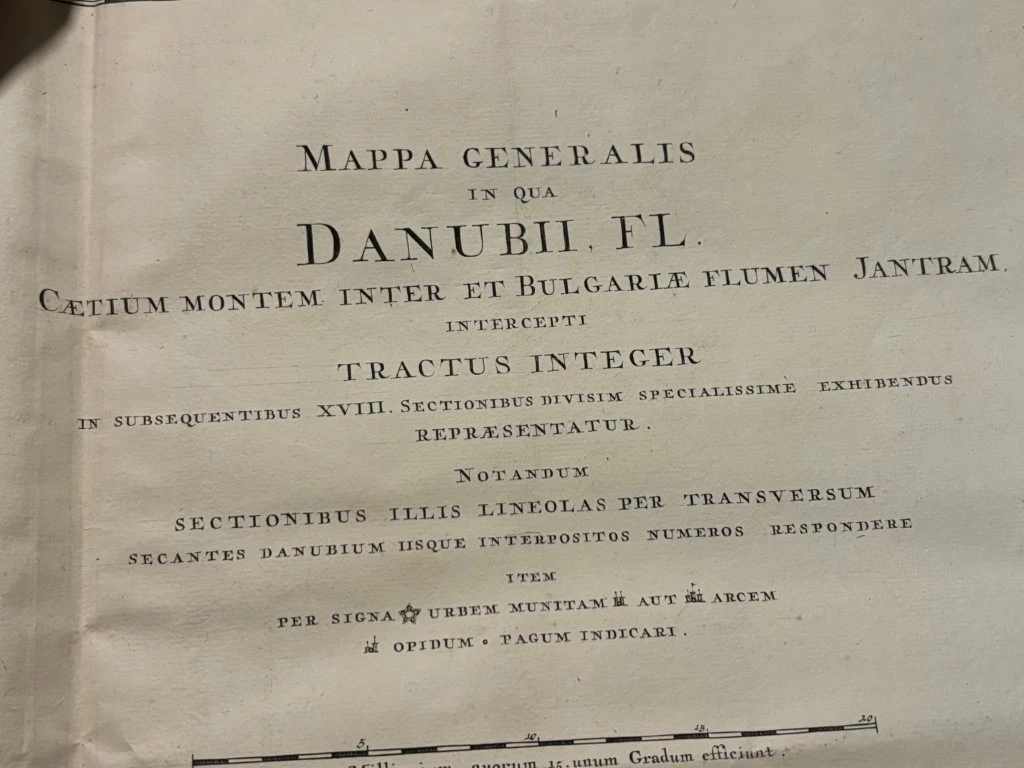
Mappa generalis in qua Danubii fl. Caetium montem inter et Bulgariae flumen Jantram intercepti tractus integer in subsequentibus XVIII sectionibus divisim specialissime exhibendus repraesenta
Basic information
- Author: Marsigli Luigi Ferdinando
- Publisher: -
- Availability: Available
- Condition: Very good
- Code: 83363
Shipping options
Payment methods
Explore more
Mappa generalis in qua Danubii fl. Caetium montem inter et Bulgariae flumen Jantram intercepti tractus integer in subsequentibus XVIII sectionibus divisim specialissime exhibendus repraesenta
Marsigli Luigi Ferdinando
Summary
Luigi Ferdinando Marsigli: Mappa generalis in qua Danubii fl. Caetium montem inter et Bulgariae flumen Jantram intercepti tractus integer in subsequentibus XVIII sectionibus divisim specialissime exhibendus repraesentatur, notandum sectionibus illis lineolas per transversum secantes Danubium iisque interpositos numeros respondere item per signa urbem munitam aut arcem, opidum, pagum indicari
Luigi Ferdinando Marsigli, (Bologna, July 10, 1658 - Bologna, November 1 1730), geographer, naturalist, polymath, general, diplomat.
He studied privately in Bologna, Padua and Rome. Due to circumstances, he began to study the literature related to the Ottoman Empire, which in 1679 led him to join the entourage of the Venetian envoy Pietro Civrani and travel with him to Constantinople.
In Constantinople, he began long-term scientific research related to the Balkans and the Ottoman Empire. He served in the Venetian army, and had a more significant role in the Austrian army. He was a diplomat and general in the service of the Habsburgs in the period 1681–1704. In 1699, peace was concluded in Srijemski Karlovci between the Republic of Venice, the Habsburg Monarchy and the Omani Empire. The peace treaty marked the end of the war that began in 1683, and was the fundamental act from which demarcation would begin. When peace was concluded, it was agreed that the new border line would be determined on the ground and that it would be determined on maps that would be specially created for this purpose. The Ottoman commission for delimitation was led by Ibrahim-effendi, the capitul of the Ottoman Empire. On the Austrian side, the chairman of the commission for delimitation was Count Ferdinando Luigi Marsigli. Imperial chief engineer and colonel Johann Friedrich Hollstein worked on the demarcation with Marsigli, who, in addition to writing a diary, made some topographical sketches and geographical maps, and topographer and cartographer Johann Cristoph Müller. Personally or in co-authorship, J. C. Müller created the largest part of the cartographic material related to the Peace of Karlovac. Pavao Ritter Vitezović also participated in the work of that committee. As part of the mapping of the area around the border established by the Peace of Karlovac, it is sometimes difficult to attribute the authorship of the map to just one person with certainty. Therefore, in the literature, instead of the name and surname of the author of a particular map, one can find, for example, the following saying: "Made by the Peaceful Demarcation Commission in Srijemski Karlovci in 1699 under the leadership of Count Ferdinand Luigi Marsigli" (Peić Čaldarović 1999).
As president (1699 – 1701) of the commission for demarcation with the Ottoman Empire, Marsigli, in collaboration with P. R. Vitezović collected rich original material for the history of the Danube countries. Vitezović helped him with the collection of historical data, genealogy, books and documents about Croatia and Slavonia. The line of demarcation established by the Peace of Belgrade is named after him. Marsiglio's comprehensive work on the Danube, Danubius Pannonico-Mysicus, was published in 6 volumes in Latin in The Hague and Amsterdam in 1726. It is a work full of interesting maps and plans of Croatian cities, and all this material originates from the time of Marsigli's stay and work in Croatian regions.
Additional information
- Author: Marsigli Luigi Ferdinando
- Publisher: -
- Year of publication:1726
- Place of publication:Amsterdam
- Dimensions:108x83 cm
- Condition:Very good
Reviews
0 reviewsWrite a review
Share your experience and help other readers choose.
This item has no reviews yet. Be the first to share your experience.
You may also like