

Slika/pokret/transformacija pokretne slike u umetnosti
Basic information
- Author: Čekić Jovan
- Publisher: Fakultet za medije i komunikacije
- Availability: Available
- Condition: New book
- Code: 58816
Shipping options
Payment methods
Explore more
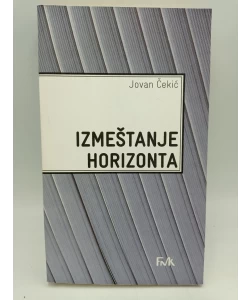
Slika/pokret/transformacija pokretne slike u umetnosti
Čekić Jovan
Summary
Image/movement/transformation of the moving image in art
Moving images marked the 20th century. Between film, television, art and technology, documents and science ... They are in a constant process of transformation. At the same time, this makes them open to experimentation. Why are moving images the closest thing to an experiment? Texts about the key stages of the development of the moving image and the ways in which artists used them in their work: from avant-garde, Fluxus, experimental film, video art to digital art.
Jovan Čekić
Philosopher, art theorist and conceptual artist. Under the influence of Deleuze's philosophical thought, he believes that the task of philosophers, artists and scientists is to map events and that the current consistency of the world consists of these overlaps, because a general theory of events is impossible. He sees alternative spaces as reserves within the capitalist machine and calls for experimentation with real spaces as different ways of connecting with the world. It also deals with the problems faced by the art of the 20th century, especially from the aspect of changes that occurred with the advent of technical reproduction, as well as mapping the shifts in art that herald the change of the culture of writing by the culture of the screen. How did the clear boundaries between institutional and non-institutional artistic activity, but also between artistic and non-artistic, disappear? How did biopolitics enter art and what are biopolitical practices?
Additional information
- Author: Čekić Jovan
- Publisher: Fakultet za medije i komunikac...
- Year of publication:2013
- Place of publication:Beograd
- Pages:372
- Dimensions:16x24 cm
- Script:Latin script
- Condition:New book
- Binding:Softcover
Reviews
0 reviewsWrite a review
Share your experience and help other readers choose.
This item has no reviews yet. Be the first to share your experience.
More books by Čekić Jovan
More books from Fakultet za medije i komunikacije








You may also like




Recently viewed