
Summary
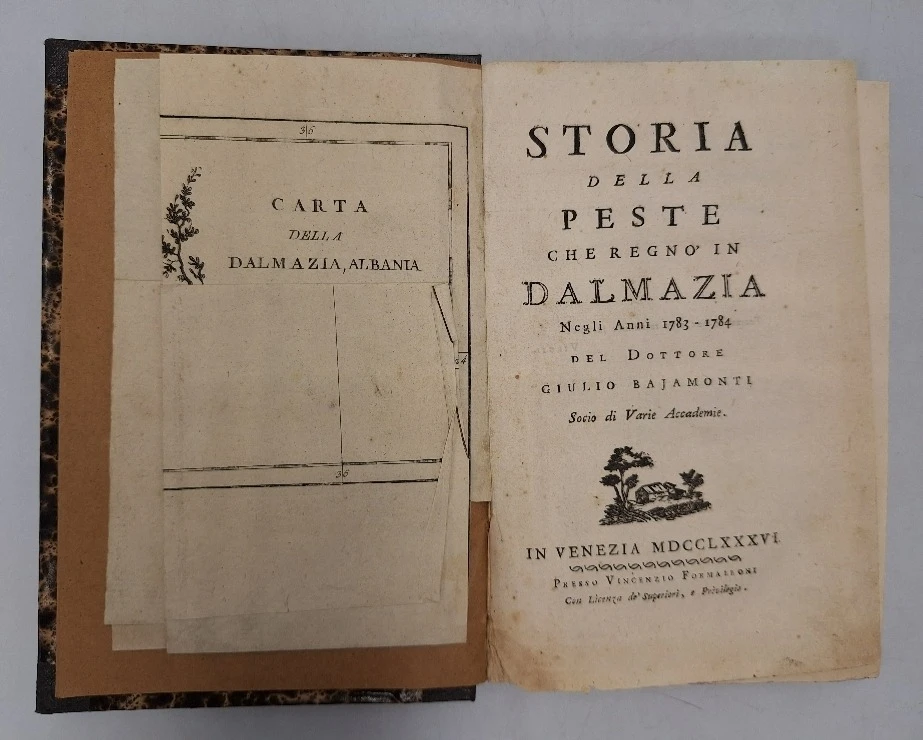
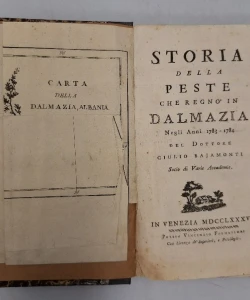
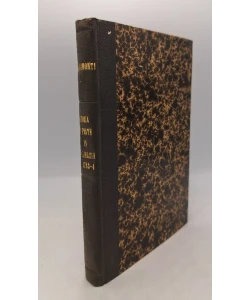
Julije Bajamonti: Storia della peste che regno' in Dalmazia Negli Anni 1783 -1784
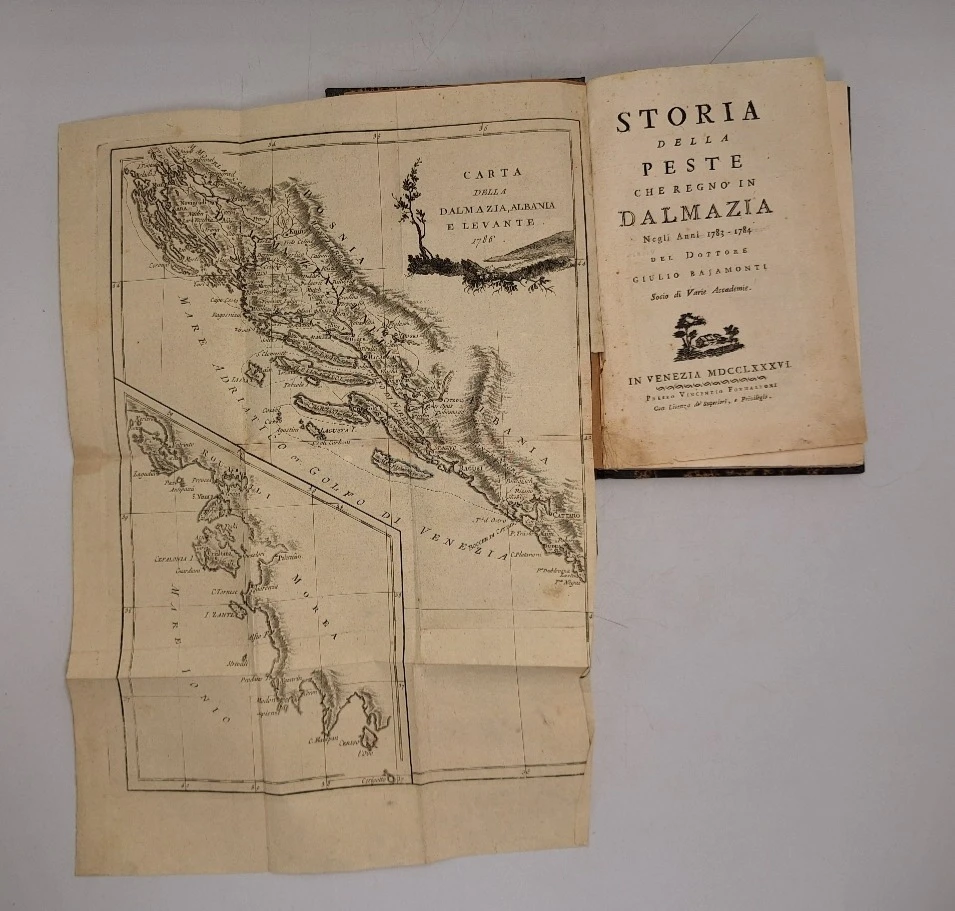
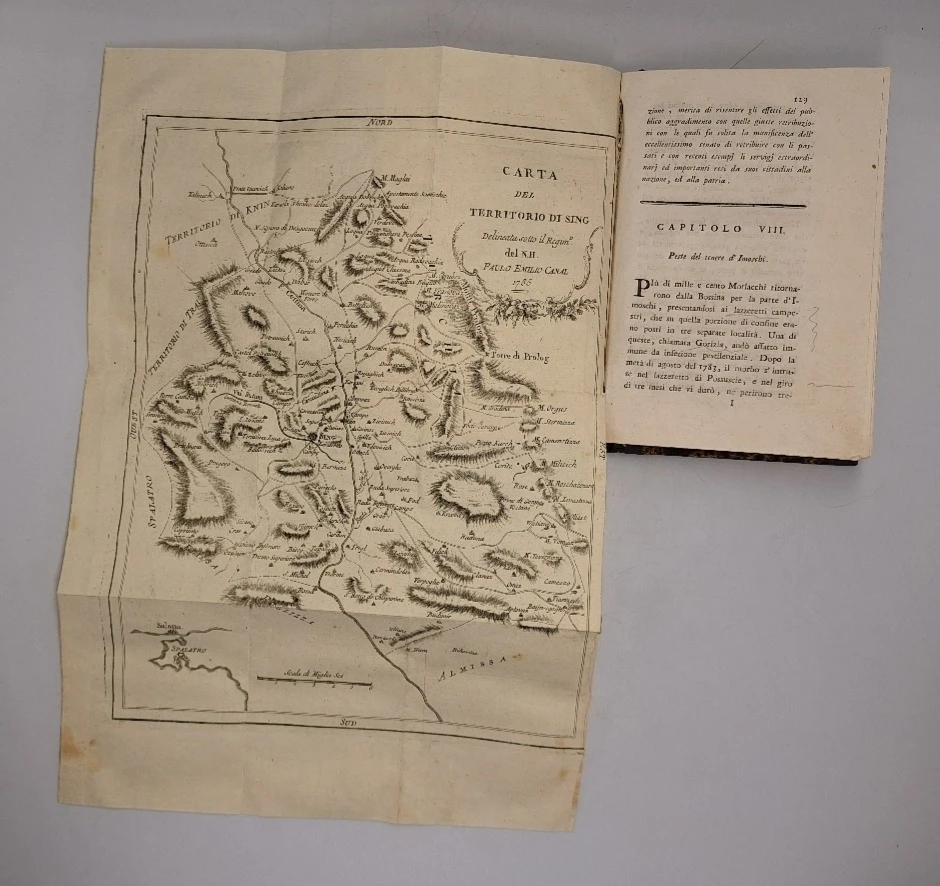
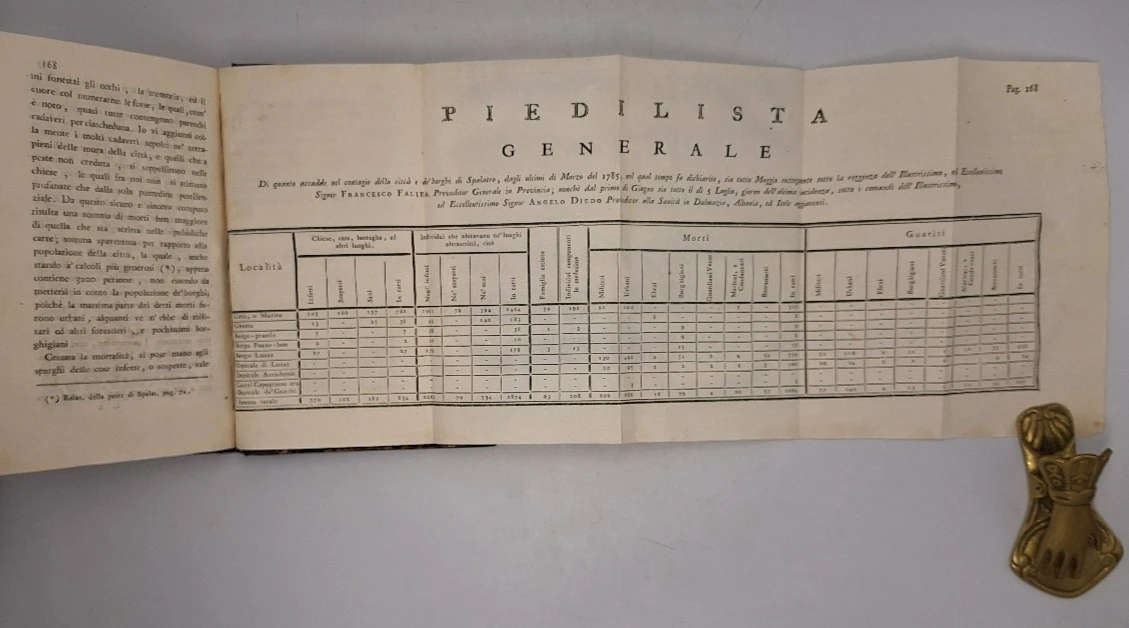
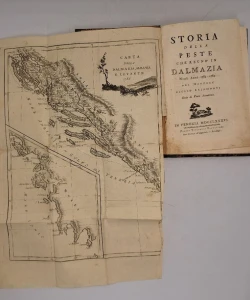
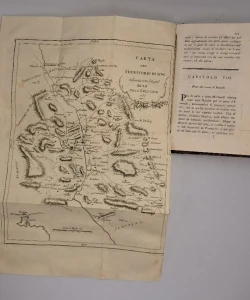
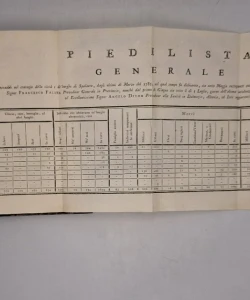
A very rare book about the plague that ravaged Dalmatia with two folding maps.
Julije Bajamonti (Italian: Giulio Bajamonti) (Split, August 4, 1744 - Split, December 12, 1800), Croatian physician, writer, composer, music theorist, polyhistorian, philosopher and encyclopedist.
Julije Bajamonti was born into a family from Split that immigrated from Poreč in 1704. He studied medicine in Padua, and after completing his studies he worked as a doctor in Hvar and Split. He married a commoner, because of which his parents disowned him, so he lived and served in Kotor for a while. He had a son, Emil, and a daughter, Helena. After returning from Kotor, he worked as an organist and choirmaster in the cathedral, and later continued his medical practice. He was a friend of Ruðer Bošković and highly respected in Dubrovnik. He was a very versatile scientist, with a liberal orientation, and because of his critical attitude towards feudal society and the conservative Church, he was exposed to criticism from the wider citizens of Split. astronomy. He collected folk songs and chants, as well as material for the history of Dalmatia and Split in the 16th and 17th centuries, as well as for an encyclopedic and musical dictionary. He wrote about 150 compositions, among which the symphonies Svečana gloria, Passio nelle domenica delle Palme, Requiem (he wrote it for his friend Ruðer Bošković) and the oratorio La traslazione di San Doimo stand out. He wrote a work on the history of Split and a book about the plague in Dalmatia, in which he presented a whole series of data on the health conditions in Dalmatia in the 18th century.
He was one of the most prominent members of the Split Economic Academy.
This item has no reviews yet. Be the first to share your experience.

Biblos Newsletter
New titles, special copies and quiet recommendations from the antiquarian bookshop.