
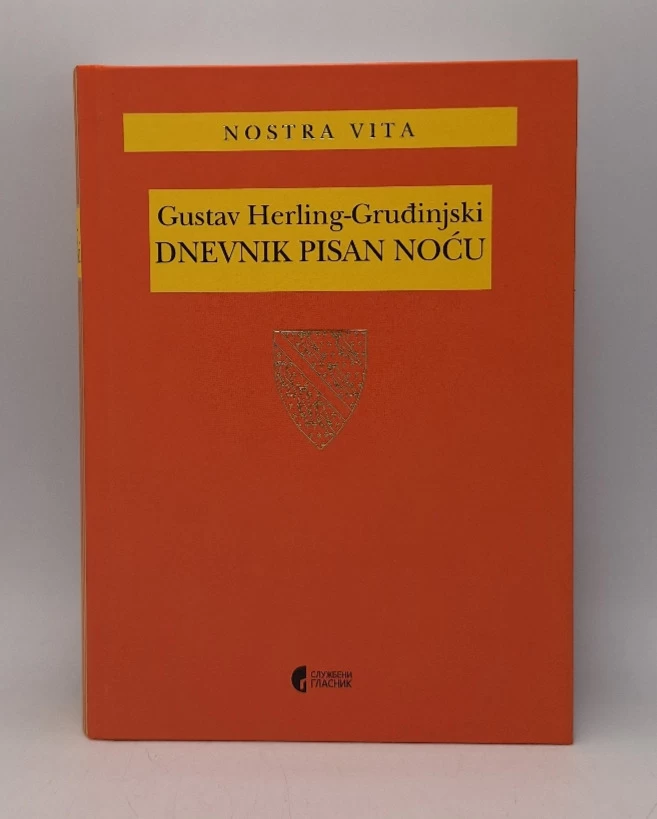
Dnevnik pisan noću
Basic information
- Author: Herling-Grudzinski Gustaw
- Publisher: Službeni glasnik
- Availability: Available
- Condition: New book
- Code: 49120
Shipping options
Payment methods
Explore more
Dnevnik pisan noću
Herling-Grudzinski Gustaw
Summary
Gustaw Herling Grudzinski: Diary written at night
Diary written at night by Polish emigrant writer Gustav Herling-Grudziński is one of the most significant diaries of European literature of the second half of the 20th century.
The diary written at night was not created literally in the late hours, but above all in gloomy times, in a period in which "history was released from the chain". It is a fascinating commentary by a shrewd intellectual on the people, events and processes that surround him. The range of the author's preoccupations is diverse: from political analysis to art criticism to philosophical reflections on the position of man in the modern world. In Dnevnik - written for a full thirty years - the writer is a chronicler of the epoch, a thinker, a connoisseur of painting, a polemicist, a historian, a moralist, an artist and, for all that, an irreconcilable judge... The diary entries are interwoven with mini-essays whose main character is always man and the questions that haunt him.
An important place in Dnevnik is occupied by reflections on Italy, where the writer spent most of his life, and about his homeland Poland, which at that time was going through a turbulent period of great changes caused by the fall of communism, as a result of which he arrived in the country in 1991, after almost half a century spent in emigration. The joy of regaining freedom is mixed with critical reflections on the direction his homeland is taking.
The author himself wrote about his diary: "It fulfills all my writing ambitions. It fulfills me completely and therefore I will probably never write a novel. The diary will be my opus magnum."
Additional information
- Author: Herling-Grudzinski Gustaw
- Publisher: Službeni glasnik
- Year of publication:2010
- Place of publication:Beograd
- Pages:572
- Dimensions:15x20 cm
- Script:Latin script
- Condition:New book
- Binding:Hardcover
Reviews
0 reviewsWrite a review
Share your experience and help other readers choose.
This item has no reviews yet. Be the first to share your experience.
More books by Herling-Grudzinski Gustaw

More books from Službeni glasnik





You may also like