

O junacima i grobovima
Basic information
- Author: Sabato Ernesto
- Publisher: Kosmos - Nova knjiga
- Availability: Available
- Condition: New book
- Code: 58686
Shipping options
Payment methods
Explore more
O junacima i grobovima
Sabato Ernesto
Summary
Ernesto Sabato: About heroes and graves
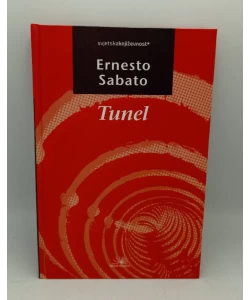
"About heroes and graves" is the second novel of the Argentinian writer Ernesto Sabato out of a total of three he wrote ("Tunnel" and "Abaddon, the Destroyer"). It is considered the most successful part of the trilogy and brought the author worldwide fame.
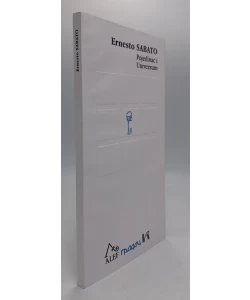
It consists of four parts. In the first two, 'The Dragon and the Princess' and 'Invisible Faces', Sabato describes the unusual love relationship between Martin, a sensitive young man with a broken relationship with his parents, and Alejandra, an enigmatic girl with peculiar behavior, from an old, once respectable Argentine family. The third part, 'Report on the Blind', also published as a stand-alone work, describes the morbid investigation of Fernando Vidal Olmos, a cruel and seemingly completely deranged paranoid obsessed with blind people and evil. The last part, "Unknown God", deals with Martin and Bruno after the tragedy announced at the beginning, their overcoming of life's difficulties.
In his novels, Sabato deals with the problem of madness and dark states of mind that are below the threshold of consciousness, such as violence, sacrilege, persecution mania, and the best example is the part of the novel "About heroes and graves" called "Report on the blind". In addition to madness, Sabato deals with the problems of existentialist philosophy in his works, such as the impossibility of communication and the realization of painful reality. Among other things, Sabato is a politically engaged writer who criticized the military dictatorship in Argentina in his novels.
Emesto Sábato (1911) Argentine writer, essayist and journalist, PhD in physics. He wrote several books of essays on the crisis of man of our time and on the meaning of literary creativity, as well as a trilogy of novels that ensured this author world fame: "The Tunnel", "On Heroes and Graves" (1961) and "Abaddon, Angel of Destruction" (1974). With his first novel, "Tunel", he gained great popularity both in his native Argentina and abroad. This novel, published in 1948, was soon translated into French and English, and then into other world languages. Next to Borges, Ernesto Sabato is one of the most famous Argentine writers.
Additional information
- Author: Sabato Ernesto
- Publisher: Kosmos - Nova knjiga
- Year of publication:2015
- Place of publication:Podgorica
- Pages:437
- Dimensions:15x21 cm
- Script:Latin script
- Condition:New book
- Binding:Hardcover
Reviews
0 reviewsWrite a review
Share your experience and help other readers choose.
This item has no reviews yet. Be the first to share your experience.
More books by Sabato Ernesto
More books from Kosmos - Nova knjiga

You may also like