
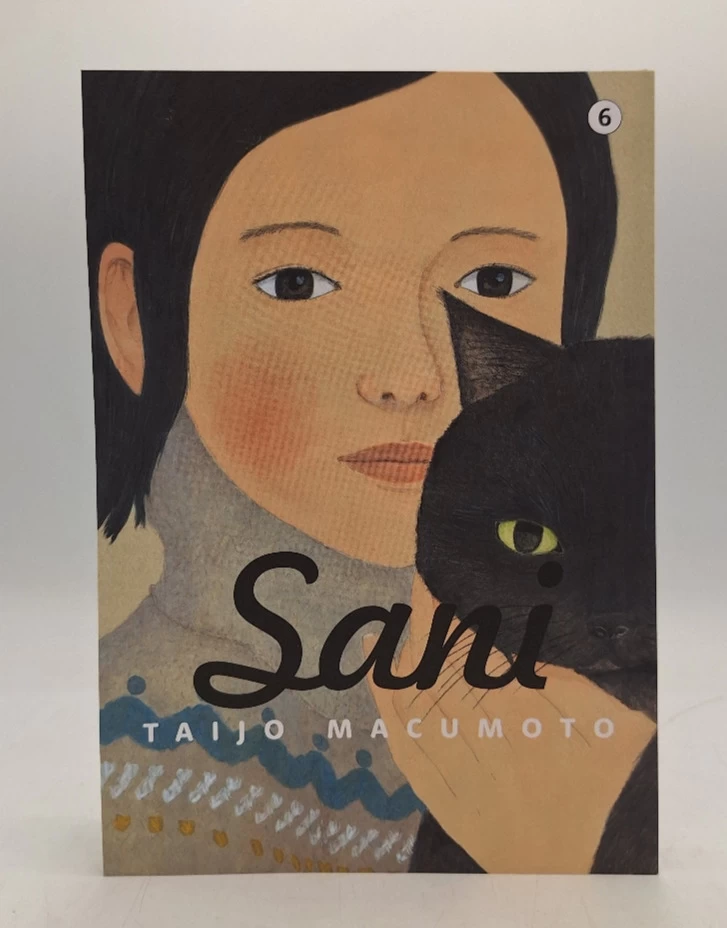
Sani 6
Basic information
- Author: Matsumoto Taiyo
- Publisher: Laguna
- Availability: Available
- Condition: Excellent
- Code: 77389
Shipping options
Payment methods
Explore more
Sani 6
Matsumoto Taiyo
Summary
Taiyo Matsumoto: Sani 6
In the last part of the Sunny manga, the story culminates in the main characters' difficult decisions, and comes down to accepting changes and striving towards the future.
The characters face inner turmoil and challenges, finding meaning and purpose outside the home for neglected children. Some start a new life while others find peace in resolving unresolved issues from the past. With this epilogue of the manga Sani, the author emphasizes the importance of resilience, hope and strength brought by the community.
Sunny, the car that was a metaphorical refuge and symbol of freedom throughout the story, acquires an additional symbolic meaning in the ending. It remains as a reminder of childhood, dreams and innocence, but also as a witness of the characters' transition to a new life phase.
The bittersweet ending awakens in the reader a feeling of hope, but also sadness due to inevitable partings. Taijo Matsumoto masterfully wraps up the story, leaving a lasting impression and a deep emotional connection with the readers.
Chekhov had his rifle to clarify that every element in the story must serve the purpose of the main narrative; Matsumoto's Sani follows this principle only to a certain extent, and his Sani is exactly that device - from the very beginning he follows both children and adults in the orphanage, and as befits a faithful follower, in the last volume he has aged, ready to be discarded. . The change is visible on this vehicle, in the last chapter of this by no means easy story. The fact that he embodies change is one of the two main characteristics of Sunny. The second one is much more important and worth highlighting - Sani is, in fact, the silent actor of the whole story.
Additional information
- Author: Matsumoto Taiyo
- Publisher: Laguna
- Year of publication:2024
- Place of publication:Beograd
- Pages:264
- Dimensions:14x20 cm
- Script:Latin script
- Condition:Excellent
- Binding:Softcover
Reviews
0 reviewsWrite a review
Share your experience and help other readers choose.
This item has no reviews yet. Be the first to share your experience.
More books by Matsumoto Taiyo


More books from Laguna










You may also like










Recently viewed