
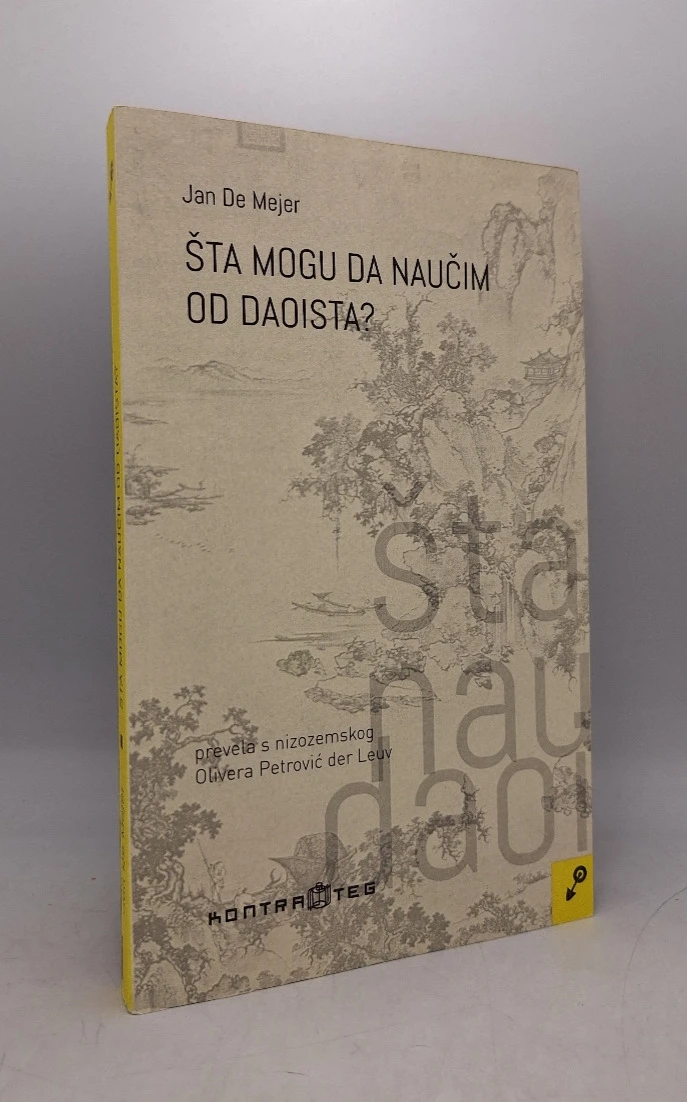
Šta mogu da naučim od daoista?
Basic information
- Author: De Mayer Jan
- Publisher: Futura publikacije
- ISBN: 9788671882361
- Availability: Available
- Condition: Excellent
- Code: 84694
Shipping options
Payment methods
Explore more
Šta mogu da naučim od daoista?
De Mayer Jan
Summary
Jan De Mayer: What can I learn from the Daoists?
Confucianism and Taoism (in the older transcription: Daoism) are the two most significant worldviews deeply rooted in the Chinese tradition. Confucianism is much better known in Europe than Taoism, and not only because of the greater number of translations of Confucius' works. The book *What can I learn from the Taoists?* represents a significant contribution to a better understanding of the Taoist worldview and the historical development of Taoism from ancient times to the present day. The author also explains why Taoism is in constant conflict with Confucianism, what are the fundamental differences between the two understandings, and the reasons why Taoism was contested in China for centuries, until attempts were made to completely eradicate it. The main difference between Confucianism and Taoism relates to ethical issues, the organization of society and the governance of the state. While Confucianism is based on a hierarchical structure, centralized administration, moral codes and established rituals and ceremonies that all members of society follow without question, Taoism advocates a return to simple community, personal development and responsibility, natural flow and spontaneity, equality of all people and respect for nature and all living beings. One of the most important aspects of Taoist philosophy is the understanding that there is no difference between the human world, the natural world that surrounds us, and the cosmos. Dao or Path is the natural order of the universe, the spontaneous way in which the world exists, and such an order is maintained if everything remains true to its own nature. To follow the Way means to be in harmony with that natural order. Instead of following certain rules, Taoists advocate the ideal of naturalness and harmony of man with nature and the cosmos, believing that in this way conflicts, violence and suffering can be avoided. Taoist criticism of Confucianism does not refer so much to the virtues themselves, as to the Confucian way of imposing detailed duties on every member of society. In the hands of unscrupulous people, virtues become terrifying tools. Instead of obeying imposed rules (Confucian instrumentalization of morality and pragmatism of rules), Taoists follow the Way (Dao) as the source of everything, the natural order of the universe and the process of ceaseless change. At the social level, "following the Path" implies self-improvement, personal responsibility and consistency as a prerequisite and the best way to achieve harmony in the family, society and government. Despite the tensions between Confucianism and Taoism, both teachings had a great influence on Chinese society and culture: Confucianism primarily on public life, the organization of society and state management, while Taoism primarily influenced personal life and the search for harmony in relationships with other people and nature.
Additional information
- Author: De Mayer Jan
- Publisher: Futura publikacije
- Year of publication:2025
- Place of publication:Novi Sad
- Pages:177
- Dimensions:13.5x22 cm
- Script:Latin script
- Condition:Excellent
- Binding:Softcover
Reviews
0 reviewsWrite a review
Share your experience and help other readers choose.
This item has no reviews yet. Be the first to share your experience.
More books from Futura publikacije








You may also like