
Summary
Bartol Đurđević: De Turcarum moribus (On the origins of Turkish customs)
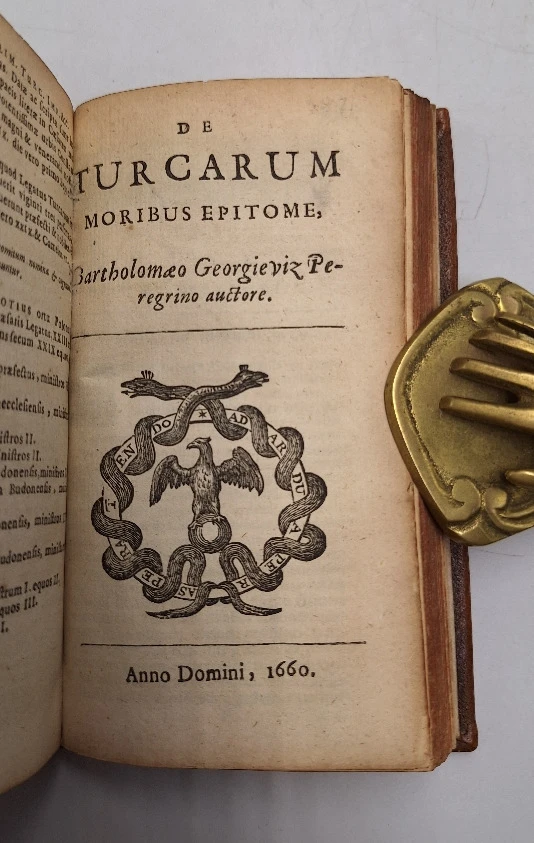
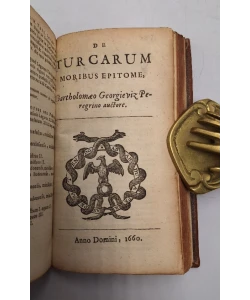
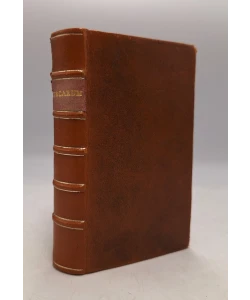
De Turcarum moribus (On the origins of Turkish customs) is the most significant work of the Croatian Latinist, travel writer and polyglot Bartol Đurđević (Bartul Jurjević, c. 1506 - c. 1566). Created as a direct result of his thirteen-year slavery after the Battle of Krbav, this work is among the first and most influential European ethnographic records about the Ottoman Empire. His life's goal was to portray the opportunities in Turkey, and he did so in numerous works, the best of all that dealt with that issue. He tried to encourage the creation of a unified anti-Turkish front, which was the actuality of that time. The fact that he was captured by the Turks on Mohács in 1526, and that he was resold as a slave seven times, unequivocally determined the theme of his works. His works were published in different languages, and some were also translated into Croatian. Georgijević is also considered the first Croatian lexicographer because he added Croatian-Latin, Croatian-French, Croatian-Dutch, Croatian-English dictionaries to many of his works, depending on the purpose of the work and its audience. The work DE TURCARUM MORIBUS EPITOME is a travelogue that deals with the description of customs and circumstances in the Turkish Empire. It is particularly interesting that the book is illustrated with six (6) woodcuts. Pages 100-102 contain translations of the Our Father and Hail Mary prayers from Latin to Croatian. It describes in detail the territorial-administrative organization, the school system, marriage, the organization of the army and agriculture in the Turkish Empire. In the last part of the book, he advocates the creation of a large anti-Turkish coalition. The book is in excellent condition.
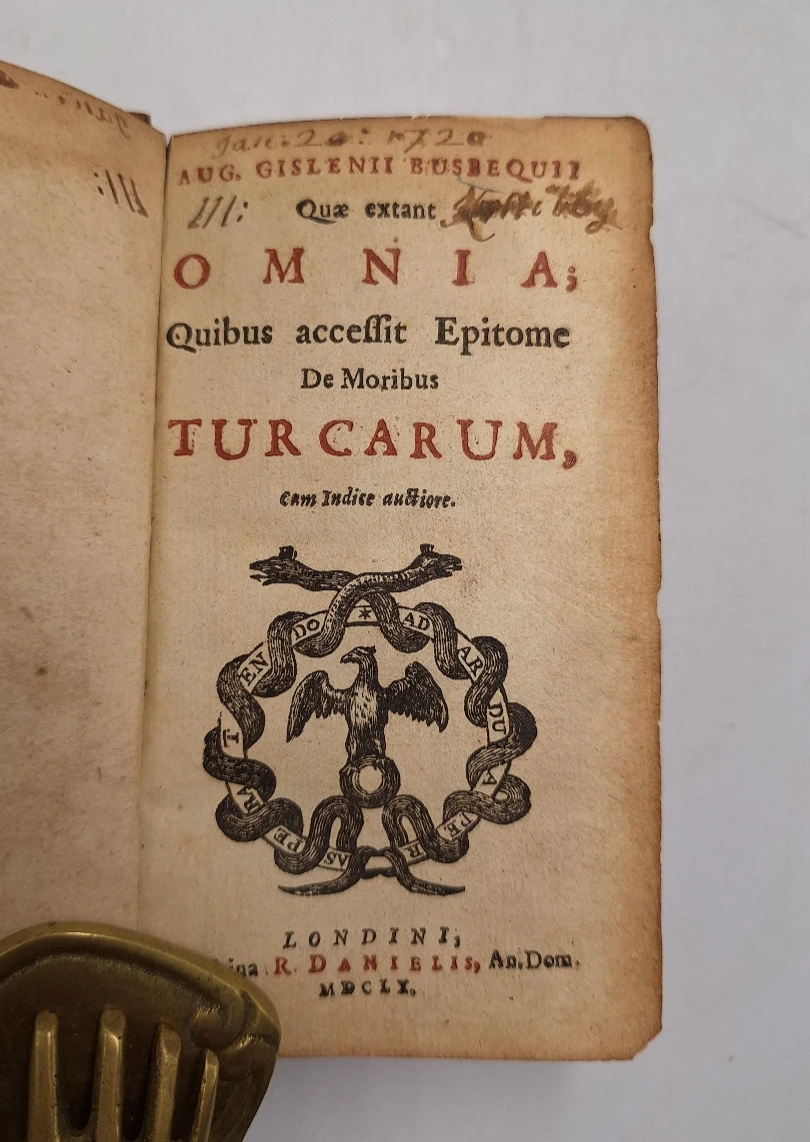
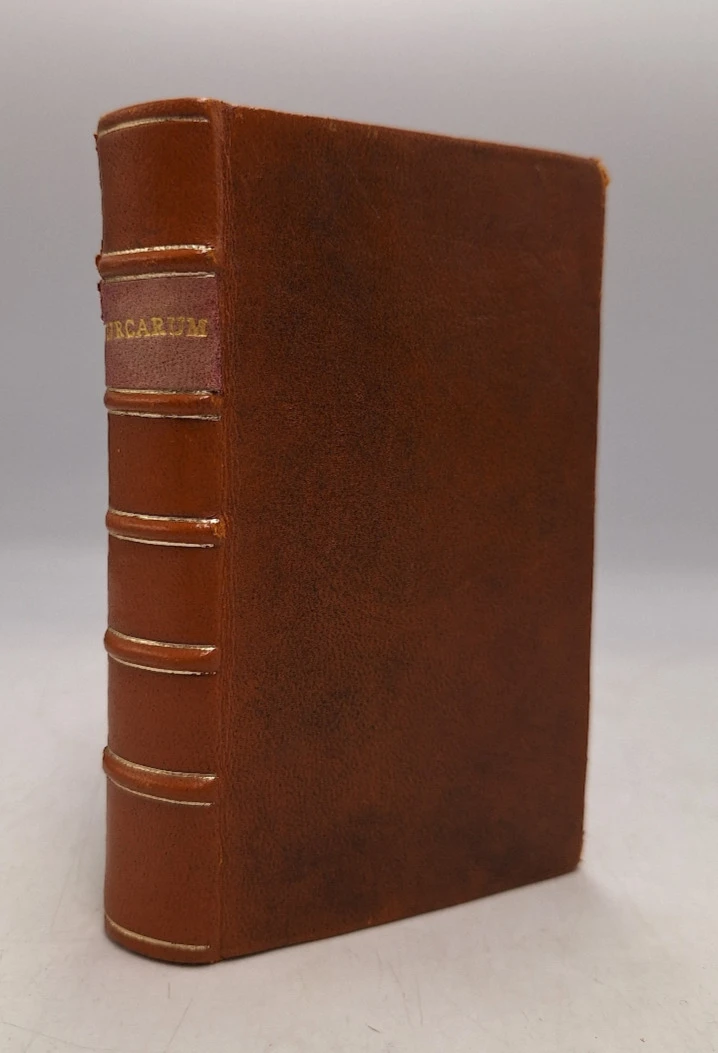
The book is bound with the book: Aug. Gislenii Busbequii Quae Extant Omnia; London: R. Danielis, 1660
First edition of this collection of letters describing the Ottoman Empire at its height. It contains the writings of Busbecq, the Flemish ambassador to Suleiman the Magnificent, and Bartolo Đurđević, a Croatian soldier who became an Ottoman slave. Their accounts include not only information about the Ottomans, but also specific advice on how to escape from slavery and a dictionary of Slavic and Turkish languages.
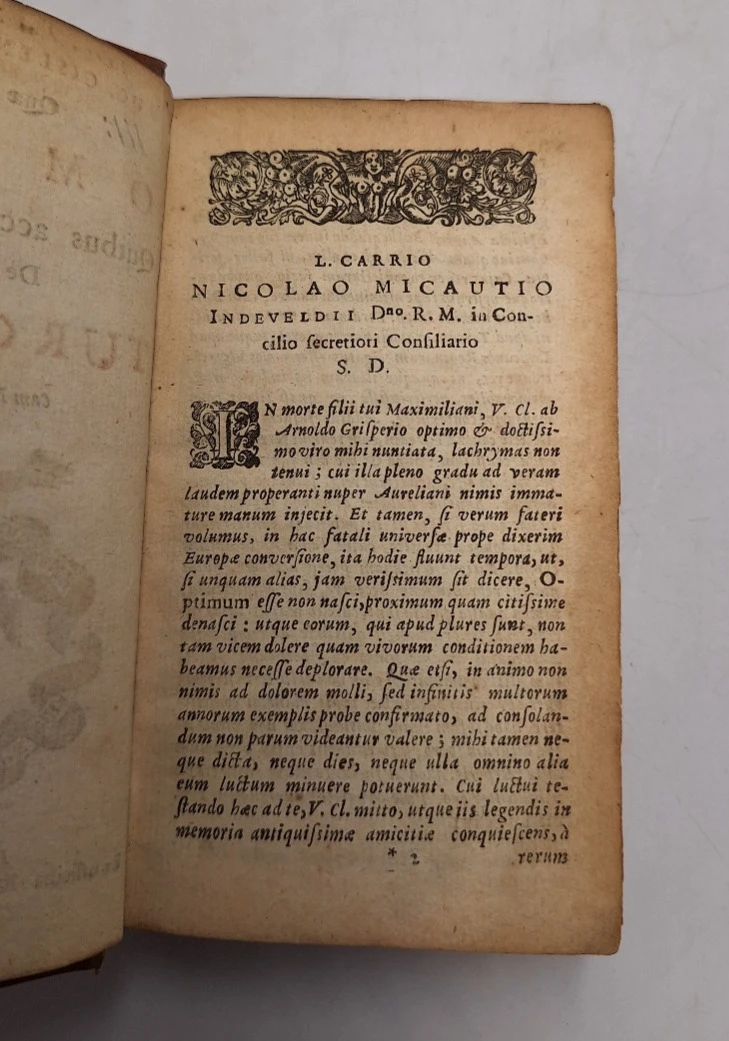
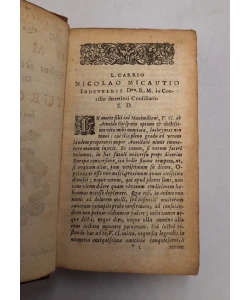
Ogier Ghiselin de Busbecq (1522-1592) was a Flemish writer and diplomat who served as ambassador to the court of Suleiman the Magnificent from 1556 to 1562. His most famous work was the Legationis Turcicae epistolae (1589), Turkish Letters, a collection of correspondence describing his time in Ottoman politics and the empire in general. He was also an avid collector, discovered several valuable manuscripts and introduced the tulip to the Netherlands. He returned from Turkey in 1562, eventually dying in a raid in Rouen. This volume was published posthumously and edited by the humanist scholar Louis Carrion. It contains four epistles that became part of the Turkish Letters, along with other additional material such as Busbecq's correspondence with the Holy Roman Emperor Rudolph II. It also contains a reprint of De Turcarum Moribus Epitome (originally published in 1558) by Bartuolo Đurđević.
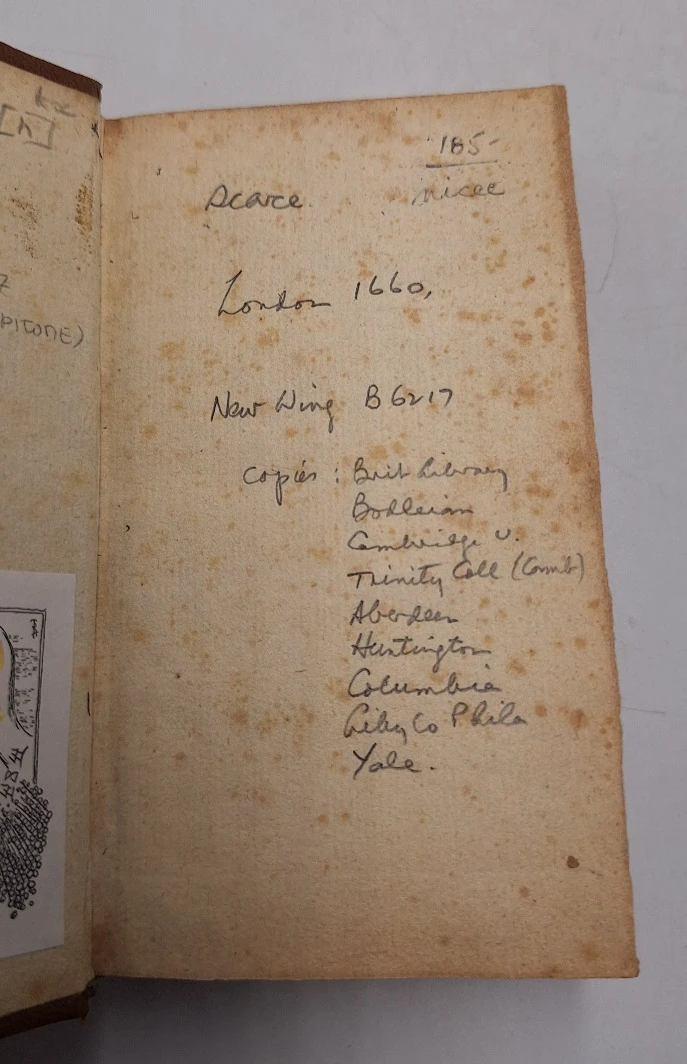
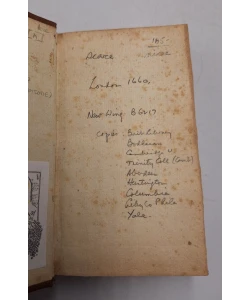
The book has ex libris of the collector Ivo Dubravčić
This item has no reviews yet. Be the first to share your experience.

Biblos Newsletter
New titles, special copies and quiet recommendations from the antiquarian bookshop.