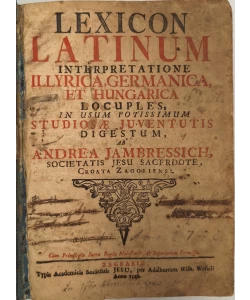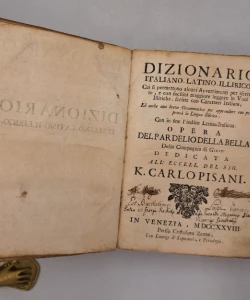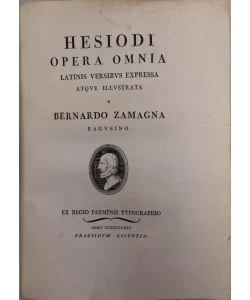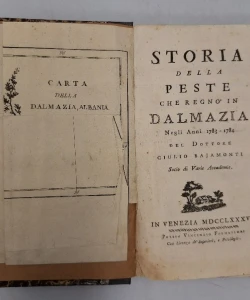

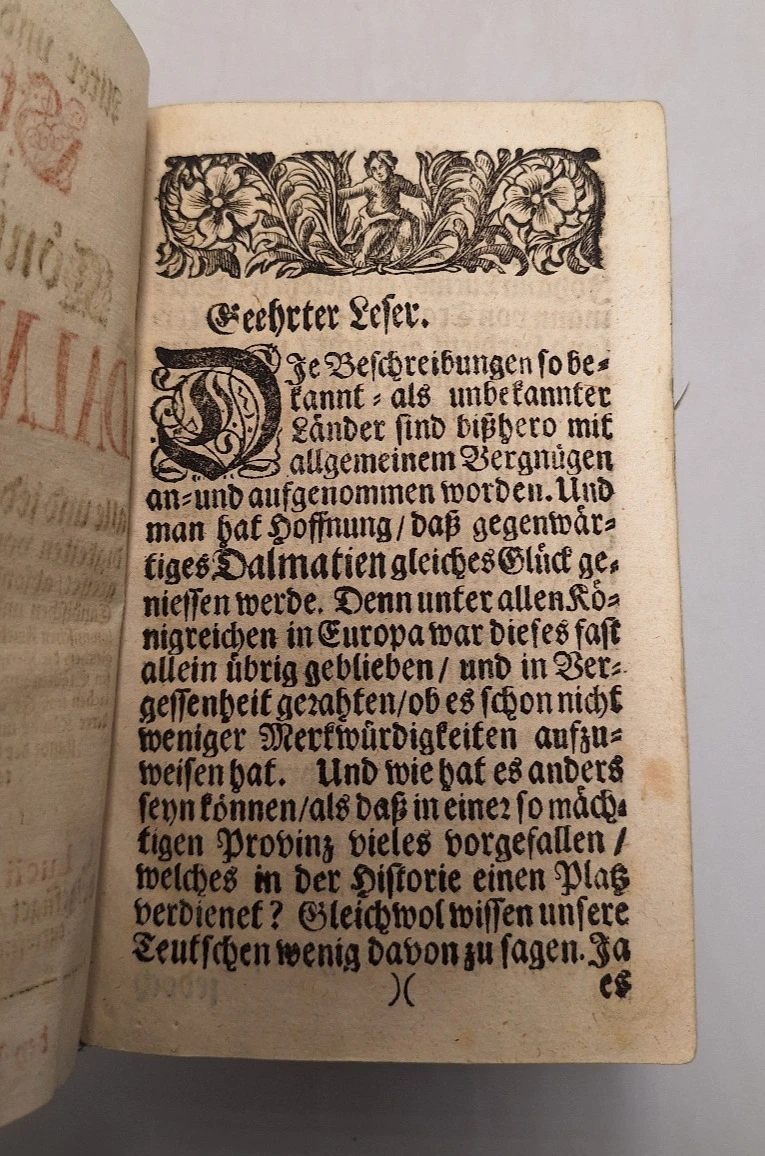
Alter und Neuer Staat des Konigreichs Dalmatien I-II
Osnovne informacije
- Autor: Reusch Erhardo
- Nakladnik: Peter Conrad Monath
- Dostupnost: Dostupno
- Stanje: Vrlo dobro
- Šifra: 12909
Opcije dostave
Načini plaćanja
Istražite još
Alter und Neuer Staat des Konigreichs Dalmatien I-II
Reusch Erhardo
Sažetak
Erhardo Reusch: Alter und Neuer Staat des Konigreichs Dalmatien I-II
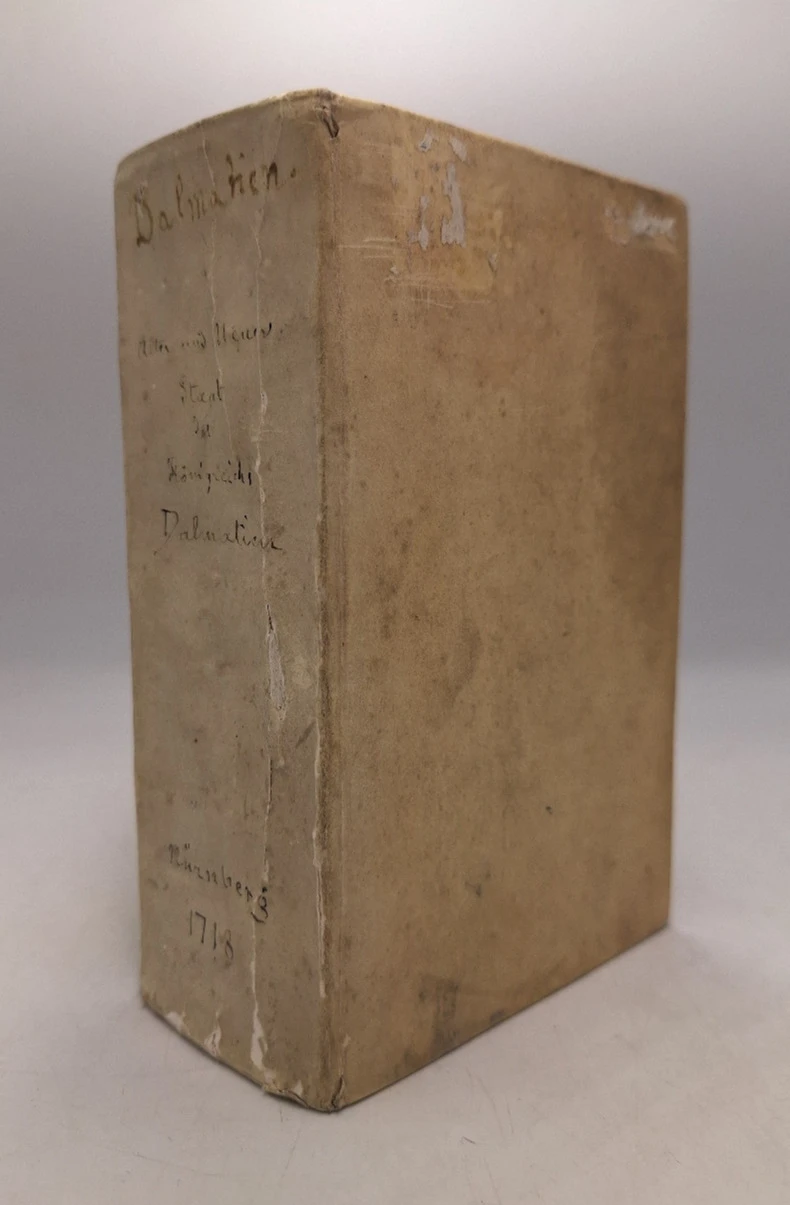
obje knjige su uvezane zajedno
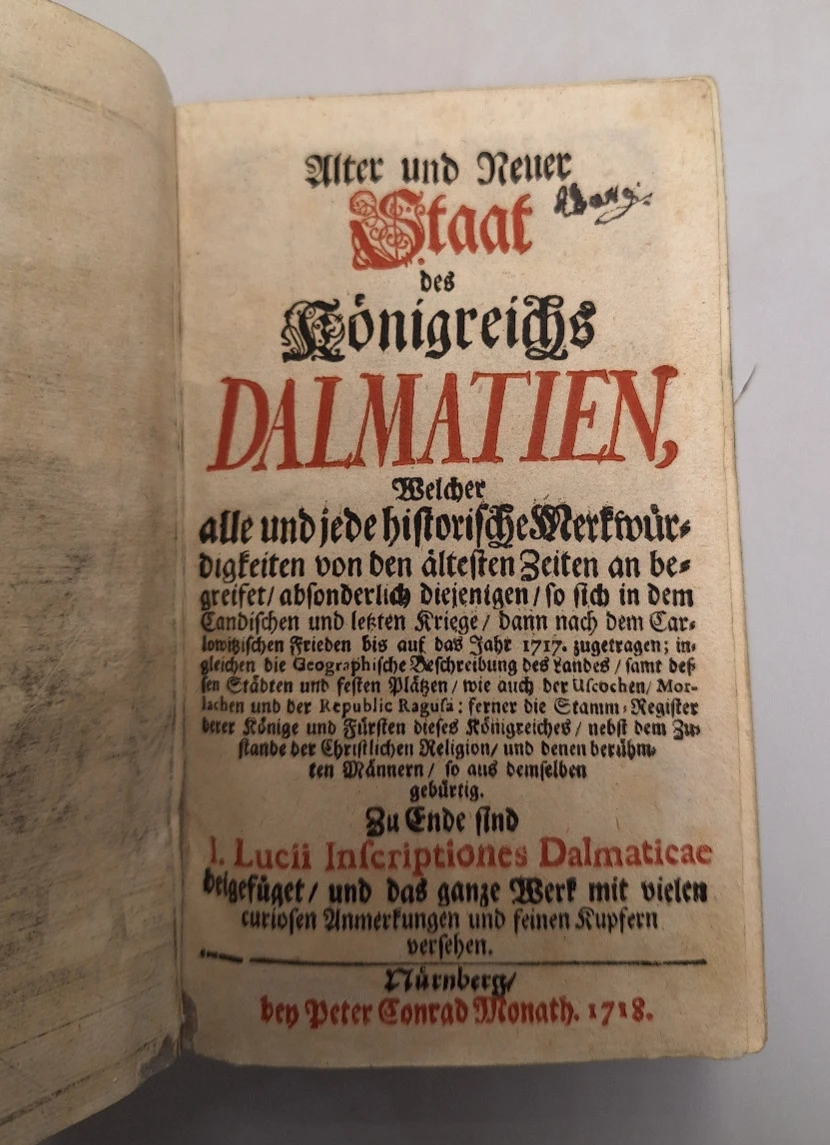
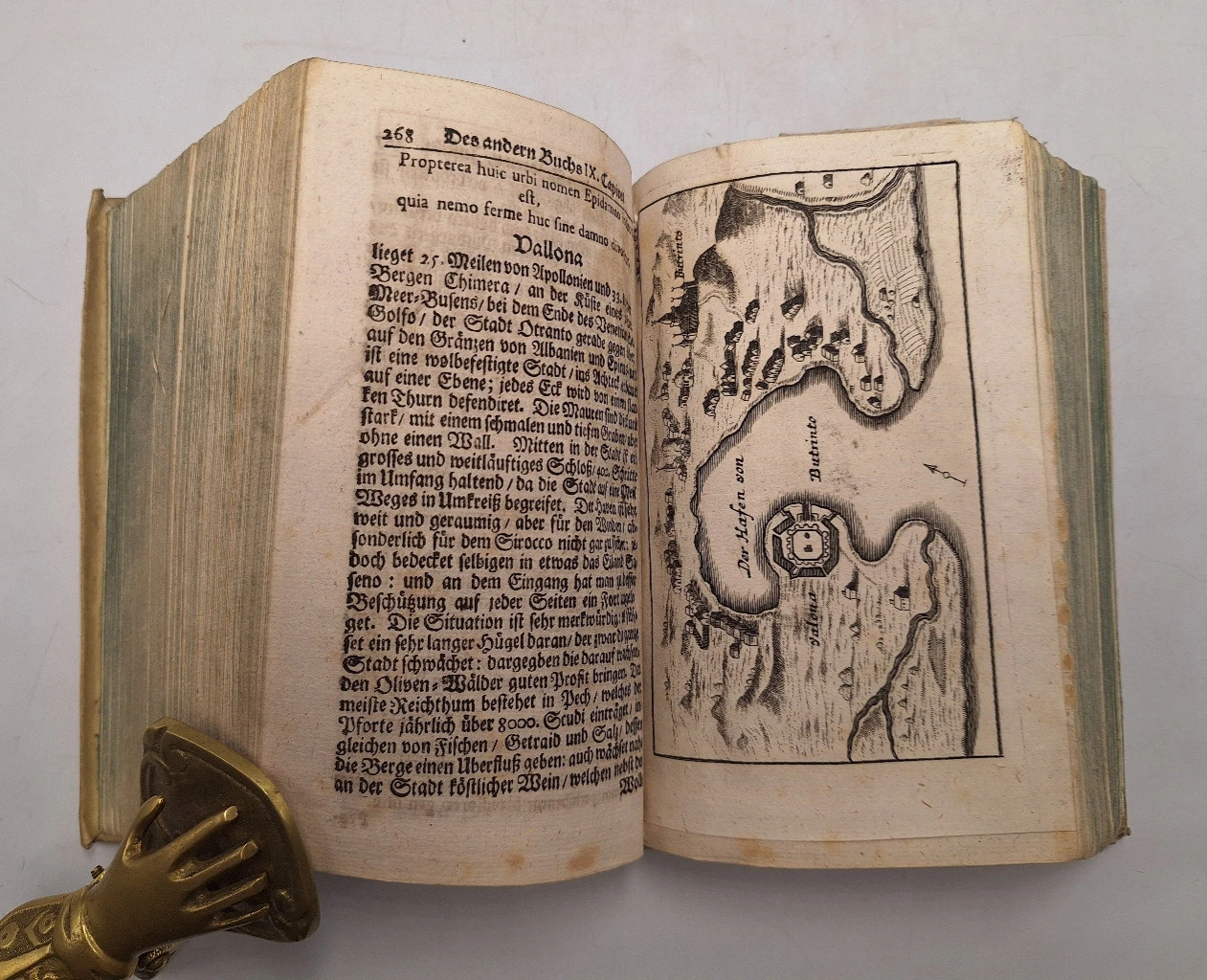
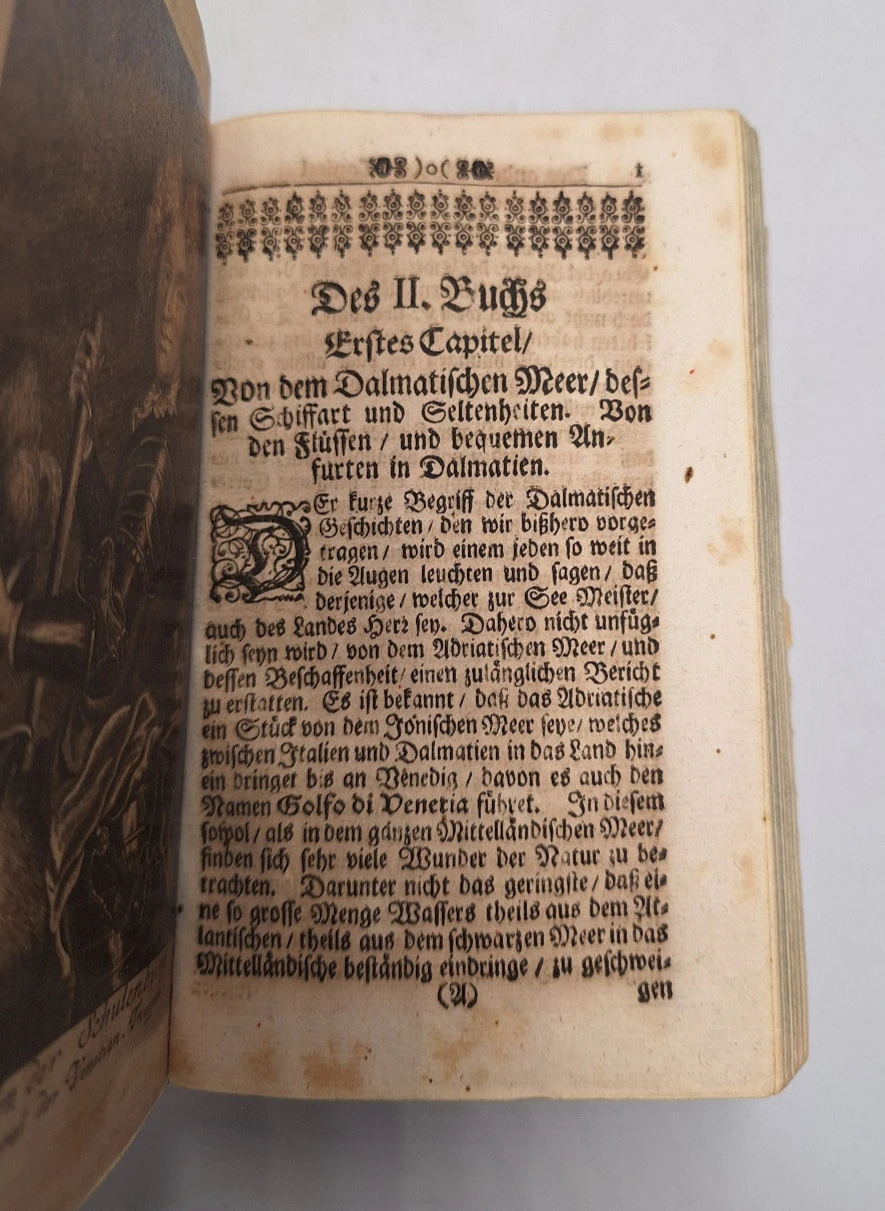
Alter und Neuer Staat des Königreichs Dalmatien, Welcher alle und jede historische Merkwürdigkeiten von den ältesten Zeiten an begreifet, absonderlich diejenigen, so sich in dem Candischen und letzten Kriege, dann nach dem Carlowitzischen Frieden bis auf das Jahr 1717 zugetragen; ingleichen die Geographische Beschreibung des Landes, samt dessen Städten und festen Plätzen, wie auch der Uscochen, Morlachen und der Republic Ragusa: ferner die Stamm-Register derer Könoge und Fürsten dieses Königreiches, nebst dem Zustande der Christlichen Religion, und denen berühmten Männern, so aus demselben gebürtig. Zu Ende sind I. Lucii Inscriptiones Dalmaticae beigefüget und das Werk mit vielen curiosen Anmerkungen und feinen Kupfern versehen
"Stara i nova uprava Kraljevine Dalmacije"
S opisom svih povijesnih događaja od najstarijih vremena, a posebno onih koji su se dogodili tijekom Kandijskog i posljednjeg rata i nakon Karlovačkog mira do 1717. godine, s geografskim opisom zemlje i njezinih gradova i utvrda, kako Uskoka/Morlaka tako i Dubrovačke Republike; te s rodoslovljem kraljeva i knezova ove Kraljevine, prikazom položaja kršćanske religije i predstavljanjem slavnih osoba rodom iz tih krajeva.
Doslovni prijevod naslova: "Stara i nova država Kraljevine Dalmacije".
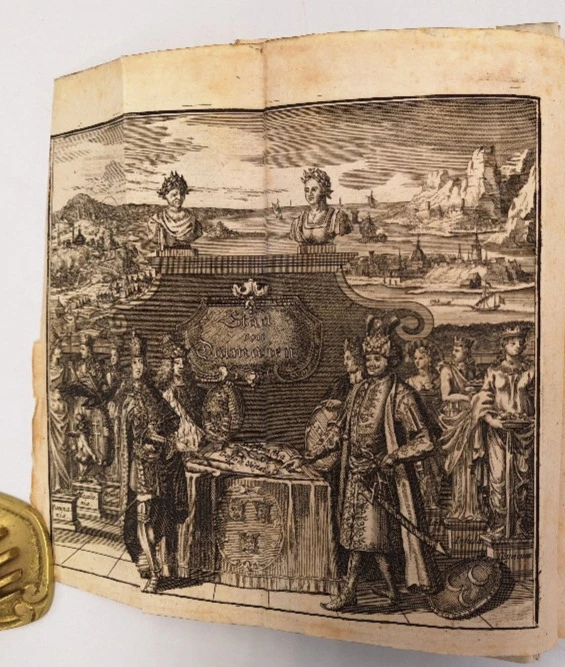
Na knjigoveškom listu popis tabli s ilustracijama.
Poglavlje "Dalmatische Inscriptiones" počinje na str., 496 druge knjige ., i preuzeto je iz knjige hrvatskoga povjesničara Ivana Lučića "Inscriptones Dalmaticae...", tiskane u Veneciji 1673.
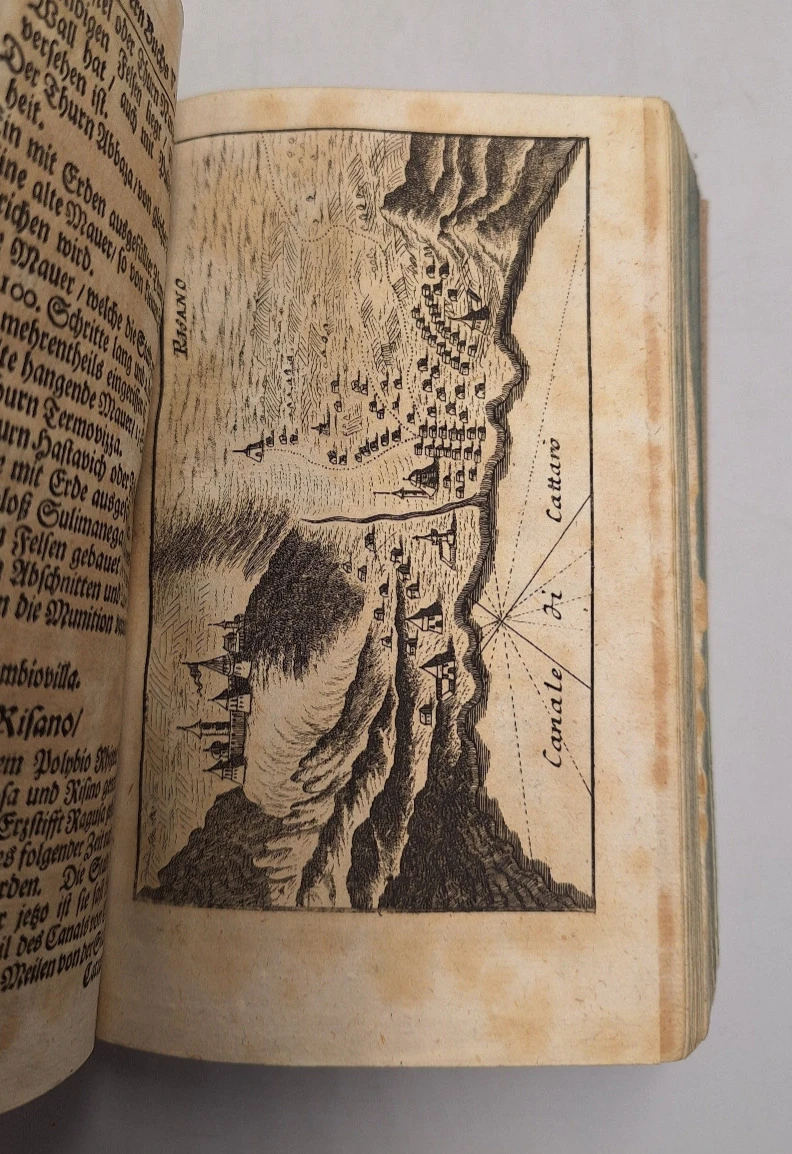
Ove su vedute gradova i utvrda mletačke Dalmacije objavljene u djelu Reucha Erharda «Alter und neuen Staat des Königreichs Dalmatien» izdatom u Nürnbergu kod njemačkog izdavača Johanna Kaspara Monatha 1718. godine. U svojem djelu Reusch objavljuje vedute hrvatskih gradova i utvrda, na obali : Rijeke (S. Veith am Pflavm oder Fiume), otoka Raba (Insul Arbe), otoka Paga (In. Pago), grada Osora na otoku Cresu (Osera), Senja (Zeng), Knina (Chnin), Vrane (Urania), Karina (Carin), Nadina (Nadin), Drniša (Dernis), Zemunika (Zemonico), Zadra (Zara), Šibenika s okolicom (Sebenico), Skradina i Prokljanskog jezera (Scardona, Lago di Prochlian), Trogira (Citta di Trau), Klisa (Clissa), Splita (Spalatro), otoka Hvara (Liesina Ins.), Makarske (Macarsca), otoka Korčule (Curzola), Sinja (Sing), Zadvarja s okolicom (die Landschaft Duare), Opuzena (Opus) i Dubrovnika (Ragusa). U djelu nalazimo i vedutu vojnokrajiške utvrde Otočca (Ottozitz) koji se u vrijeme nastanka ove karte nalazi u sastavu Vojne Krajine, točnije Karlovačkog generalata. Južno od Dubrovnika koji je također pripadao pokrajni mletačke Dalmacije, zastupljene su vedute Bokokotorskog zaljeva, Risana (Risano), Herceg-Novog (Castelnuovo), Budve (Budova) i Ulcinja (Dulzigno) koji se danas nalaze na teritoriju Crne Gore te vedute Drača (Durazo) i Skadra (Scutari) tada također dijela mletačke Dalmacije, a danas u sastavu Albanije. Sve navedene vedute preuzete su s predložaka iz djela mletačkog kartografa Vincenza Marie Coronellija “Isolario dell Atlante Veneto” te djela slovenskog polihistora Janeza Vajkarda Valvasora «Die Erde des Hertzoghums Crain» (U slavu vojvodine Kranjske).
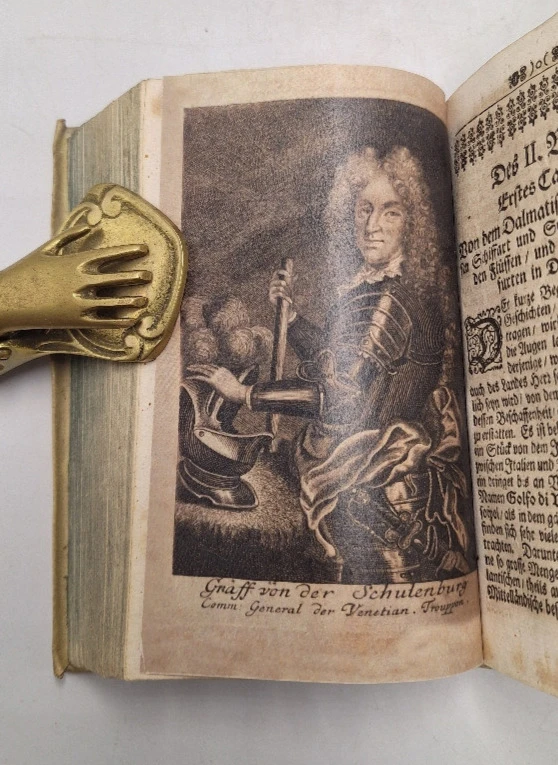
Monathov zemljovid na kraju knjige i litografija grofa Von der Schunterberga na početku druge knjige su faksimili.
Dodatne informacije
- Autor: Reusch Erhardo
- Izdavač: Peter Conrad Monath
- Godina izdanja:1718
- Mjesto izdavanja:Nurnberg
- Broj stranica:398+ 562 +40
- Dimenzije:10x17.5 cm
- Pismo:Gotica
- Stanje:Vrlo dobro
- Uvez:Tvrdi
Recenzije
0 recenzijaNapišite recenziju
Podijelite iskustvo i pomozite drugim čitateljima pri odabiru.
Ovaj artikl još nema recenzija. Budite prvi koji će podijeliti iskustvo.